
Loading, please wait...
LOT 1867
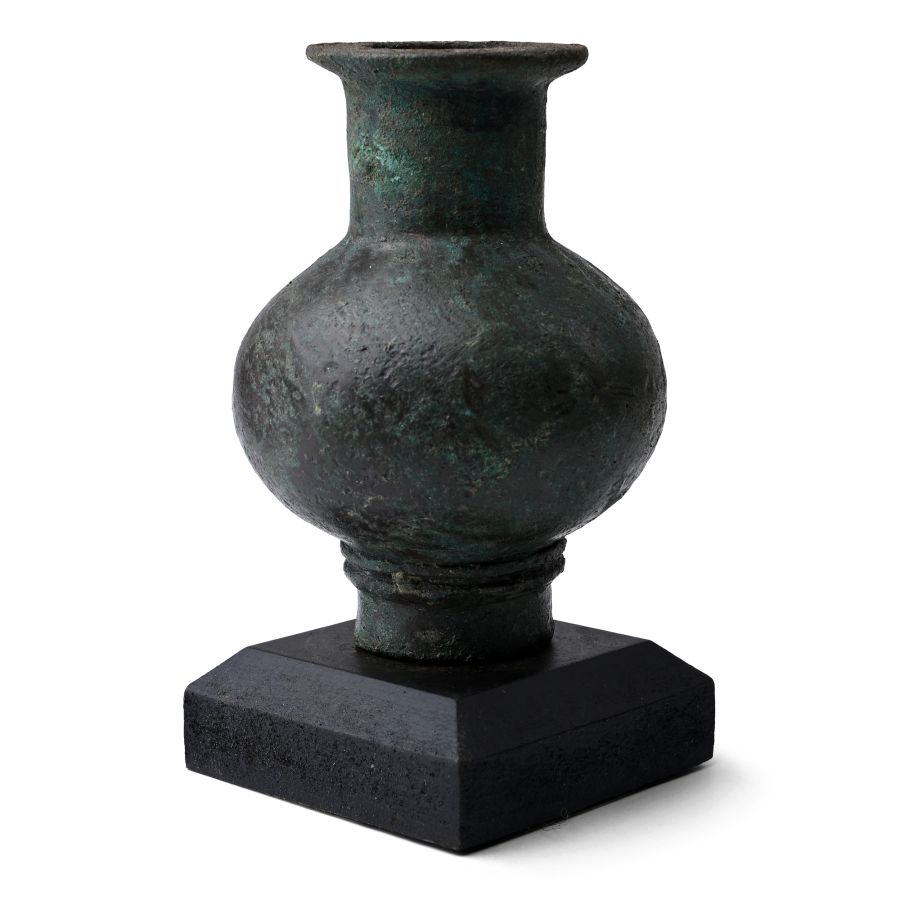
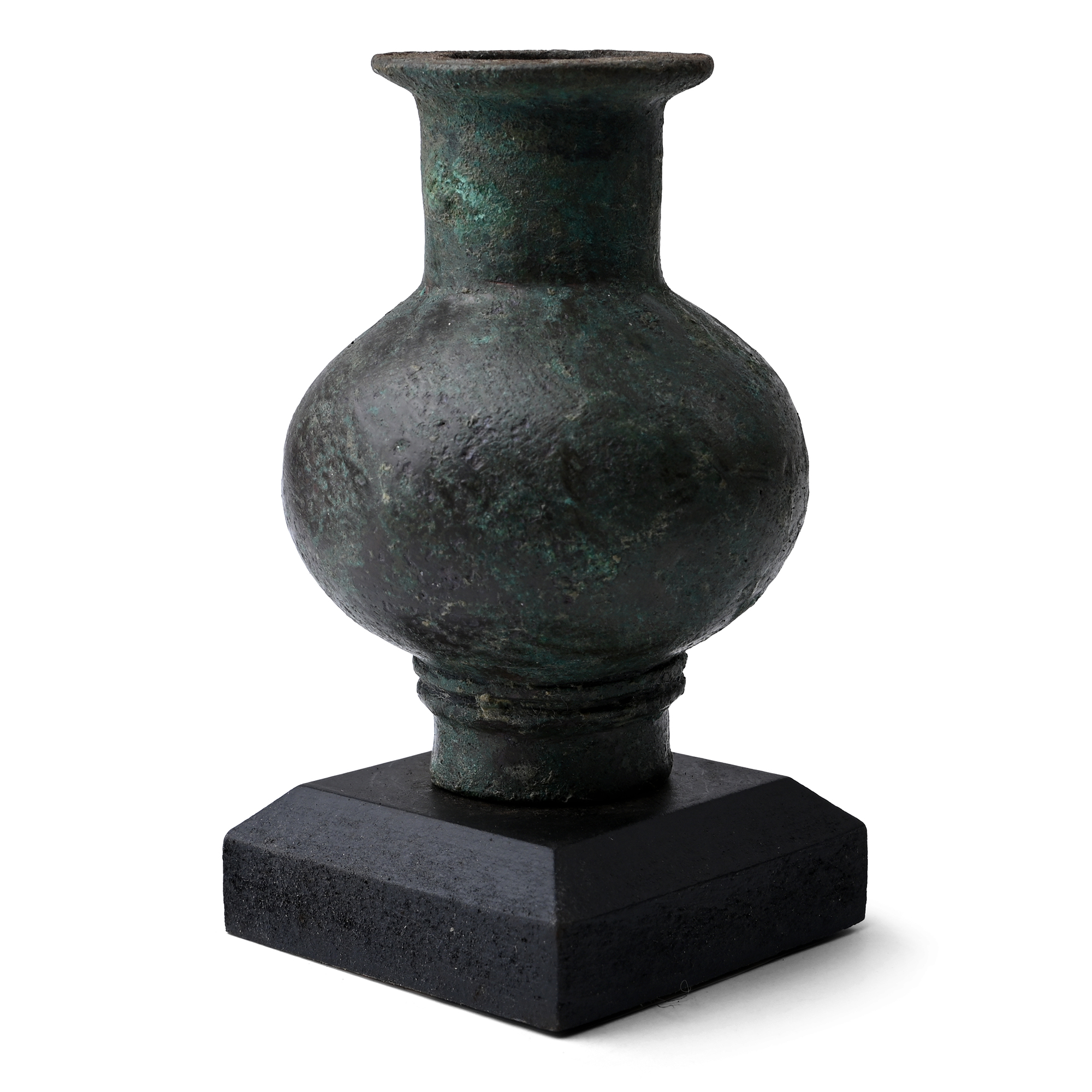
Luristan Bronze Macehead
2ND-1ST MILLENNIUM B.C.
3 1/4 in. (329 grams total, mace: 83 mm).
With a globular body and tubular socket with two raised collars above and a flaring base; accompanied by a custom-made display stand. [No Reserve]
ProvenanceFrom the collection of the late Sir Clinton Charles Donald Cory, 5th Baronet of Coryton.
Ex Philip Auction House, 24 September 1985.
Cf. Musé Cernuschi, Bronzes du Luristan: Enigmes De L'Iran Ancien IIIe-Ier millénaire ac. j.-c., Paris musées, 2008, p.103, for similar example.
CONDITIONTimeLine Auctions follows a vetting process to ensure the authenticity and legality of all items, reinforcing our commitment to integrity and responsible trading. Each antiquity, antique, and coin lot undergoes thorough examination by a vetting committee of at least ten external specialists, professional trade association members, scientists, and archaeologists: Our Vetting Process
AUCTIONS:
TimeLine is a leading auction house specialising in antiquities, ancient art, collectables, natural history, coins, medals, and books. Our auctions offer museums, collectors, historians, and enthusiasts the opportunity to acquire unique and historically significant pieces.
-
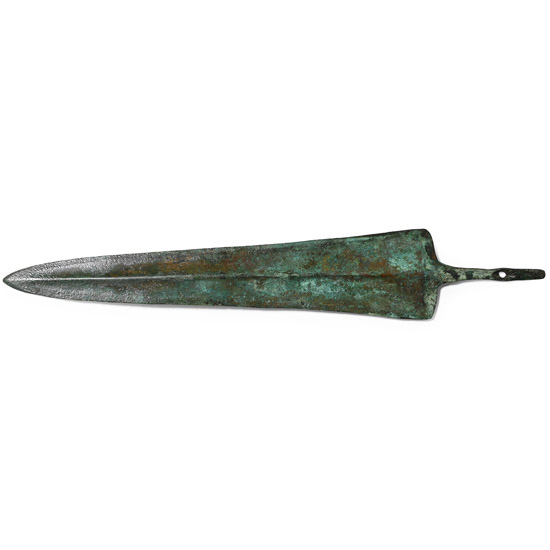
Greek Bronze Tanged Spearhead
1st millennium B.C.Sold for (Inc. bp): £234
With straight shoulders and lozengiform mid-rib running to the blade tip; short tang with fastening hole. 154 grams, 31 cm
Ex Abelita family collection, 1980s-2000s. -
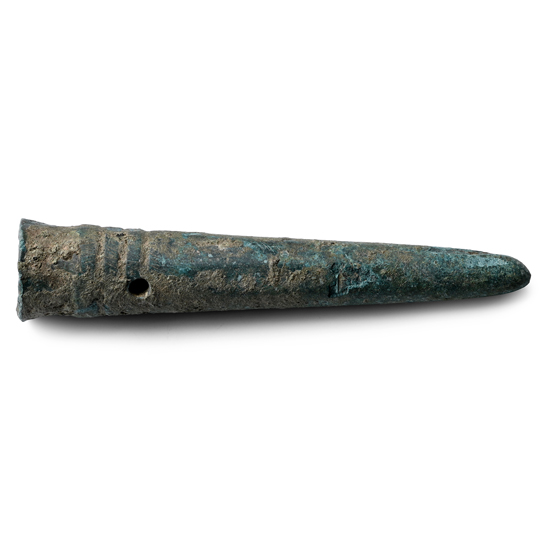
Villanovan Bronze Spear Butt End
Iron Age, circa 8th century B.C.Sold for (Inc. bp): £33
A conical hollow-form tube with ribbed neck, pierced through the sides for attachment. 71 grams, 11.2 cm
From the private collection of a European gentleman (1942-2024), formed since the 1970s. -
.jpg)
Luristan Bronze Dagger
13th century B.C.Sold for (Inc. bp): £208
With a lentoid-section blade, tongue-shaped in plan, with an integral tapering hilt with flared finial, lateral flanges to accept a panel of bone to each face forming the grip. 185 grams, 32.5 cm
Ex Abelita family collection, 1980s-2000s.
The art of Luristan can be described as the art of nomadic herdsmen and horsemen with an emphasis on the crafting of small, easily portable objects, among these a great number of bronze weapons. The rich and noble aristocrats of the Luristan, Elamites, Hurrians, Lullubians, Kutians, and Kassites went to battle splendidly equipped and wore magnificent bronze armour, using maces, spears and daggers as offensive weapons, alongside spears, bows and arrows.
