
Loading, please wait...
LOT 1520
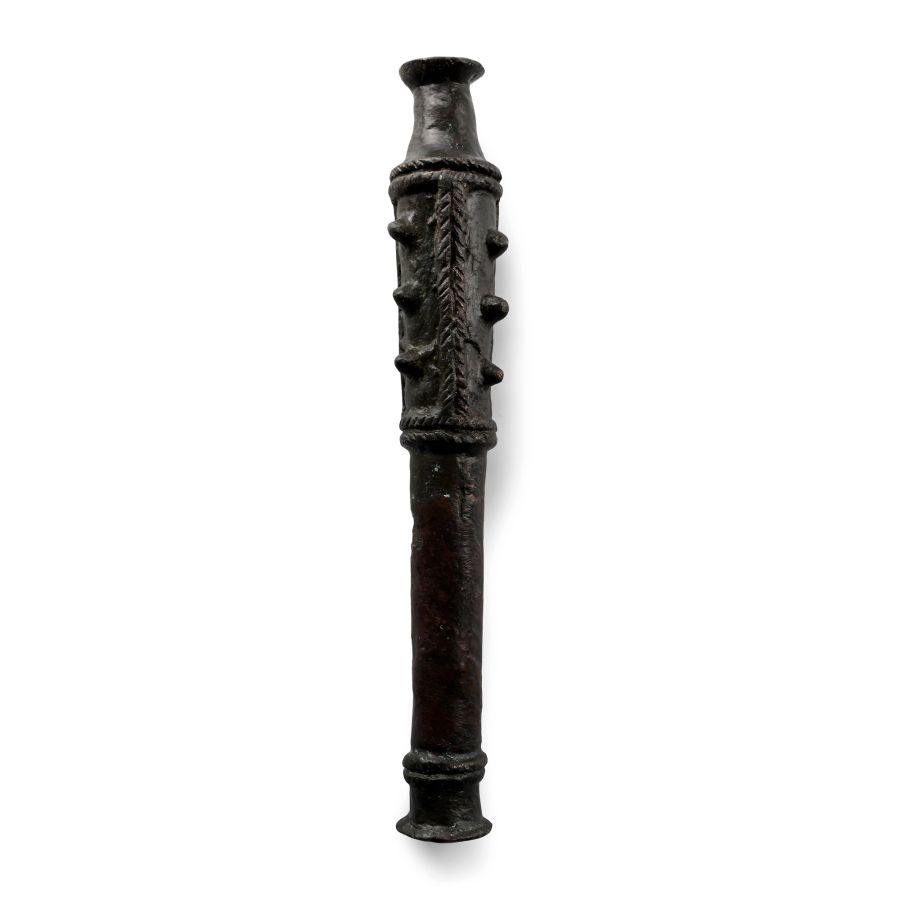
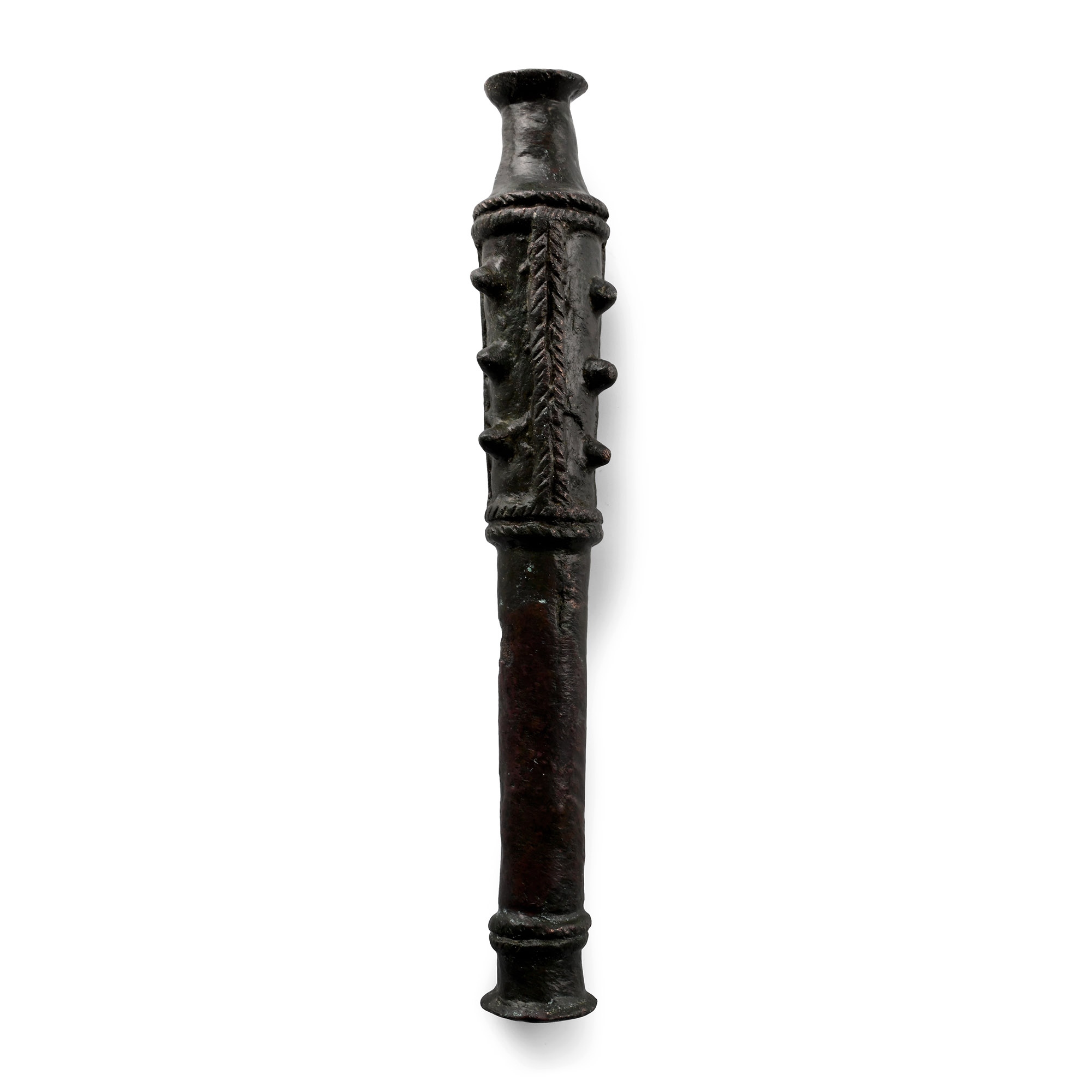
Luristan Bronze Macehead
LATE 2ND MILLENNIUM B.C.
6 1/8 in. (190 grams, 15.6 cm).
Of cylindrical shape, the upper section with alternating rectangular panels framed by pseudo-rope design and vertical rows of three prominent spikes, a short cylindrical shaft edged at top and bottom.
ProvenanceEx Abelita family collection, 1980s-2000s.
LiteratureSee Godard, A., Les Bronzes du Luristan, Paris, 1931, pl.XIX, no.58, for a similar; Khorasani, M. M., 'Bronze and iron weapons from Luristan' in Antiguo Oriente: Cuadernos del Centro de Estudios de Historia del Antiguo Oriente, 7, 2009, fig.8.
FootnotesThis weapon has been used in different ways, and it was probably considered the main tool in the Kassite civilisation because of the high number of maces found in this area. Bronze maces in Luristan possibly had wooden handles, although most of them unfortunately, have been eroded and severely deteriorated. According to Khorasani, such maces were realised with the lost-wax process.
CONDITIONTimeLine Auctions follows a vetting process to ensure the authenticity and legality of all items, reinforcing our commitment to integrity and responsible trading. Each antiquity, antique, and coin lot undergoes thorough examination by a vetting committee of at least ten external specialists, professional trade association members, scientists, and archaeologists: Our Vetting Process
AUCTIONS:
TimeLine is a leading auction house specialising in antiquities, ancient art, collectables, natural history, coins, medals, and books. Our auctions offer museums, collectors, historians, and enthusiasts the opportunity to acquire unique and historically significant pieces.
-
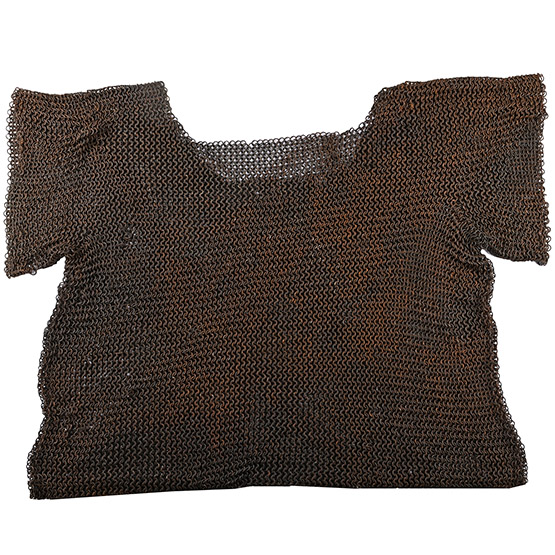
Medieval Warrior's Iron Chain Mail Armour Shirt
Circa 15th century A.D.Sold for (Inc. bp): £1,820
A butted short-sleeved chainmail shirt made of thick oval rings assembled in the usual system of one-to-four; in an excellent state of preservation, with over 95% of the rings intact, very few broken or corroded, with no later additions. 9.93 kg, 87 x 56 cm
Acquired on the German art market before 2000. Private collection, South Germany. Accompanied by an academic report by Dr Raffaele D'Amato. This lot has been checked against the Interpol Database of stolen works of art and is accompanied by search certificate no.13066-249665.
In the German-manufactured ring mail armours, in the 15th century A.D., the rings protecting the breast were very thick, whereas the sleeved mail armours were thinner. Master armourers from Nuremberg were famous for this production across Europe. -
.jpg)
Western Asiatic Bronze Arrowhead Collection
2nd-1st millennium B.C.Sold for (Inc. bp): £338
Comprising tanged arrowheads, four with large elongated triangular blades and raised midrib, sharp central groove, three with barbed shoulders and cylindrical stem with handle for the shaft; three with barbed shoulders and convex on sides, one elongated triangular type with barbed shoulders and flat socket, one with trilobate blade and another with short tang and barbed blade with raised midrib. 305 grams total, 6.5-13.6 cm
Ex London, UK, collection, 1990s.
These arrowheads seem to belong to the type V, subcategory types A, B, C and D according to the classification of Khorasani and Negahban. In the four categories of triangular bronze arrowheads from Luristan, Marlik, and Northern Iran, individuated by Negahban, subtypes C and D of type V are larger arrow or javelin heads, C with barbed shoulders and D with round shoulders. Most of them were cast in moulds. -
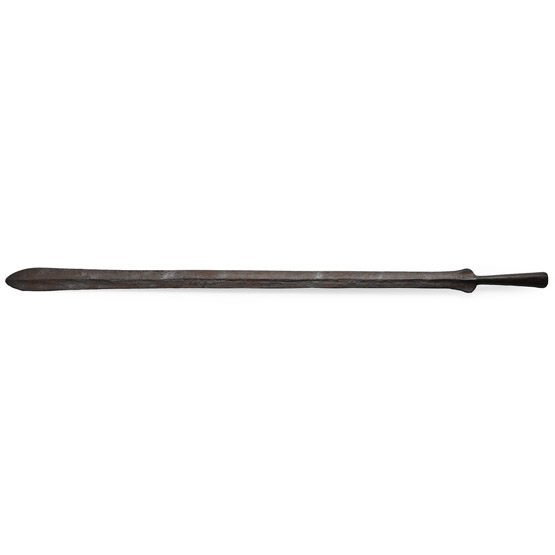
Maasai Lion-Killing Iron Spearhead
Late 20th century A.D.Sold for (Inc. bp): £26
Comprising a long parallel-sided flat blade with slight midrib broadening to a rounded tip, flared shoulders and long conical socket. 544 grams, 79.5 cm
Property of a Berkshire, UK, gentleman collector.
