
Loading, please wait...
LOT 1630
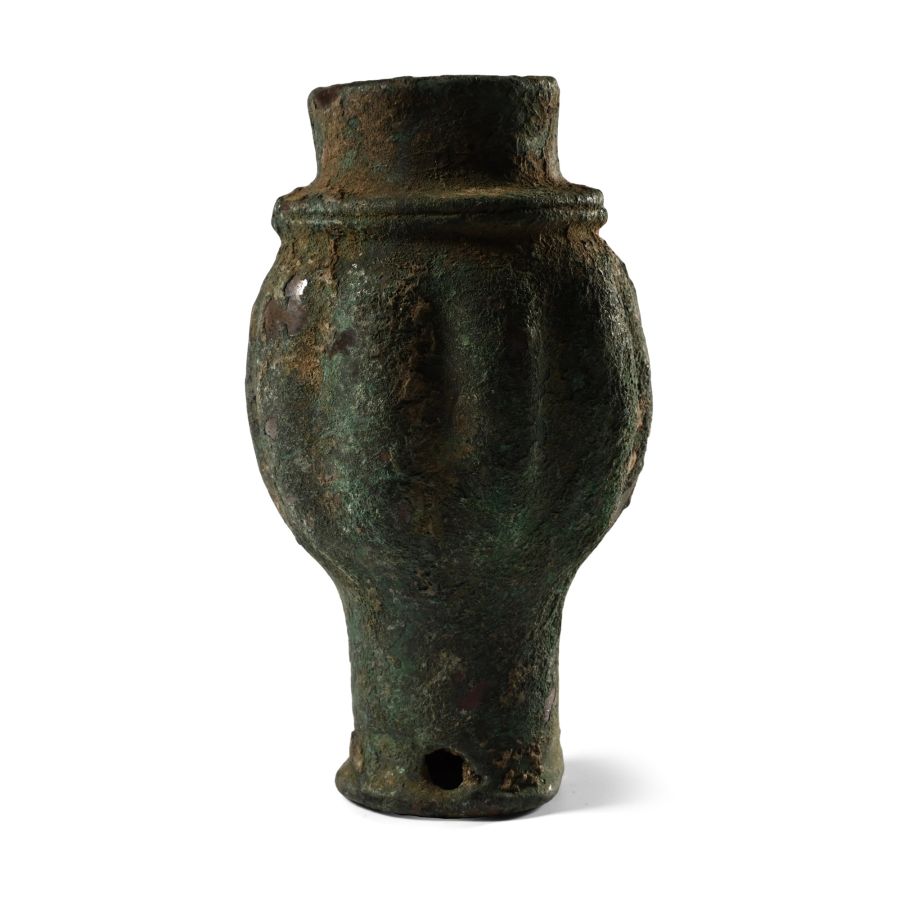
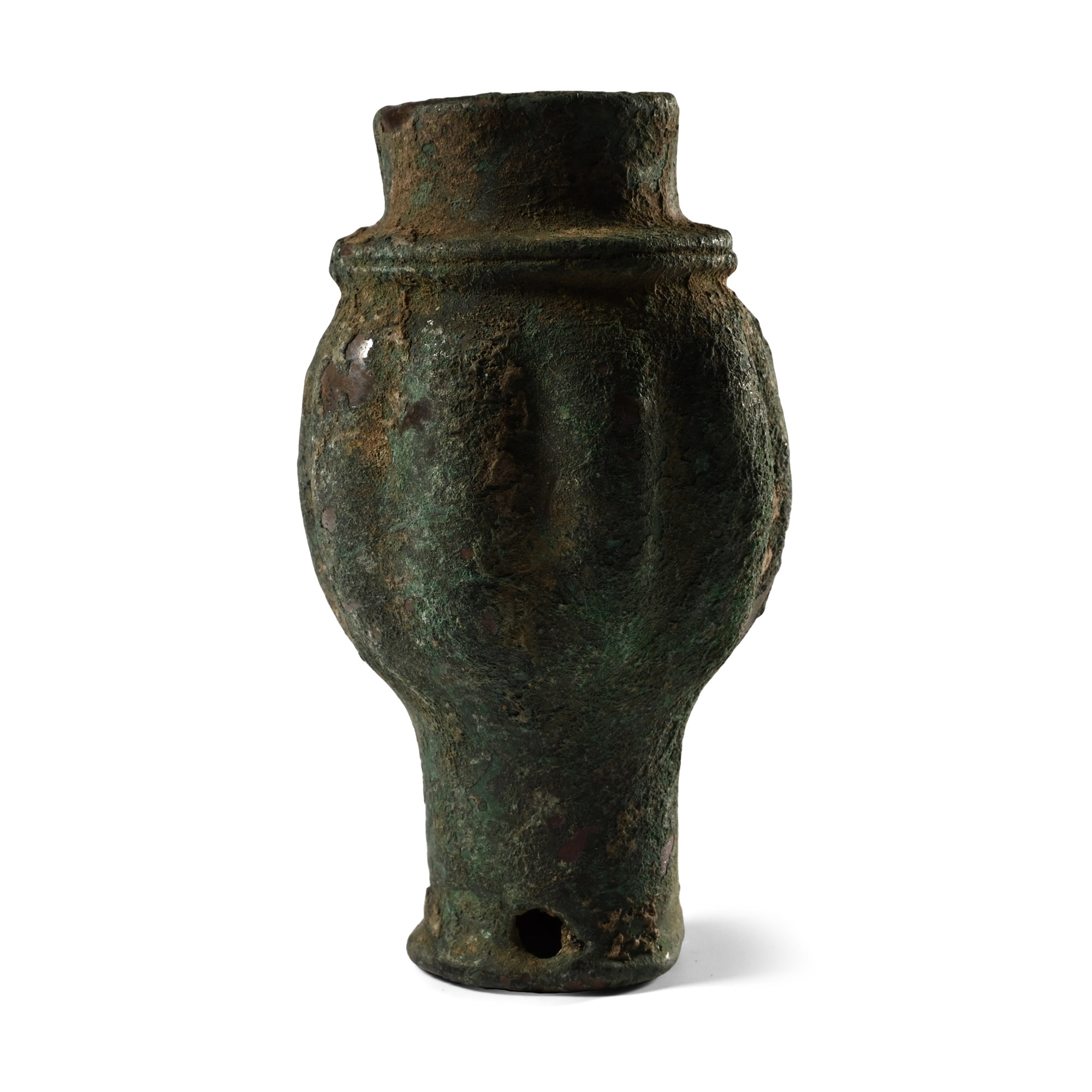
Luristan Bronze Macehead
13TH-7TH CENTURY B.C.
3 7/8 in. (416 grams, 98 mm).
Comprising a cylindrical shaft with flared mouth, rounded flanges around the swollen head, horizontal stepped bands; Sara Gorz type.
ProvenanceAcquired 1980-2015.
Ex Abelita family collection.
This lot is accompanied by an illustrated lot declaration signed by the Head of the Antiquities Department, Dr Raffaele D’Amato.
Cf. Musé Cernuschi, Bronzes du Luristan: Enigmes De L'Iran Ancien IIIe-Ier millénaire ac. j.-c., Paris musées, 2008, p.103, for type.
CONDITIONTimeLine Auctions follows a vetting process to ensure the authenticity and legality of all items, reinforcing our commitment to integrity and responsible trading. Each antiquity, antique, and coin lot undergoes thorough examination by a vetting committee of at least ten external specialists, professional trade association members, scientists, and archaeologists: Our Vetting Process
AUCTIONS:
TimeLine is a leading auction house specialising in antiquities, ancient art, collectables, natural history, coins, medals, and books. Our auctions offer museums, collectors, historians, and enthusiasts the opportunity to acquire unique and historically significant pieces.
LOT 1630
Luristan Bronze Macehead
Estimate £120 - 170€140 - 200 (for guidance only)$160 - 230 (for guidance only)
-
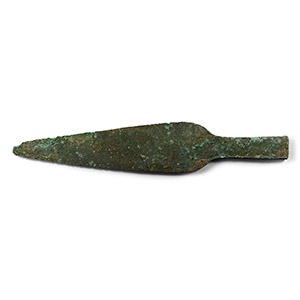
Western Asiatic Integral Hilted Bronze Short Sword
Late 3rd-2nd millennium B.C.Estimate: £250 - 350 (+bp*)
Opening Bid: £130
With a broad, lentoid-section flat blade, rounded tip, sloping sides, well marked shoulders with wide but short tang. 713 grams, 43.5 cm
Acquired 1980-2015. Ex Abelita family collection. This lot is accompanied by an illustrated lot declaration signed by the Head of the Antiquities Department, Dr Raffaele D’Amato.
The sword finds similarity with a one from the Royal Cemetery of Ur. This is the most primitive form of dagger, consisting of a simple, pointed blade having slightly convex outline shoulders sloping to a short tang which has no rivets, and was probably hafted to wood with bitumen. -
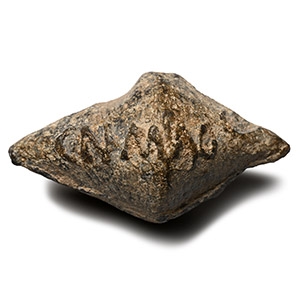
Roman 'Pompey the Great' Lead Slingshot
1st century B.C.Sold for (Inc. bp): £364
Biconical lead slingshot (glans) with inscription in Latin letters 'CN' (Cneius) 'MAG' (Magnus) on one side, and 'IMP' for 'IMPERATOR' (victorious general) to the other side, i.e Gnaeus Pompeius Magnus Imperator (Pompey the Great the victorious general). 81 grams, 47 mm
From the collection of a London antiquarian, formed since the 1980s. This lot is accompanied by an illustrated lot declaration signed by the Head of the Antiquities Department, Dr Raffaele D’Amato. -
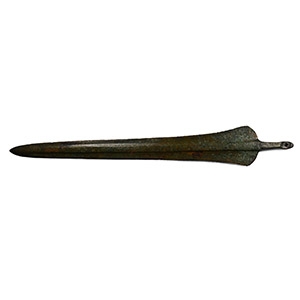
Luristan Bronze Spearhead Blade
14th-10th century B.C.Estimate: £250 - 350 (+bp*)
Opening Bid: £130
With rounded shoulders and square-sectioned mid-rib running to the blade tip; short tang with fastening hole. 45 grams, 46.5 cm
Acquired 1980-2015. Ex Abelita family collection. This lot is accompanied by an illustrated lot declaration signed by the Head of the Antiquities Department, Dr Raffaele D’Amato.
The spearhead belongs to the type VI spearhead of the Khorasani classification. It is characterised by a long blade and short tang, slightly rounded shoulders and pronounced midrib. Similar weapons were excavated by Prof. Negahban in the royal cemetery of Marlik.
