
Loading, please wait...
LOT 1265
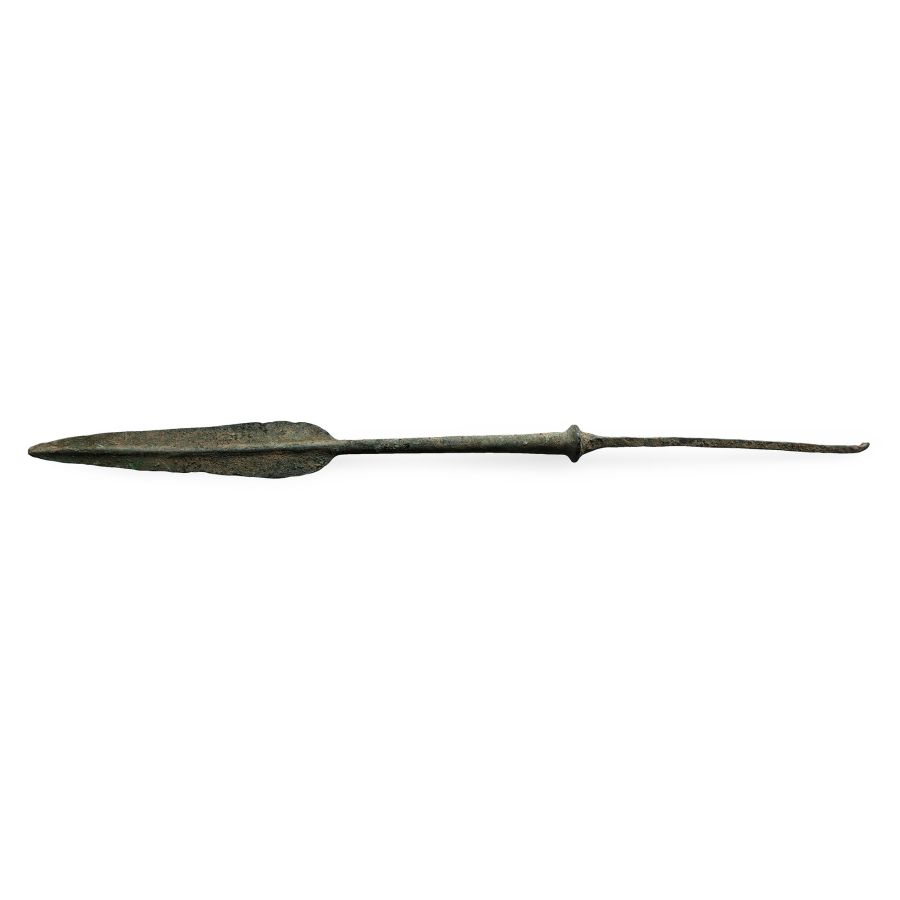
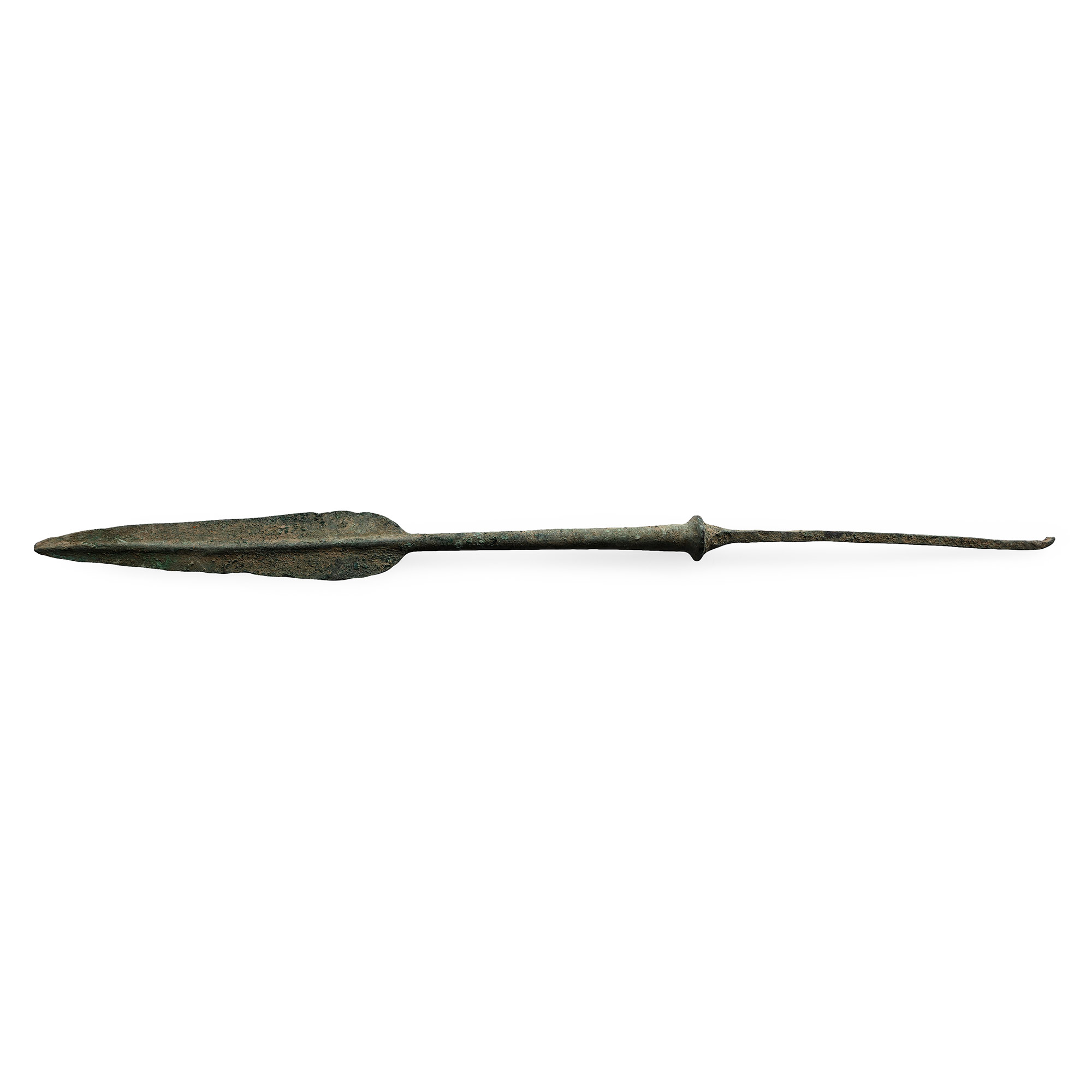
Luristan Bronze Javelin Head
2ND-1ST MILLENNIUM B.C.
18 1/2 in. (225 grams, 47 cm).
Comprising a slender leaf-shaped two-edged blade with midrib extending to a columnar neck expanding to a flared collar; square-section tang with bent finial.
ProvenanceAcquired in the 1990s.
Ex Abelita family collection.
This lot has been cleared against the Art Loss Register database, and is accompanied by an illustrated lot declaration signed by the Head of the Antiquities Department, Dr Raffaele D'Amato.
TimeLine Auctions follows a vetting process to ensure the authenticity and legality of all items, reinforcing our commitment to integrity and responsible trading. Each antiquity, antique, and coin lot undergoes thorough examination by a vetting committee of at least ten external specialists, professional trade association members, scientists, and archaeologists: Our Vetting Process
AUCTIONS:
TimeLine is a leading auction house specialising in antiquities, ancient art, collectables, natural history, coins, medals, and books. Our auctions offer museums, collectors, historians, and enthusiasts the opportunity to acquire unique and historically significant pieces.
LOT 1265
Luristan Bronze Javelin Head
Estimate £120 - 170€140 - 200 (for guidance only)$160 - 230 (for guidance only)
-
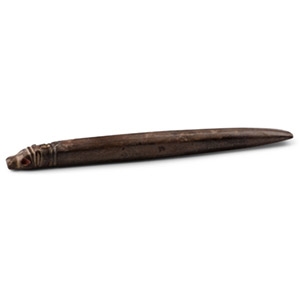
Mesopotamian Stone Animal-Headed Implement
3rd-2nd millennium B.C.Estimate: £600 - 800 (+bp*)
Opening Bid: £150
Square-section long body with rounded edges, tapered and flattened to one end; stylised zoomorphic finial to the other end with one white eye inlay, pierced for suspension. 42.4 grams, 15.1 cm
From an important collection pre 1988. From a private UK collection. This lot has been cleared against the Art Loss Register database, and is accompanied by an illustrated lot declaration signed by the Head of the Antiquities Department, Dr Raffaele D'Amato. -
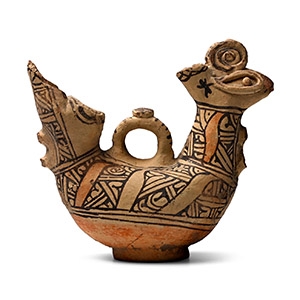
Western Asiatic Terracotta Bichrome Bird Vessel
8th-9th century A.D.Sold for (Inc. bp): £468
Lentoid in plan with central loop handle, spout formed as a bird-head with coiled crest, rear a broad vent with openwork strainer; painted foliage and reserved bands. 387 grams, 17 cm
UK collection, 1990s. Acquired on the UK art market, before 2000. Private collection, Mr M.V., a London-based businessman. This lot has been cleared against the Art Loss Register database, and is accompanied by an illustrated lot declaration signed by the Head of the Antiquities Department, Dr Raffaele D'Amato. -
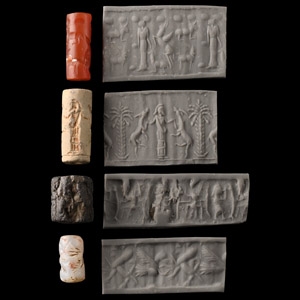
Mesopotamian Stone Cylinder Seal Collection
2nd-1st millennium B.C. and laterSold for (Inc. bp): £390
Comprising four seals in carnelian and other materials, depicting: standing figure in flounced robe holding two ibexes by the foreleg, date-palm in the field; opposed gryphon and perching bird of prey; figure and quadruped in a landscape; standing robed figure with recumbent oxen to each side, rampant gryphon. 15.78 grams total, 16-27 mm
UK private collection before 2000. Acquired on the UK art market. Private collection, London, UK. This lot has been cleared against the Art Loss Register database, and is accompanied by an illustrated lot declaration signed by the Head of the Antiquities Department, Dr Raffaele D'Amato.
