
Loading, please wait...
LOT 0892
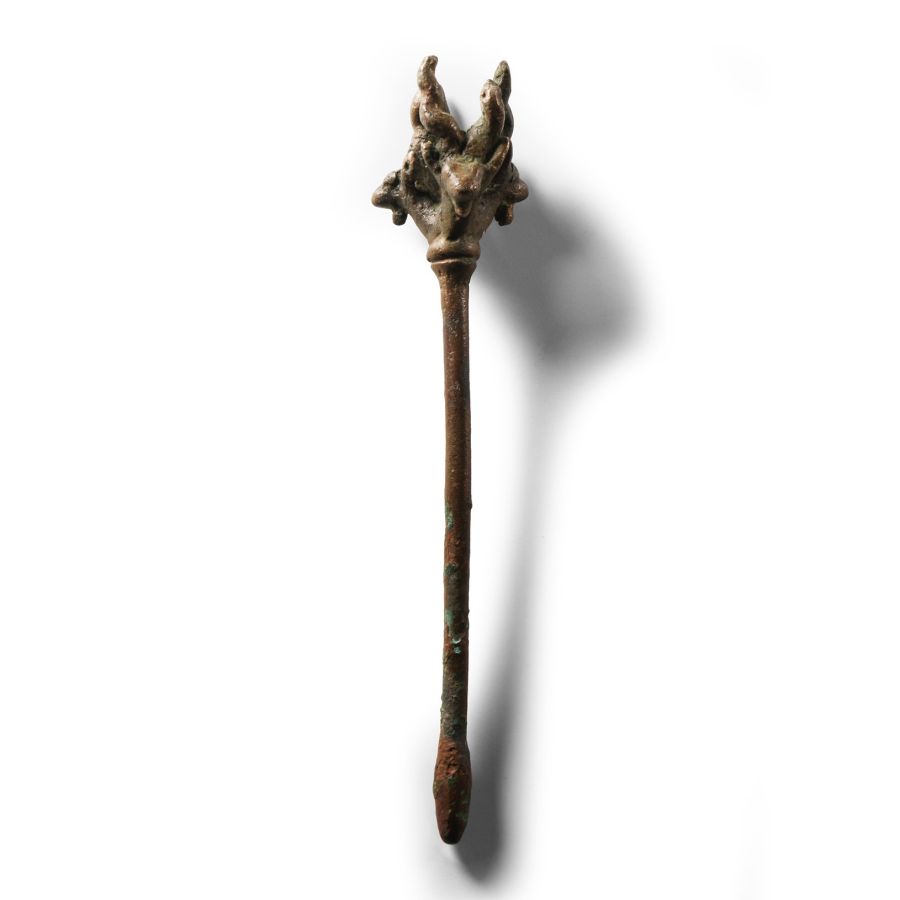
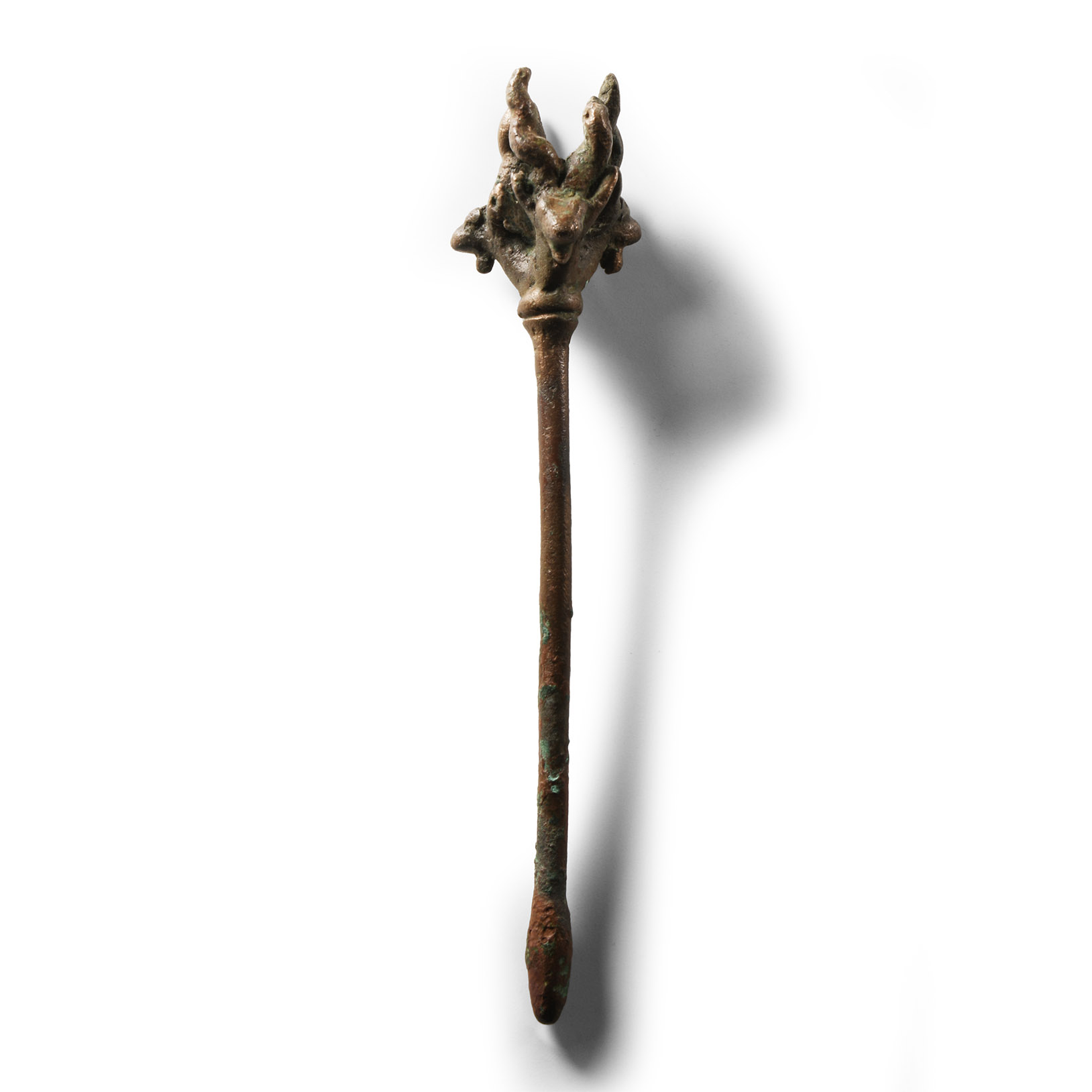
Luristan Bronze Implement with Antelope Heads
11TH-8TH CENTURY B.C.
6 1/2 in. (88 grams, 16.5 cm).
With a rounded end, the substantial finial formed of three ibex heads with spiralling horns. [No Reserve]
ProvenanceFrom a UK private collection, before 1980.
CONDITIONTimeLine Auctions follows a vetting process to ensure the authenticity and legality of all items, reinforcing our commitment to integrity and responsible trading. Each antiquity, antique, and coin lot undergoes thorough examination by a vetting committee of at least ten external specialists, professional trade association members, scientists, and archaeologists: Our Vetting Process
AUCTIONS:
TimeLine is a leading auction house specialising in antiquities, ancient art, collectables, natural history, coins, medals, and books. Our auctions offer museums, collectors, historians, and enthusiasts the opportunity to acquire unique and historically significant pieces.
-
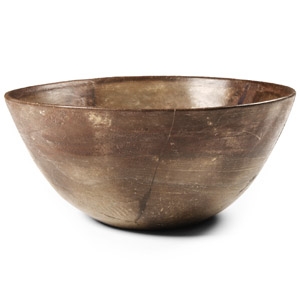
Western Asiatic Bowl with Cross
1st millennium B.C.Sold for (Inc. bp): £65
Comprising a deep body with flat base; the interior with a large painted cross motif extending to the rim with triangles on the field between the cross arms; repaired. 140 grams, 13.2 cm
London, UK gallery, 1971-early 2000s. -
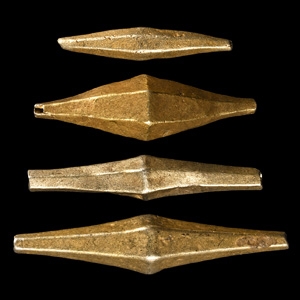
Ancient Large Gold Bead Collection
Circa 1st millennium B.C.Sold for (Inc. bp): £468
Group of facetted biconical types. 4.51 grams total, 17-27 mm
From a late Japanese specialist collector, 1970-2000s. -
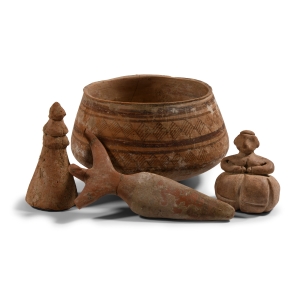
Indus Valley Painted Terracotta Bowl Decorated with Figures
Circa 2000 B.C. and laterSold for (Inc. bp): £416
Comprising: a squat biconical bowl with broad base, tiered bands of geometric hatched ornament in red and brown shades; terracotta idol figure with raised arms, dimpled rump and hooked head; offered with a later ceramic figurine and a conical pylon. 727 grams total, 6.8 - 15 cm
Acquired 1980-2015. Ex Abelita family collection.
