
Loading, please wait...
LOT 0298
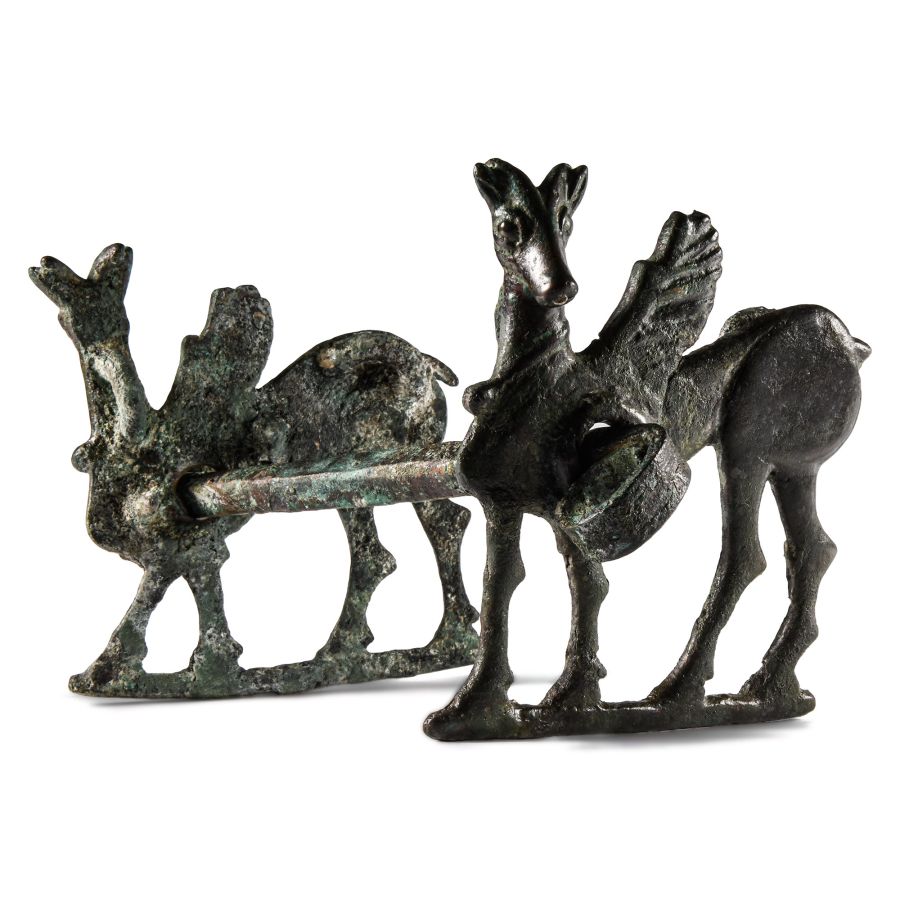
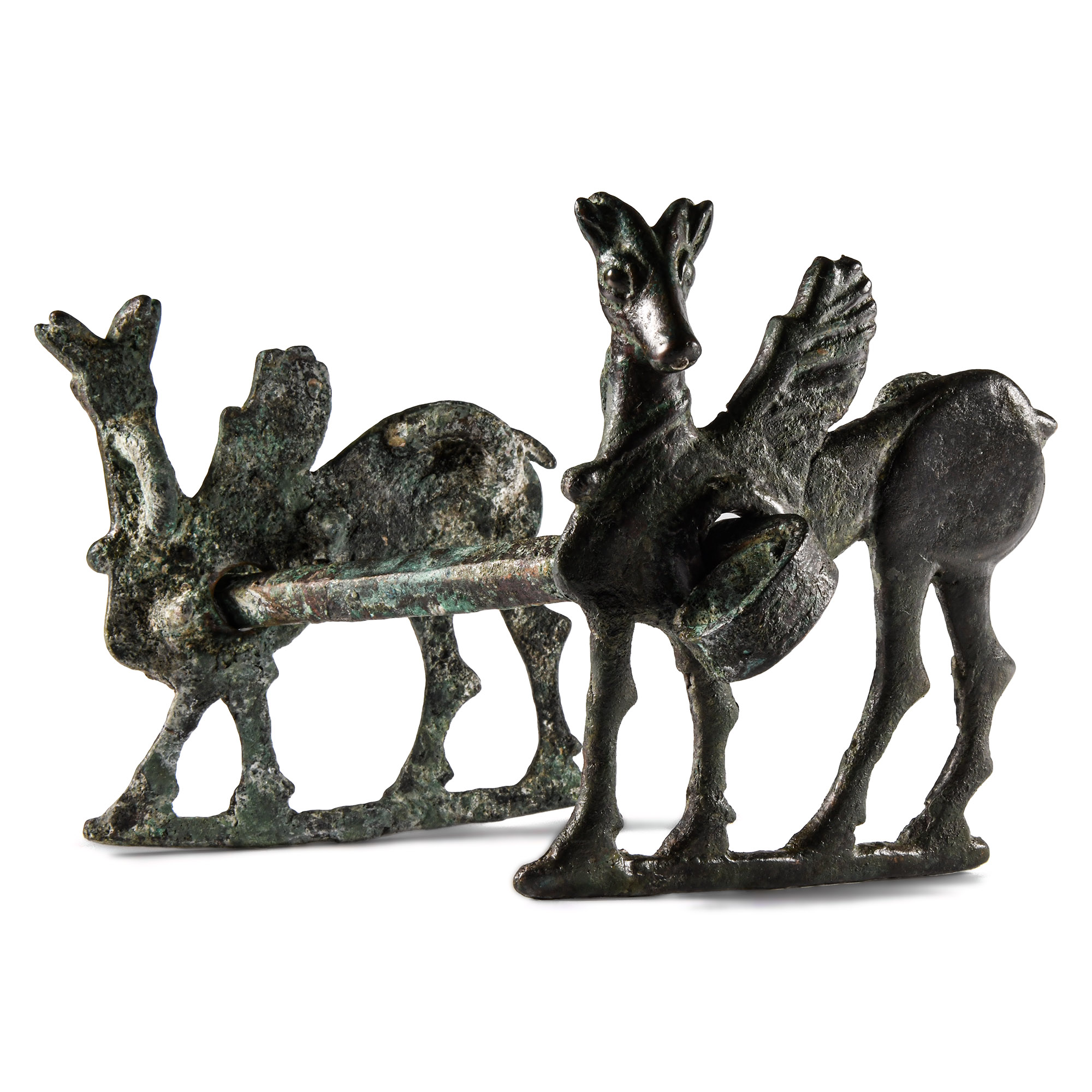
Luristan Bronze Horse Bit
9TH-8TH CENTURY B.C.
6 7/8 in. (543 grams, 17.5 cm).
The cheekpieces formed as winged deer with horns and small ears, a circular opening to the body for the bar to pass through, two loops and studs to the reverse; the bar with looped circular terminals.
ProvenanceEx old English collection.
London art market, pre 2000.
Property of a Lonodon, UK, gentleman.
Cf. Haerink, E., Overlaet, B., 'Finds from Khatunban B – Badavar Valley (Luristan) in the Iran Bastan Museum' in Iranica Antiqua, January 2004, pp.105-168, pl.5, for a similar.
FootnotesThe most admirable horse bits ever created by man are undoubtedly those from Luristan, a province which extended along the valleys that make up the central part of the Zagros mountains. Worked in cast bronze with the lost wax process, they almost always had a rigid cannon in round or square bars which were flattened and rolled up around themselves at the ends, but their exceptional feature were the figural side bars. The local metalsmiths, in a period of time between 1200 and 700 B.C. managed to create an infinite number of typologies: horses, oxen, ibex, roosters and various mythological animals.
CONDITIONTimeLine Auctions follows a vetting process to ensure the authenticity and legality of all items, reinforcing our commitment to integrity and responsible trading. Each antiquity, antique, and coin lot undergoes thorough examination by a vetting committee of at least ten external specialists, professional trade association members, scientists, and archaeologists: Our Vetting Process
AUCTIONS:
TimeLine is a leading auction house specialising in antiquities, ancient art, collectables, natural history, coins, medals, and books. Our auctions offer museums, collectors, historians, and enthusiasts the opportunity to acquire unique and historically significant pieces.
-
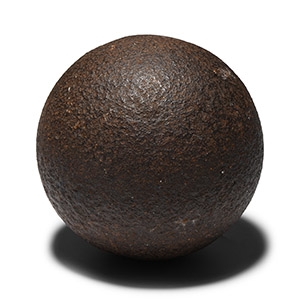
English Civil War Iron Cannon Ball
1642-1651 A.D.Sold for (Inc. bp): £182
Possibly made for a naval long gun, a 'long nine'. 4.3 kg, 98 mm wide
Found in a churchyard in Derbyshire, UK, before 1950. Acquired from the son of the clergyman that found it, in 2004. Property of a Nottinghamshire gentleman. -
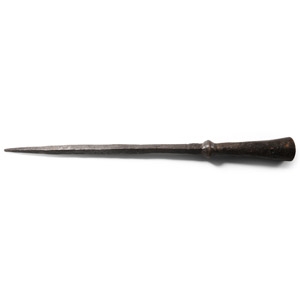
Medieval Iron Socketted Javelin
Circa 15th-16th century A.D.Sold for (Inc. bp): £111
With square-section spike and flaring socket. 342 grams, 36 cm
Ex California, USA, collection formed since the late 1960s. European art market before the late 1990s. -
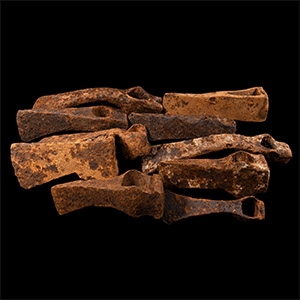
Viking Age and Later Axehead Group
Circa 11th-18th century A.D.Estimate: £100 - 140 (+bp*)
Opening Bid: £50
Comprising socketted axeheads of various types; some possibly stamped with maker's marks. 7 kg total, 16-24.5 cm
Acquired 1990s-early 2000s. East Anglian private collection.
