
Loading, please wait...
_900x900.jpg "Luristan Bronze Dirk")
_200x200.jpg "Luristan Bronze Dirk")
.jpg "Luristan Bronze Dirk")
LOT 1517
Luristan Bronze Dirk
2ND-1ST MILLENNIUM B.C.
14 1/2 in. (275 grams, 37 cm).
With a parallel-sided blade curving to a point, with a broad mid-rib, and a rectangular-section tang.
ProvenanceEx Abelita family collection, 1980s-2000s.
LiteratureCf. MacGregor, A. (ed.), Antiquities from Europe and the Near East in the Collection of Lord McAlpine of West Green, Oxford, 1987, item 17.25, for type.
FootnotesMacGregor dated such blades to the Late Bronze Age or Early Iron Age. Moorey, Gordon and Khorasani created a classification of bladed weapons, according to which daggers are edged weapons no greater than 36cm in length, dirks (short swords) are between 36cm and 50cm in length, and swords are edged weapons greater than 50cm in length.
CONDITIONTimeLine Auctions follows a vetting process to ensure the authenticity and legality of all items, reinforcing our commitment to integrity and responsible trading. Each antiquity, antique, and coin lot undergoes thorough examination by a vetting committee of at least ten external specialists, professional trade association members, scientists, and archaeologists: Our Vetting Process
AUCTIONS:
TimeLine is a leading auction house specialising in antiquities, ancient art, collectables, natural history, coins, medals, and books. Our auctions offer museums, collectors, historians, and enthusiasts the opportunity to acquire unique and historically significant pieces.
-
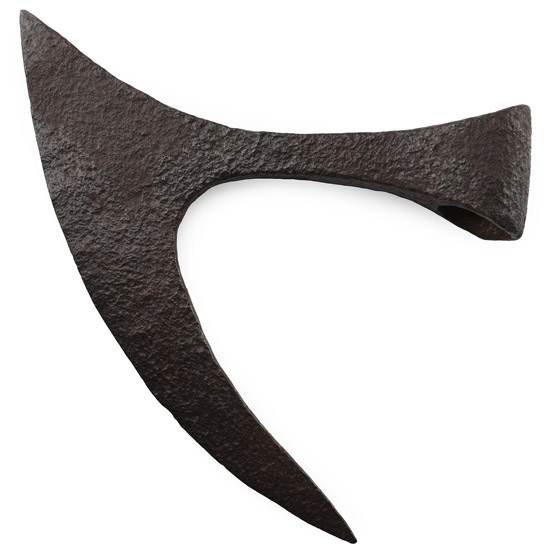
Viking Hooked Iron Axehead
Circa 9th-11th century A.D.Sold for (Inc. bp): £442
With broad curved blade and pointed chin, tapering neck, deep socket. 366 grams, 20.1 cm
Ex North American private collection, 1970s. -
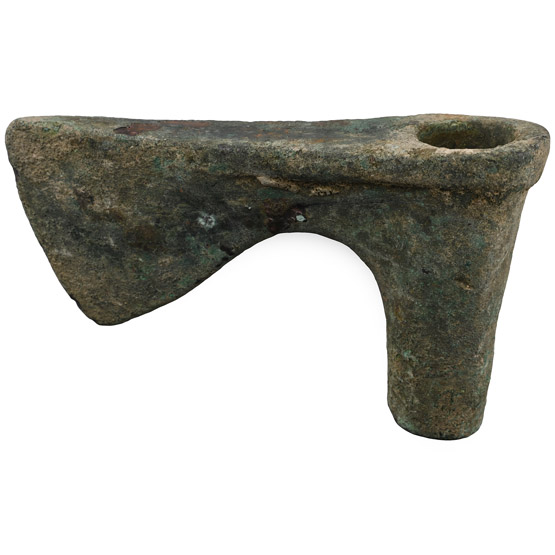
Luristan Bronze Socketted Axehead
2nd-1st millennium B.C.Estimate: £100 - 140 (+bp*)
Opening Bid: £50
With a short socketted shaft and flange to the mouth, broadening blade towards the cutting edge. 367 grams, 12 cm
Ex Abelita family collection, 1980s-2000s. -
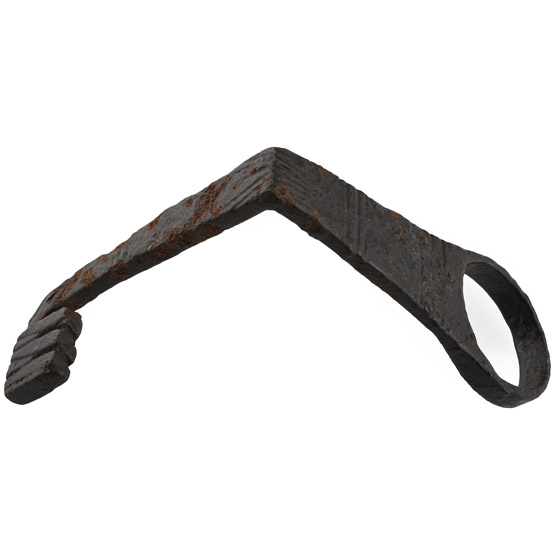
Late Roman Iron Latch Key
4th-5th century A.D.Sold for (Inc. bp): £39
Comprising a broad bow and short shank, perpendicular stem with incised notching to the lateral bit. 31.15 grams, 67 mm
Ex German art market, 2000s. Acquired from an EU collector living in London. From the collection of a Surrey, UK, gentleman.
