
Loading, please wait...
LOT 1572
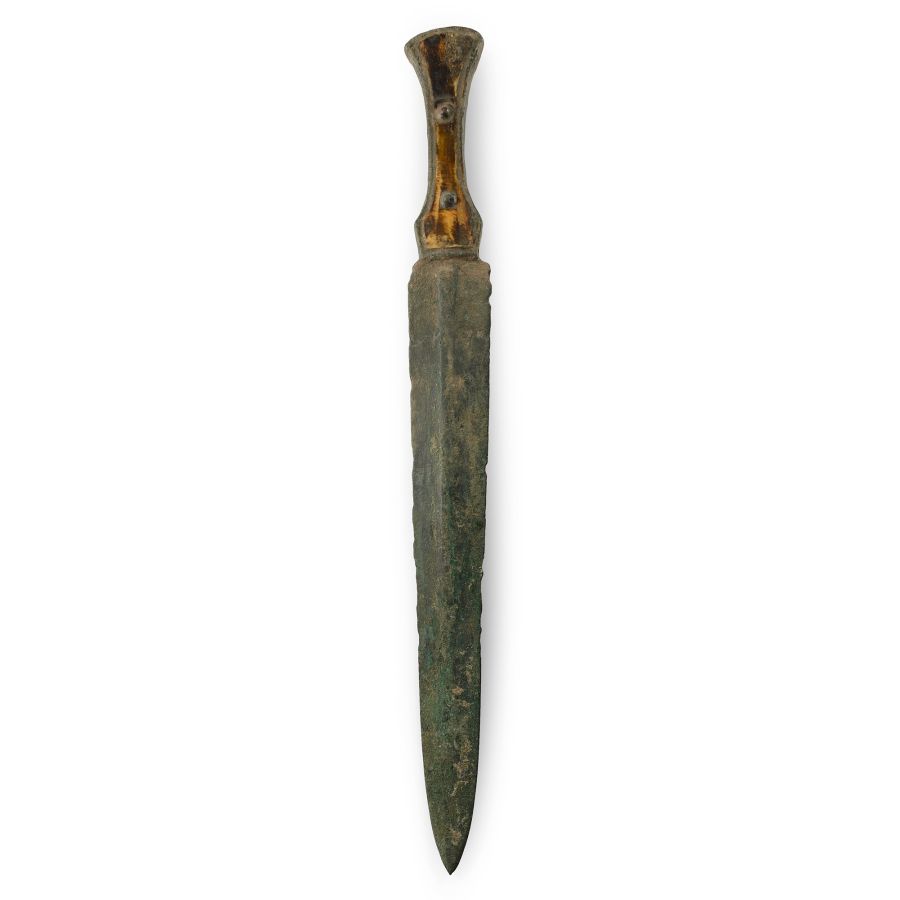
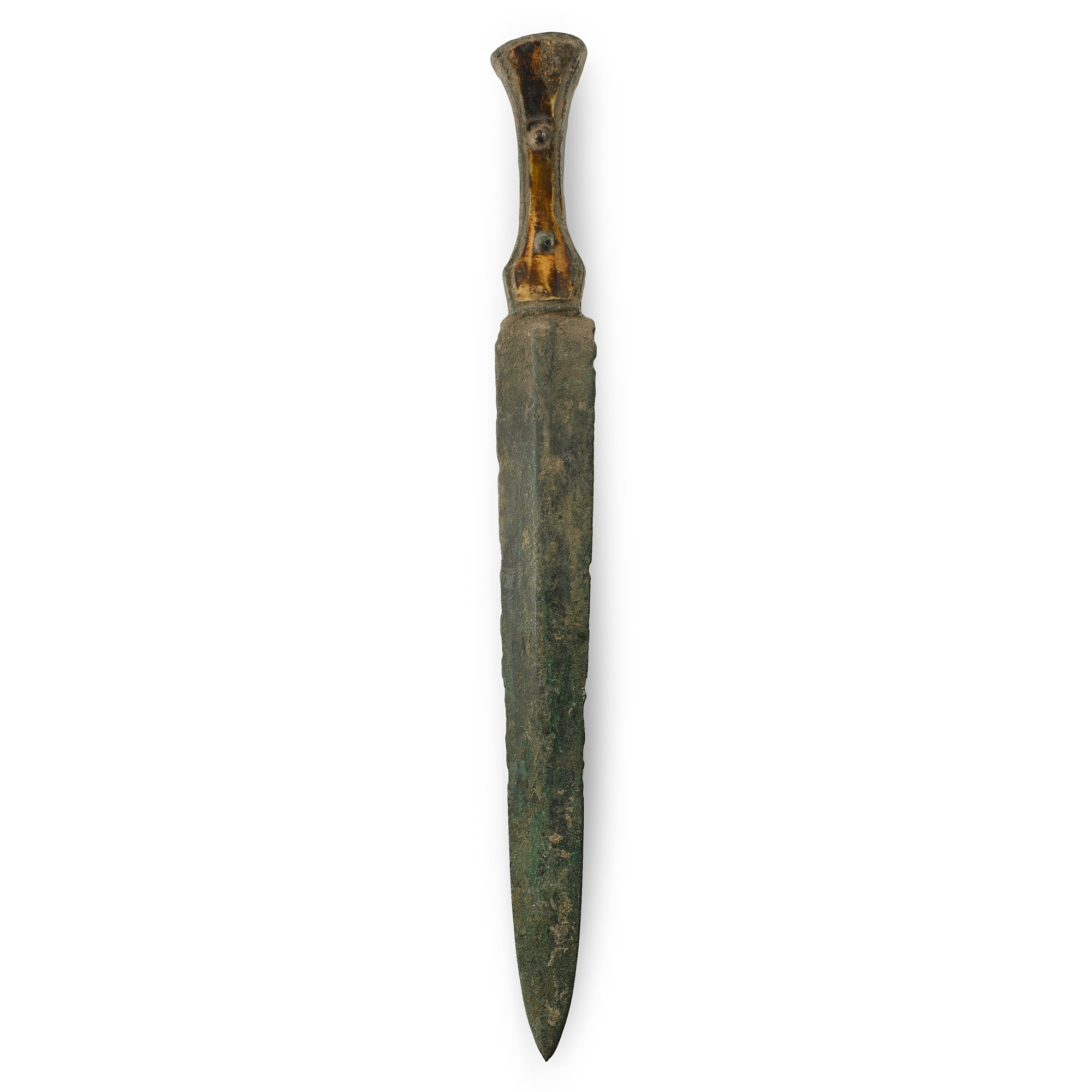
Luristan Bronze Dirk
10TH CENTURY B.C.
13 3/8 in. (228 grams, 34 cm).
A short sword with lentoid-section triangular blade, rhomboid guard, hilt with later organic filling to each face.
ProvenanceAcquired 1980-2015.
Ex Abelita family collection.
This lot is accompanied by an illustrated lot declaration signed by the Head of the Antiquities Department, Dr Raffaele D’Amato.
Cf. Khorasani, M.M., Arms and Armour from Iran. The Bronze Age to the End of the Qajar Period, Tübingen, 2006, item 9, for type.
FootnotesThe type Dirk I according to the classification of Medvedskaya is common among dirks and daggers attributed to Luristan. The hilt is flanged and accepts inlays remnants of organic material on the handle. There are also two angular indentations on each side of the guard.
CONDITIONTimeLine Auctions follows a vetting process to ensure the authenticity and legality of all items, reinforcing our commitment to integrity and responsible trading. Each antiquity, antique, and coin lot undergoes thorough examination by a vetting committee of at least ten external specialists, professional trade association members, scientists, and archaeologists: Our Vetting Process
AUCTIONS:
TimeLine is a leading auction house specialising in antiquities, ancient art, collectables, natural history, coins, medals, and books. Our auctions offer museums, collectors, historians, and enthusiasts the opportunity to acquire unique and historically significant pieces.
-
.jpg)
Western Asiatic Bronze Short Sword with Mushroom Pommel
Late 2nd-early 1st millennium B.CEstimate: £400 - 600 (+bp*)
Opening Bid: £222
The hilt with mushroom-shaped pommel, round grip, crescentic guard, long sloping blade with rectangular-section mid-ridge. 1.04 kg, 56.5 cm
Ex London, UK, collection, 1990s. This lot is accompanied by an illustrated lot declaration signed by the Head of the Antiquities Department, Dr Raffaele D’Amato.
This category of swords has been classified by Khorasani as 'swords with a mushroom pommel' and are usually characterised by a solid-cast hilt with a penannular guard, a ribbed or variously decorated grip and the conical hollow-cast mushroom pommel. Usually the blade is multi-fullered and tapers to a sharp tip. Moorey considers them to be from the end of the 2nd millennium B.C. -
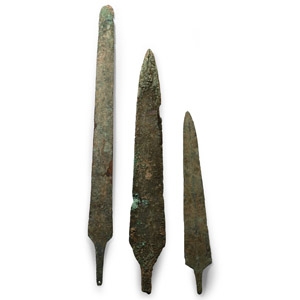
Western Asiatic Bronze Dagger Group
2nd millennium B.C.Sold for (Inc. bp): £124
With a narrow pointed blade and wide shallow raised flange to the centre, straight sides, well marked shoulders with narrow tang, one rivet hole still preserved in one specimen. 358 grams total, 20.7-33.5 cm
Acquired 1980-2015. Ex Abelita family collection. This lot is accompanied by an illustrated lot declaration signed by the Head of the Antiquities Department, Dr Raffaele D’Amato.
The type was technically more advanced than previous types of blades in the Near East, owing to the shape of the weapon, with its slightly convex sides widening out near the point, which combined the advantages of the leaf-shaped and straight-sided forms. This kind of dagger was used in the early second millennium in Mesopotamia and in Syria, and as late as the mid-first millennium in Luristan. -
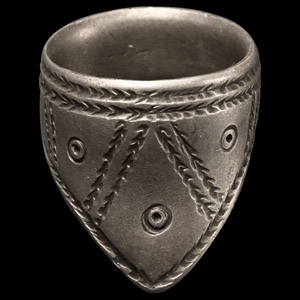
Large Medieval Silver Archer's Thumb Ring
15th century A.D.Sold for (Inc. bp): £208
With barrel-shaped hoop and triangular spur, impressed ropework bands and ring-and-dot motifs. 17.36 grams, 27.91 mm overall, 20.93 mm internal diameter (approximate size British W, USA 11, Europe 25, Japan 24)
Ex German art market, 2000s. Acquired from an EU collector living in London. From the collection of Surrey, UK, gentleman. This lot is accompanied by an illustrated lot declaration signed by the Head of the Antiquities Department, Dr Raffaele D’Amato.
