
Loading, please wait...
LOT 1932
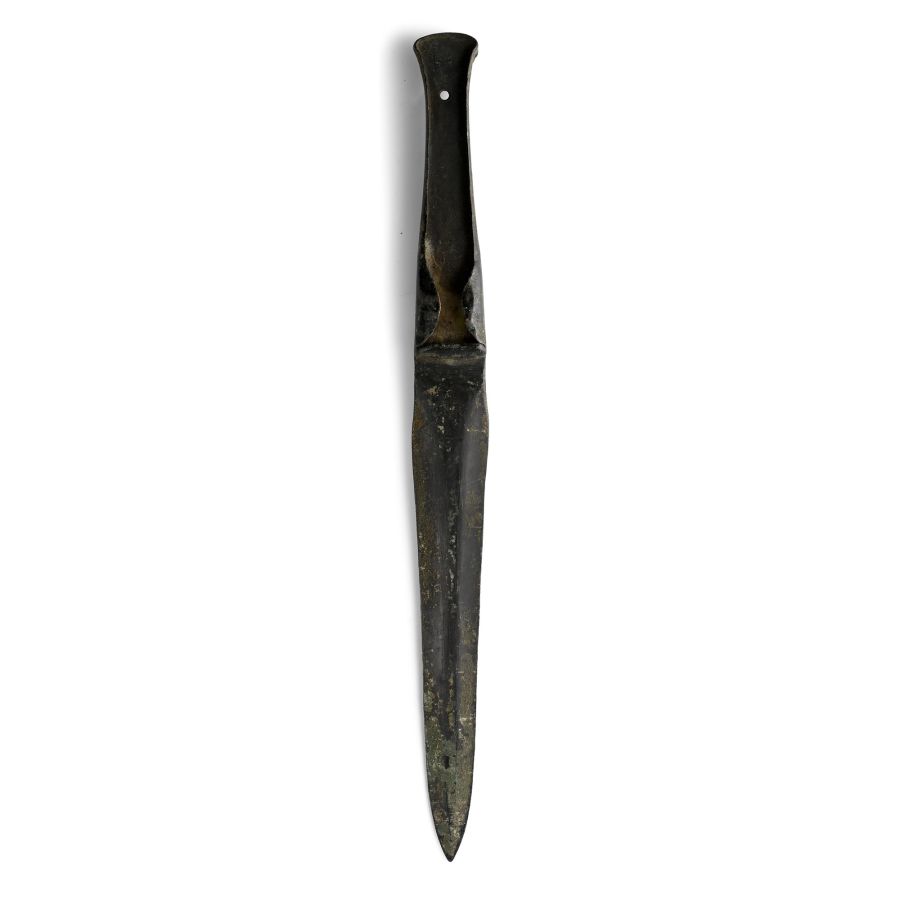
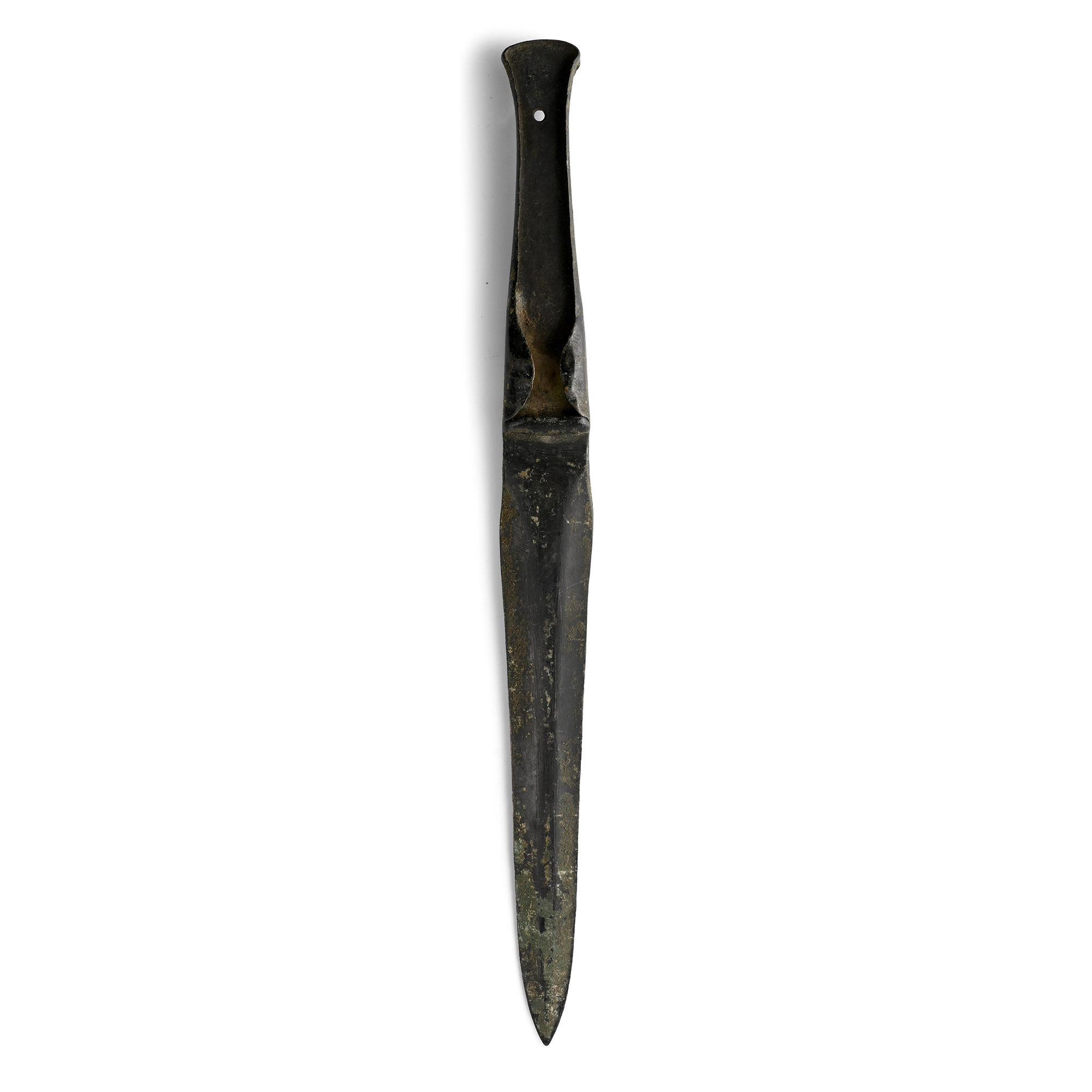
Luristan Bronze Dagger
13TH CENTURY B.C.
12 3/4 in. (185 grams, 32.5 cm).
With a lentoid-section blade, tongue-shaped in plan, with an integral tapering hilt with flared finial, lateral flanges to accept a panel of bone to each face forming the grip.
ProvenanceEx Abelita family collection, 1980s-2000s.
LiteratureCf. Khorasani, M.M., Arms and Armour from Iran - The Bronze Age to the End of the Qajar Period, Tübingen, 2006, p.381, cat.13.
FootnotesThe art of Luristan can be described as the art of nomadic herdsmen and horsemen with an emphasis on the crafting of small, easily portable objects, among these a great number of bronze weapons. The rich and noble aristocrats of the Luristan, Elamites, Hurrians, Lullubians, Kutians, and Kassites went to battle splendidly equipped and wore magnificent bronze armour, using maces, spears and daggers as offensive weapons, alongside spears, bows and arrows.
CONDITIONTimeLine Auctions follows a vetting process to ensure the authenticity and legality of all items, reinforcing our commitment to integrity and responsible trading. Each antiquity, antique, and coin lot undergoes thorough examination by a vetting committee of at least ten external specialists, professional trade association members, scientists, and archaeologists: Our Vetting Process
AUCTIONS:
TimeLine is a leading auction house specialising in antiquities, ancient art, collectables, natural history, coins, medals, and books. Our auctions offer museums, collectors, historians, and enthusiasts the opportunity to acquire unique and historically significant pieces.
LOT 1932
Luristan Bronze Dagger
Estimate £180 - 240€210 - 280 (for guidance only)$240 - 320 (for guidance only)
Opening Bid
£90 (EUR 104; USD 122) +BP*
-
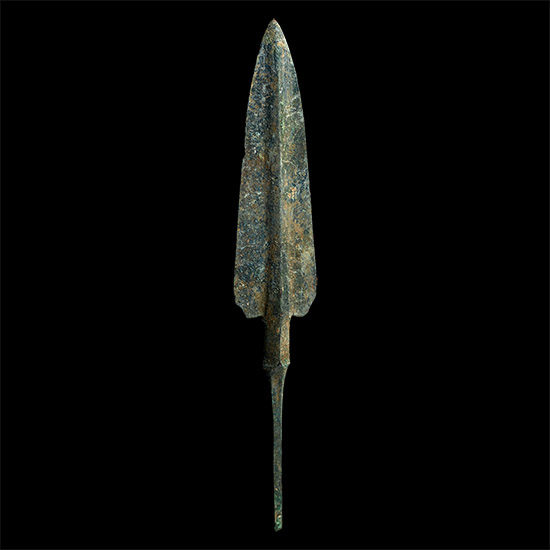
Large Luristan Bronze Arrowhead
2nd-1st millennium B.C.Estimate: £30 - 40 (+bp*)
Opening Bid: £5
With lanceolate head, square-section neck and rounded shoulders. 50.6 grams, 16.6 cm
From a UK collection formed in the 1980s. Property of an Essex, UK, gentleman. -
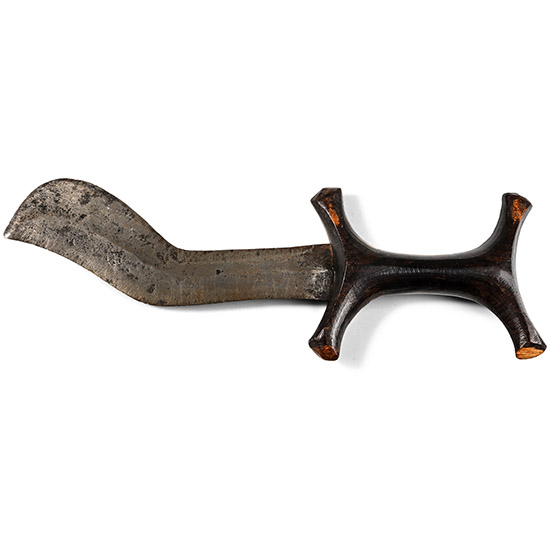
'Battle of Omdurman' Ham-Stringing Beja Knife
Sudan, late 19th century A.D.Estimate: £60 - 80 (+bp*)
Opening Bid: £5
With traditional X-shaped carved wooden hilt, narrow two-edged blade with hooked end for slicing; old collector's label 'Hamstringing Sudanese curved knife for slashing at horses' hocks. Probably from battle of Omdurman Sept. 2nd 1898'. 140 grams, 25.6 cm
From the private collection of Peter Clayton, FCILIP, Dip, Arch, FSA, FRNS, Hemel Hempstead, Hertfordshire, UK; formed since the late 1950s. -
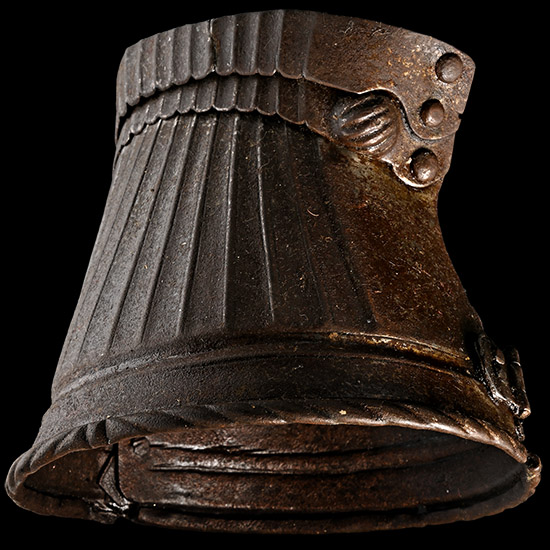
Maximilian Steel Mitten Gauntlet with Reference Number 1.32 in Yellow
Germany, circa early 16th century A.D.Estimate: £600 - 800 (+bp*)
Opening Bid: £300
Wrist and the upper hand section from an armoured gauntlet, with flared cuff and ropework detailing to the rim, vertical fluting to the cannon and two attached articulated plates; cannon hinged at one edge and with sliding catch to the other; marked '1.32'. 180 grams, 12 cm
Acquired on the UK art market. From a gentleman's collection in East Sussex, UK.
This armour part was destined to protect the hand and the wrist. The 'mitten gauntlet' consisted of a longer, narrow conical cuff tapering to the wrist and cut at the top to form a point. By the beginning of the 15th century, the 'mitten gauntlet' had become popular and was to remain so for the rest of the century and into the first half of the 16th century, especially in German-dominated areas of Europe.
