
Loading, please wait...
LOT 1522
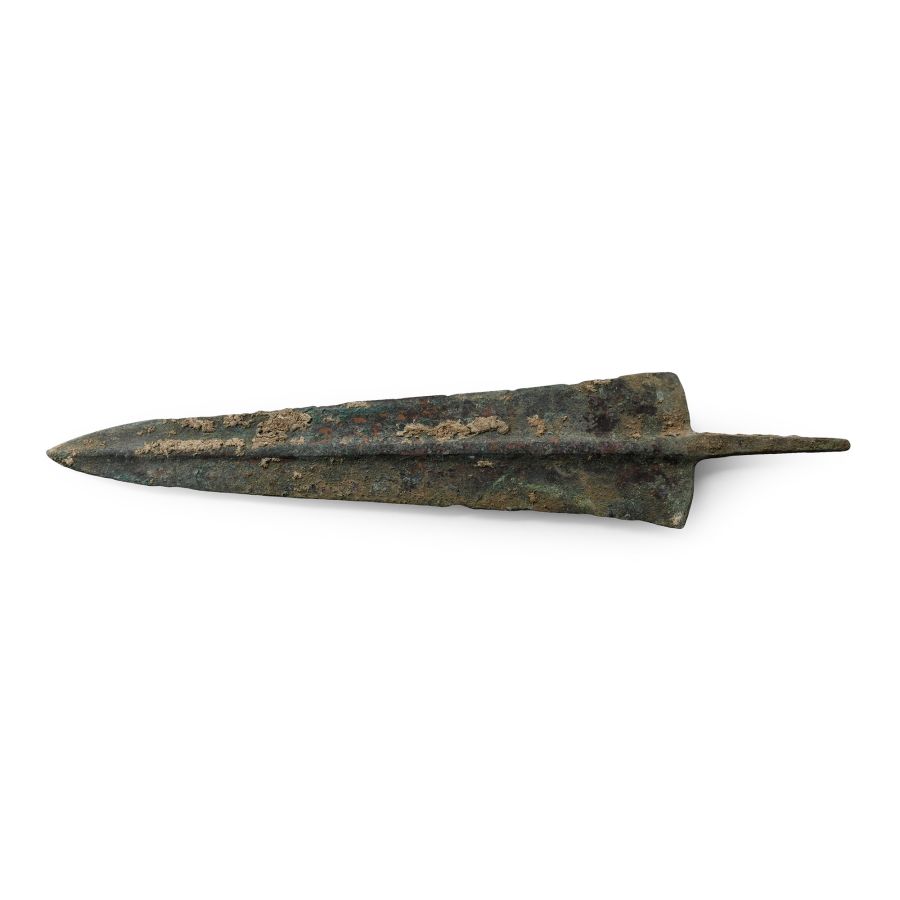
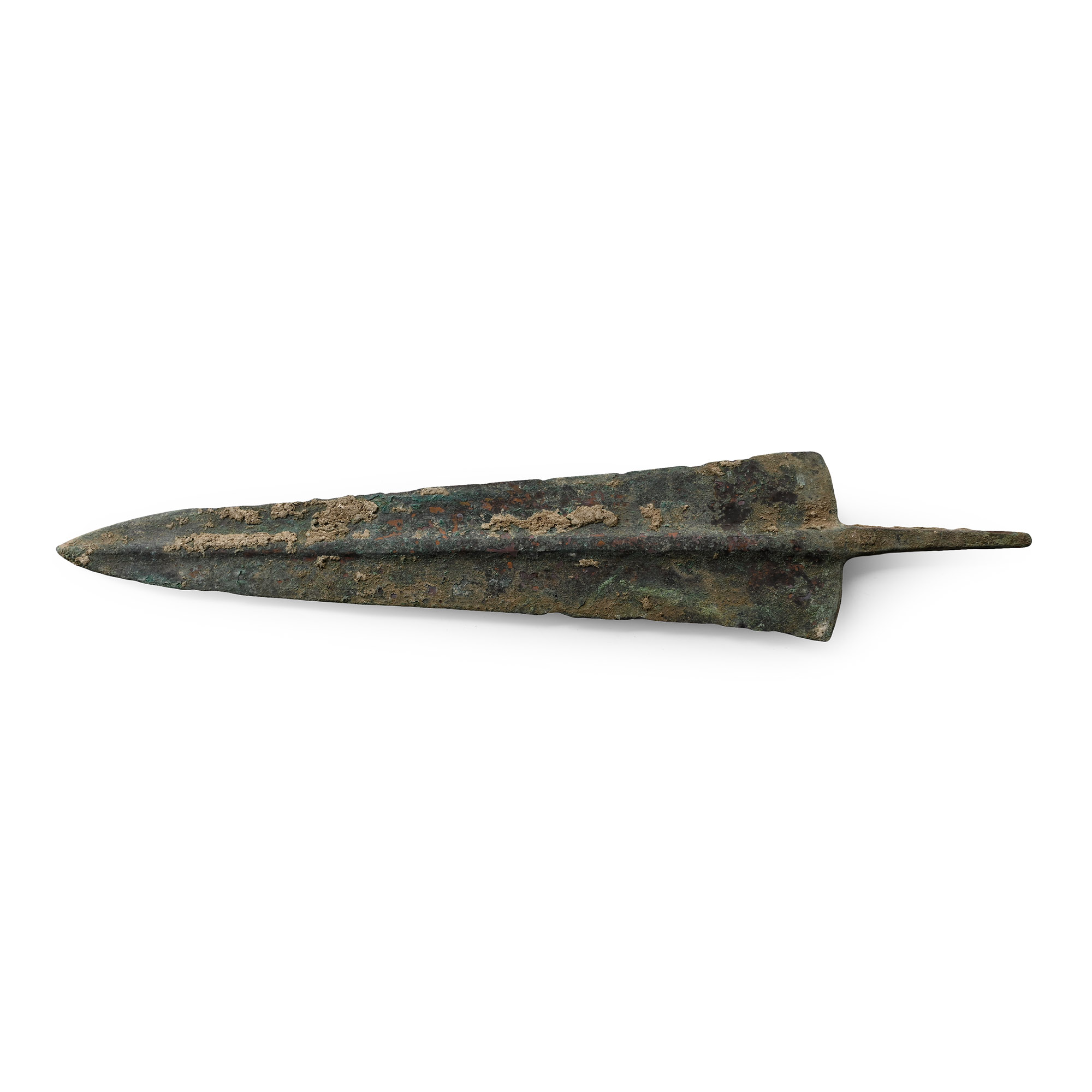
Luristan Bronze Dagger
EARLY 1ST MILLENNIUM B.C.
13 1/2 in. (241 grams, 34.4 cm).
Large triangular blade with raised midrib and a short, tapering tang.
ProvenanceEx Abelita collection, 1990s.
LiteratureCf. Christie’s, The Art of Warfare, the Axel Guttmann collection, Part I, Wednesday 6 November 2002, London, p.34, no.31, for a similar blade.
CONDITIONTimeLine Auctions follows a vetting process to ensure the authenticity and legality of all items, reinforcing our commitment to integrity and responsible trading. Each antiquity, antique, and coin lot undergoes thorough examination by a vetting committee of at least ten external specialists, professional trade association members, scientists, and archaeologists: Our Vetting Process
AUCTIONS:
TimeLine is a leading auction house specialising in antiquities, ancient art, collectables, natural history, coins, medals, and books. Our auctions offer museums, collectors, historians, and enthusiasts the opportunity to acquire unique and historically significant pieces.
-
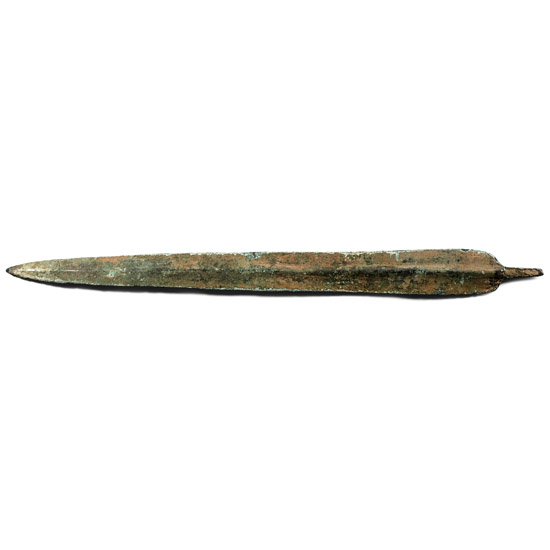
Western Asiatic Bronze Sword Blade
1st millennium B.C.Sold for (Inc. bp): £156
Slender double-edged blade with raised midrib and short tang. 224 grams, 42.2 cm
From a UK collection formed in the 1980s. Property of an Essex, UK, gentleman. -
.jpg)
Turkish Iron Dagger with Brass Hilt and Scabbard
Mid 20th century A.D.Sold for (Inc. bp): £169
Two-edged jambiya with narrow curved blade, two deep fullers and punched detailing with inset turquoise-coloured pellet; brass bolster and applied bone panels to the grip, silver facing to pommel; brass sheath with low-relief foliage and figural ornament, suspension rings. 211 grams, 23.2 cm
Previously acquired on the UK art market in the early 2000s. This item is for collection from our premises only. -
.jpg)
Scythian Iron Wide-Bladed Sword with Engraved Decoration
6th-5th century B.C.Estimate: £2,000 - 3,000 (+bp*)
Opening Bid: £750
Double-edged blade with a triangular point and squared shoulders, vertical ornamental lines on both sides of the blade, strong hilt with an engraved wave-like decoration on one side. 603 grams, 68 cm
From the private collection of a London gentleman, from his grandfather's collection formed before the early 1970s. Accompanied by an academic report by Dr Raffaele D'Amato. This lot has been checked against the Interpol Database of stolen works of art and is accompanied by search certificate number no.13300-257655.
From the 7th century B.C., the Scythian sword appears to be a two-edged, almost parallel-sided blade tapering towards the point, about 50-60 cm long, rarely reaching 70 cm in length. The present sword can be considered to be a particular type of Scythian akinakes, with strong influences from the Urartian Caucasian culture. The sword is very similar to an example from the Haimanova Mohyla barrow, and the hilt is similar to an example visible on the relief from the Yubilejnoe settlement (Lifanti-Shelekhan, 2022 figs.8,11), where swords of the Sindo-Maeotian type are depicted.
