
Loading, please wait...
LOT 0249
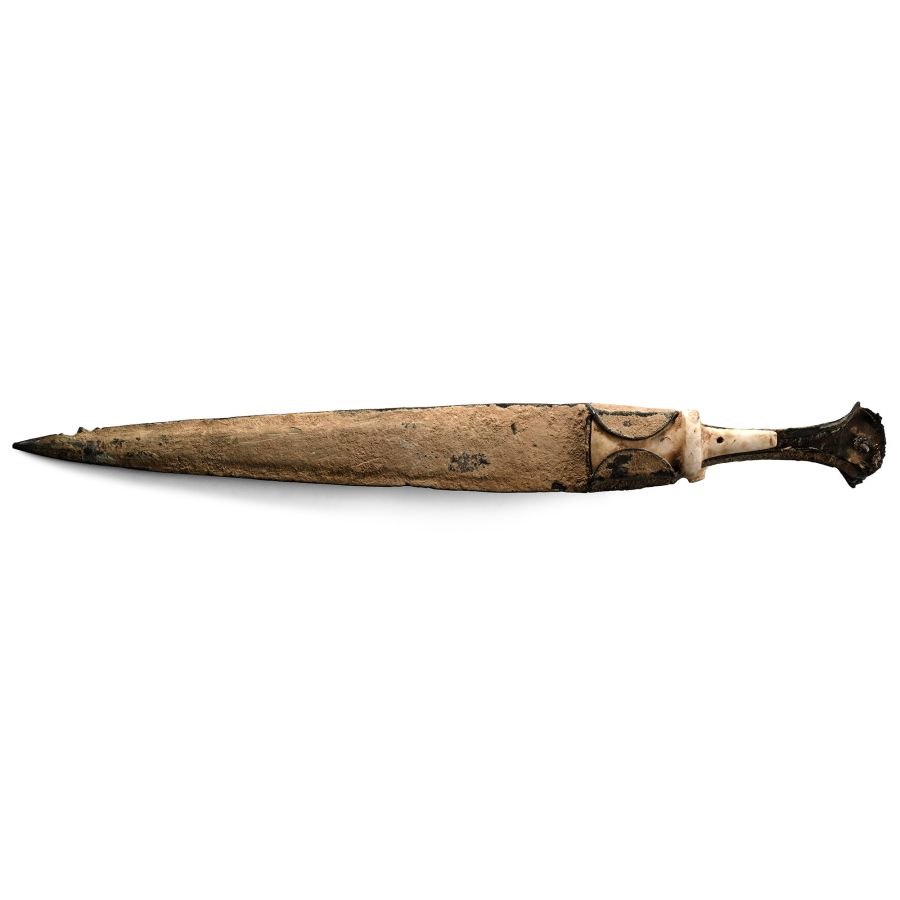
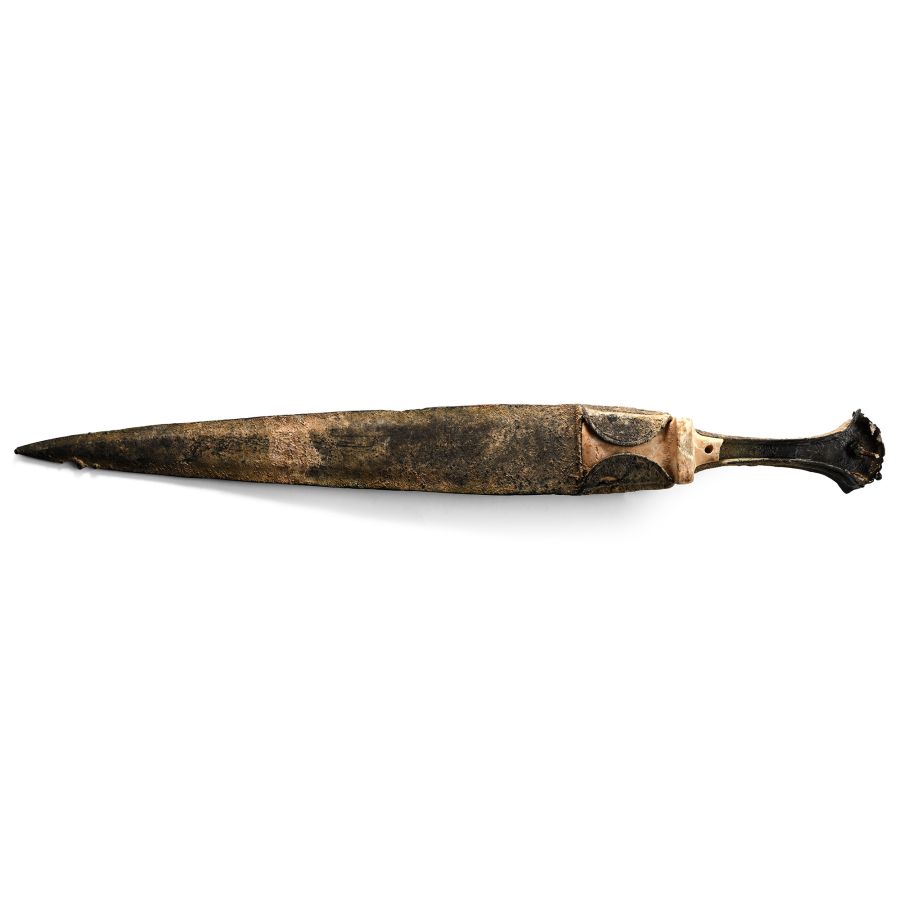
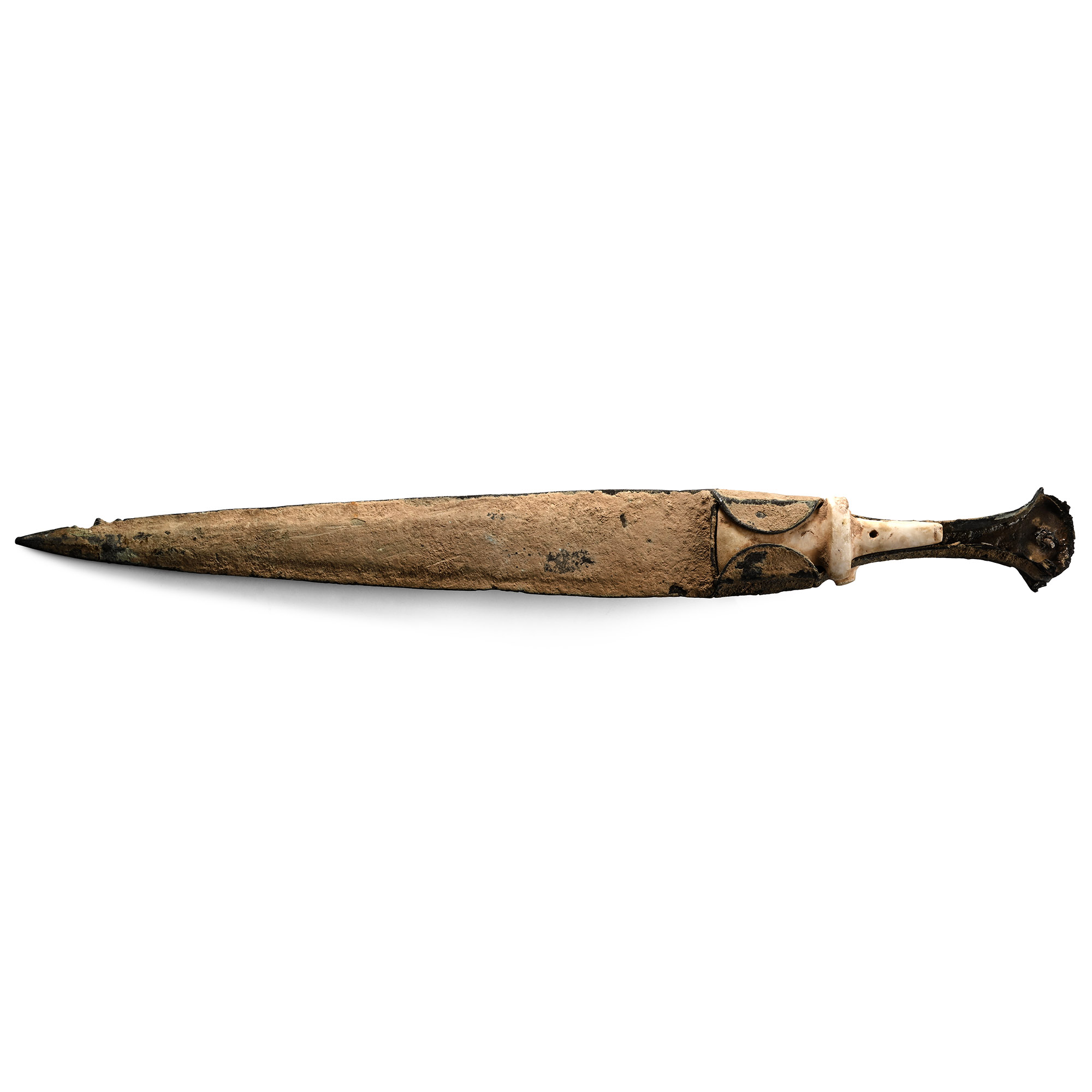
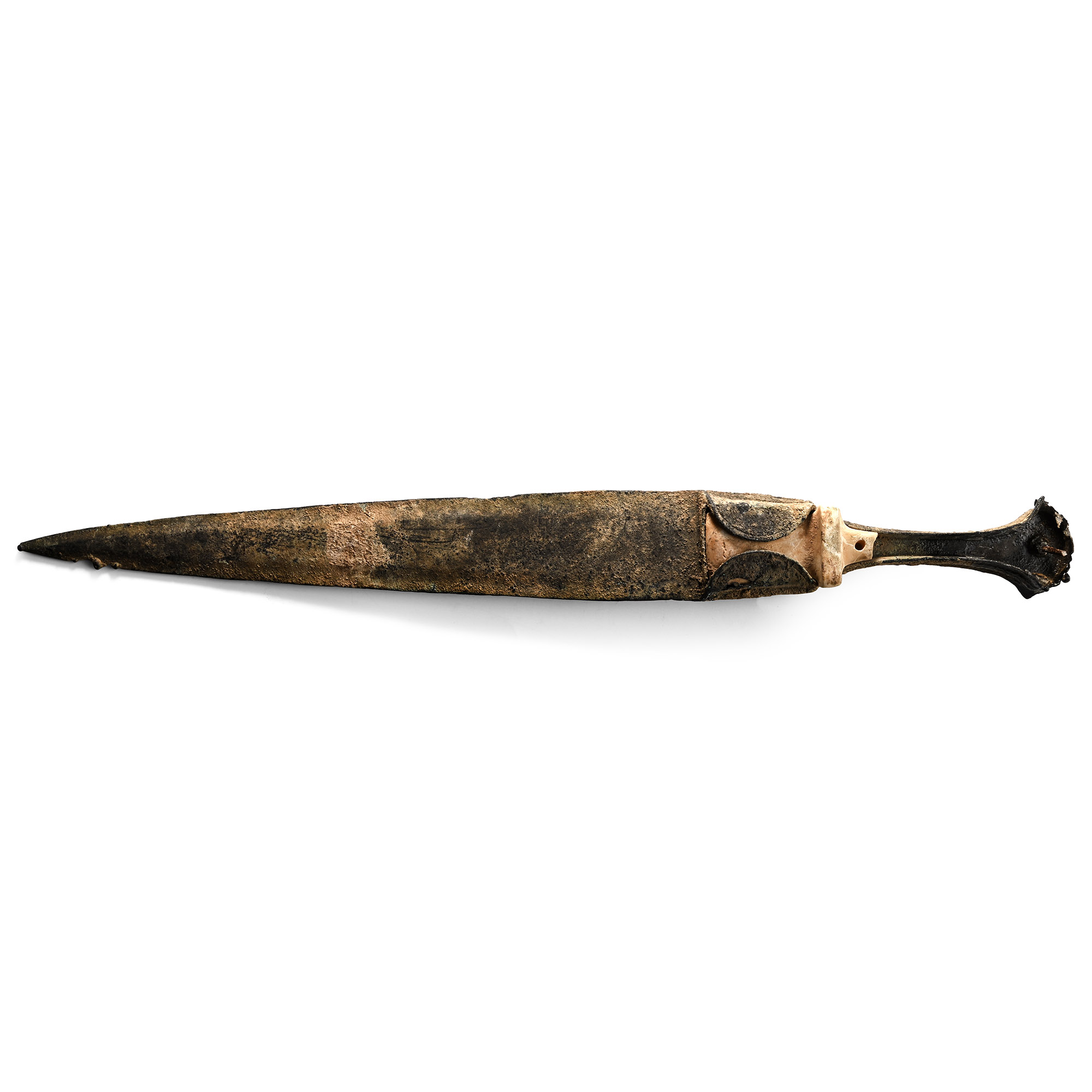
Luristan Bronze Dagger
13TH CENTURY B.C.
12 7/8 in. (255 grams, 32.7 cm).
With a lentoid-section blade, tongue-shaped in plan, with an integral tapering hilt with flared finial, lateral flanges to accept the remains of a panel of cream-coloured stone to each face which would have formed the grip.
ProvenanceAcquired on the UK art market, 1990s.
Private collection, New York, USA.
Cf. Khorasani, M.M., Arms and Armour from Iran - The Bronze Age to the End of the Qajar Period, Tübingen, 2006, p.381, cat.13.
FootnotesThe art of Luristan can be described as the art of nomadic herdsmen and horsemen with an emphasis on the crafting of small, easily portable objects, among these a great number of bronze weapons. The rich and noble aristocrats of Luristan, Elamites, Hurrians, Lullubians, Kutians, and Kassites went to battle splendidly equipped and wore magnificent bronze armour, using maces, spears and daggers as offensive weapons, alongside spears, bows and arrows.
CONDITIONTimeLine Auctions follows a vetting process to ensure the authenticity and legality of all items, reinforcing our commitment to integrity and responsible trading. Each antiquity, antique, and coin lot undergoes thorough examination by a vetting committee of at least ten external specialists, professional trade association members, scientists, and archaeologists: Our Vetting Process
AUCTIONS:
TimeLine is a leading auction house specialising in antiquities, ancient art, collectables, natural history, coins, medals, and books. Our auctions offer museums, collectors, historians, and enthusiasts the opportunity to acquire unique and historically significant pieces.
-
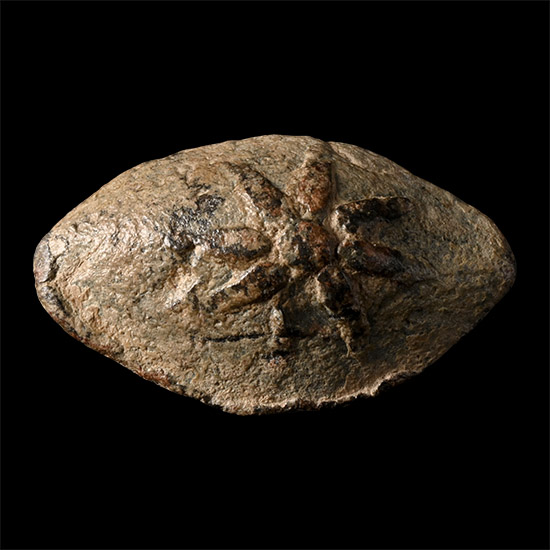
Greek Lead Slingshot with Macedonian Star
3rd-1st century B.C.Sold for (Inc. bp): £182
Biconical in profile with a casting seam and a rayed solar symbol, the so-called Argead Star, on one side. 27.2 grams, 30 mm
Ex German art market, 2000s. Acquired from an EU collector living in London. From the collection of a Surrey, UK, gentleman.
The rayed solar symbol (Argead Star, Vergina Star) is interpreted as the historical royal symbol of the ancient Macedonian Dynasty of the Argeads, with its most famous member being Alexander the Great. -
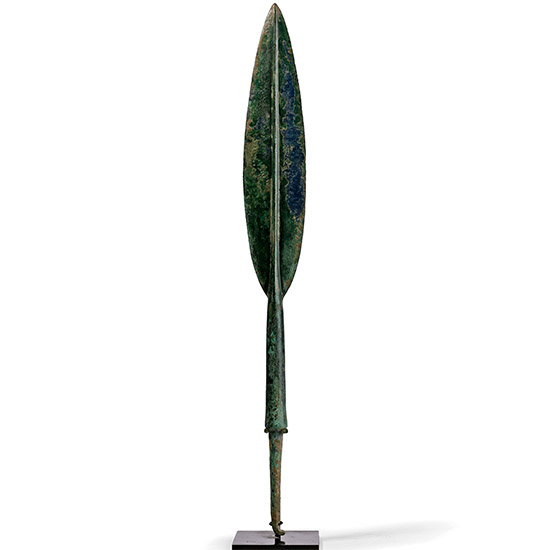
Large Luristan Leaf-Shaped Bronze Spearhead
Circa 1000-700 B.C.Sold for (Inc. bp): £845
Comprising a leaf-shaped blade with a midrib and a long tapering socket; accompanied by a display stand. 771 grams total, 44 cm including stand
with Art Ancient, London, UK. Private collection, London.
The spear, belonging to type 3 of the Khorasani classification, was used by chariot fighters to strike each other or the enemy infantry from above. Similar specimens with longer sockets were excavated by Negahban in the Amlash area. According to Moorey, sockets as long, if not longer than the blade, are a characteristic of Iranian spearheads in the late 2nd and early 1st millennium B.C. A similar spearhead from the Tappeh Sialk has been dated to the 9th-7th century B.C. -
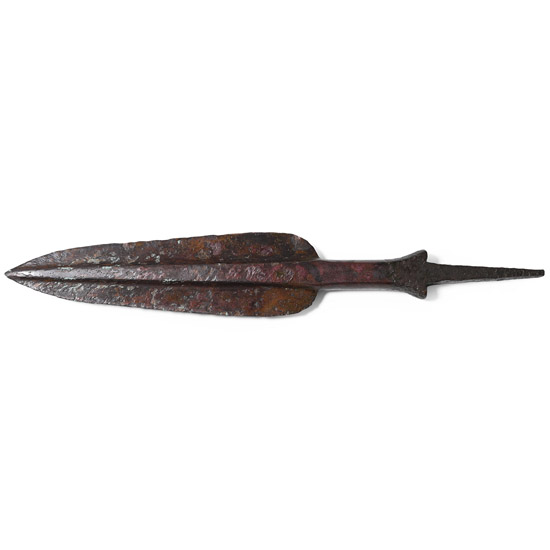
Western Asiatic Bronze Spear Blade
2nd-1st millennium B.C.Estimate: £180 - 240 (+bp*)
Current Winning Bid: £100
With an ovate blade, prominent central rib and rounded shoulders, square-section shaft with flared lateral spurs forming a collar, rectangular tang with narrow tip. 347 grams, 29.6 cm
Ex Abelita family collection, 1980s-2000s.
