
Loading, please wait...
LOT 1508
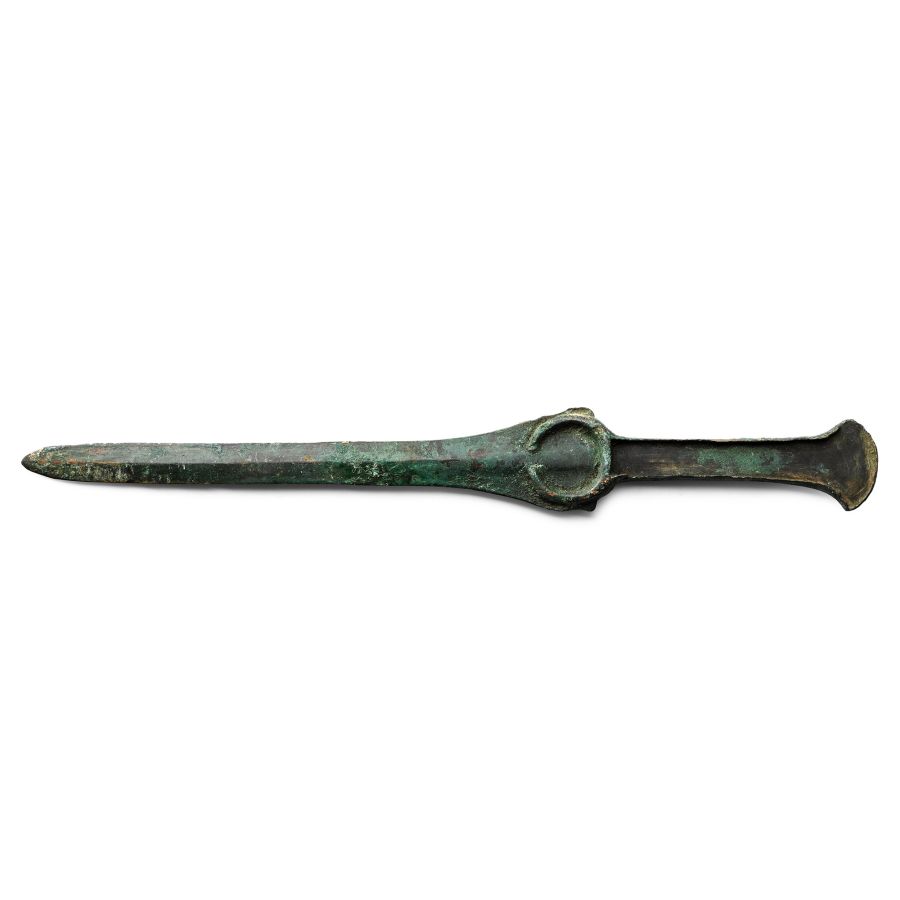
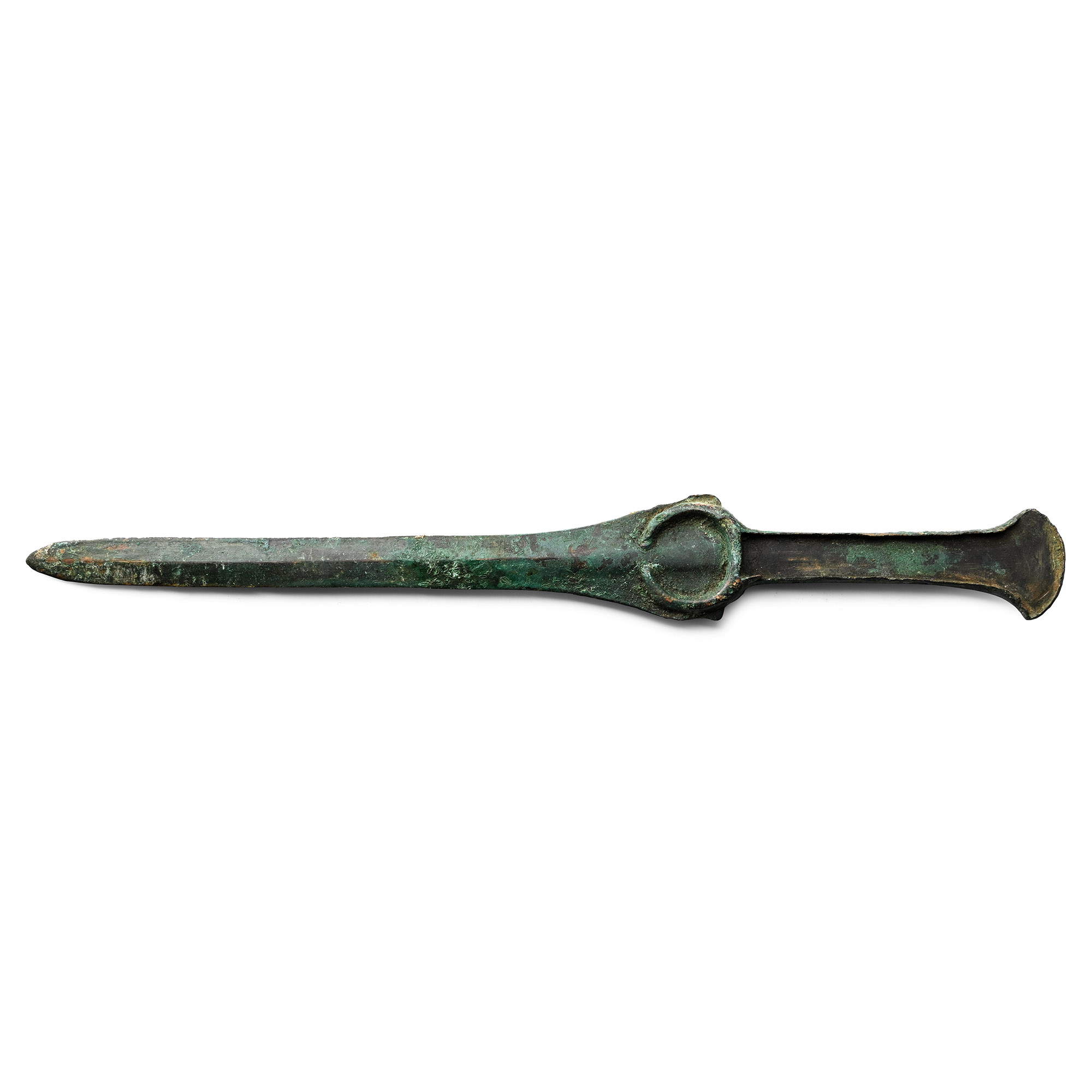
Luristan Bronze Dagger
2ND-1ST MILLENNIUM B.C.
12 in. (151 grams, 30.5 cm).
Blade with a shallow median rib, crescentic pennannular guard, handle with pommel in the shape of a nail head.
ProvenanceEx Abelita family collection, 1980s-2000s.
LiteratureSee Godard, A., Les Bronzes du Luristan, Paris, 1931, pl.VII, no.14, for a similar dagger.
FootnotesThis is a type of blade rare among Luristan weapons. The simplest type that appeared to J. de Morgan and Godard in the first excavations of Luristan looked like this: a blade always featuring a median groove, a guard decorated with a crescent, and a round hilt with a nail-shaped head. The hilt was usually filled with organic material, such as wood, bone, or ivory.
CONDITIONTimeLine Auctions follows a vetting process to ensure the authenticity and legality of all items, reinforcing our commitment to integrity and responsible trading. Each antiquity, antique, and coin lot undergoes thorough examination by a vetting committee of at least ten external specialists, professional trade association members, scientists, and archaeologists: Our Vetting Process
AUCTIONS:
TimeLine is a leading auction house specialising in antiquities, ancient art, collectables, natural history, coins, medals, and books. Our auctions offer museums, collectors, historians, and enthusiasts the opportunity to acquire unique and historically significant pieces.
-
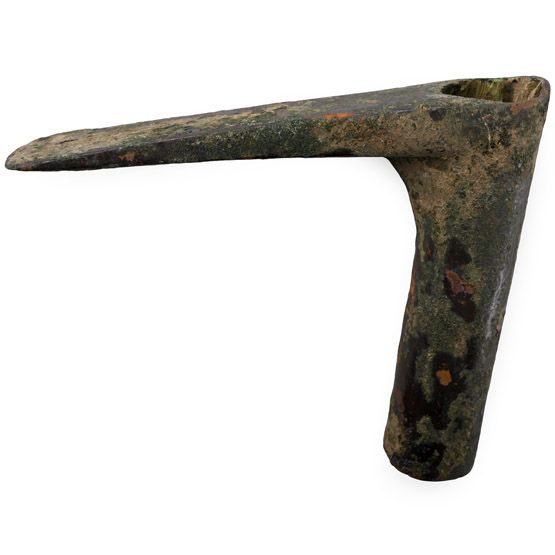
Luristan Bronze Socketted Adze
2nd-1st millennium B.C.Estimate: £100 - 140 (+bp*)
Opening Bid: £50
Long tubular socket, rectangular-section tapering blade with convex cutting edge. 355 grams, 14.2 cm
Ex Abelita family collection, 1980s-2000s. -
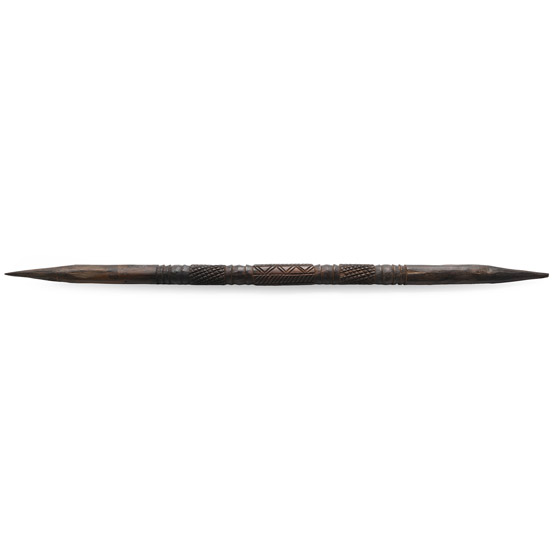
Polynesian Carved Hardwood Fighting Stick
Late 20th century A.D.Sold for (Inc. bp): £52
Comprising a worked round-section stave with point to each end, central grip with carved balusters and hatched sleeves. 320 grams, 69.2 cm
Property of a Berkshire, UK, gentleman collector. -
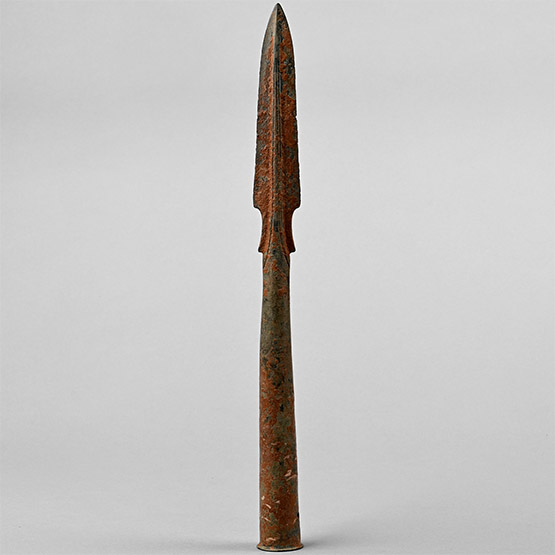
Chinese Zhou Bronze Socketted Spearhead
Zhou Dynasty, 1046-256 B.C.Estimate: £450 - 650 (‡+bp*)
Opening Bid: £250
With thick midrib, leaf-shaped blade with lateral spurs, deep tubular socket with fastening hole for the attachment to the wooden shaft. 250 grams, 32 cm
Acquired in the mid 1980s-1990s. Private collection, Switzerland, thence by descent. Private collection, since the late 1990s.
