
Loading, please wait...
LOT 1570
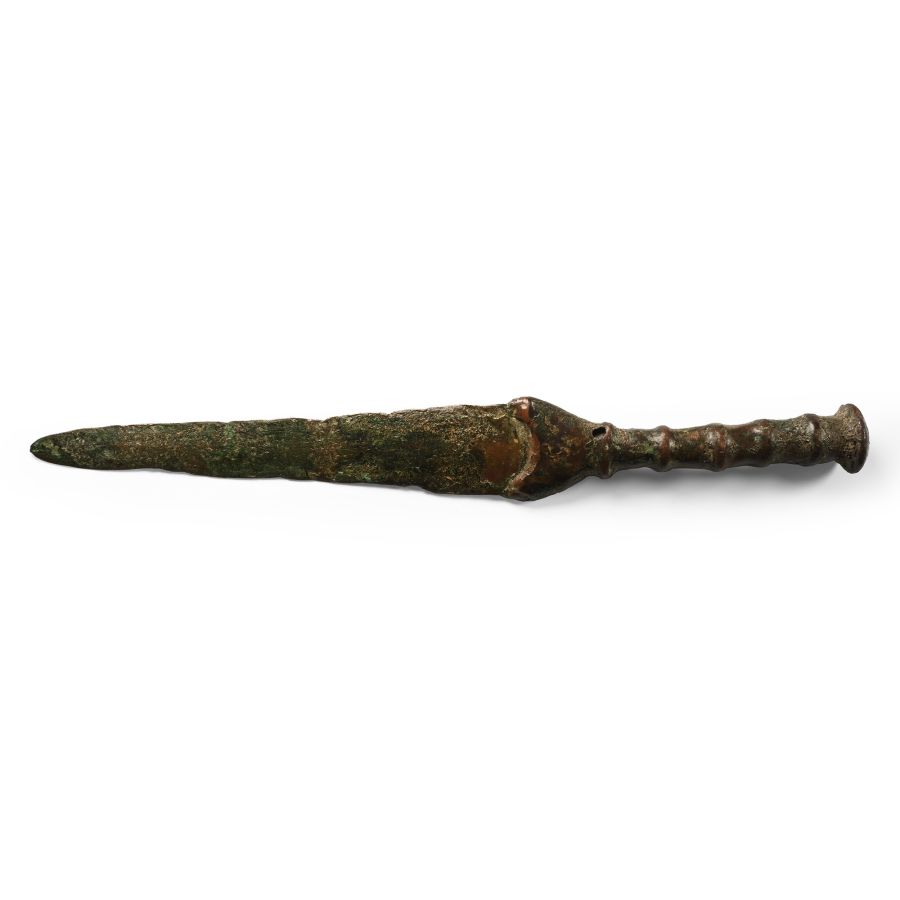
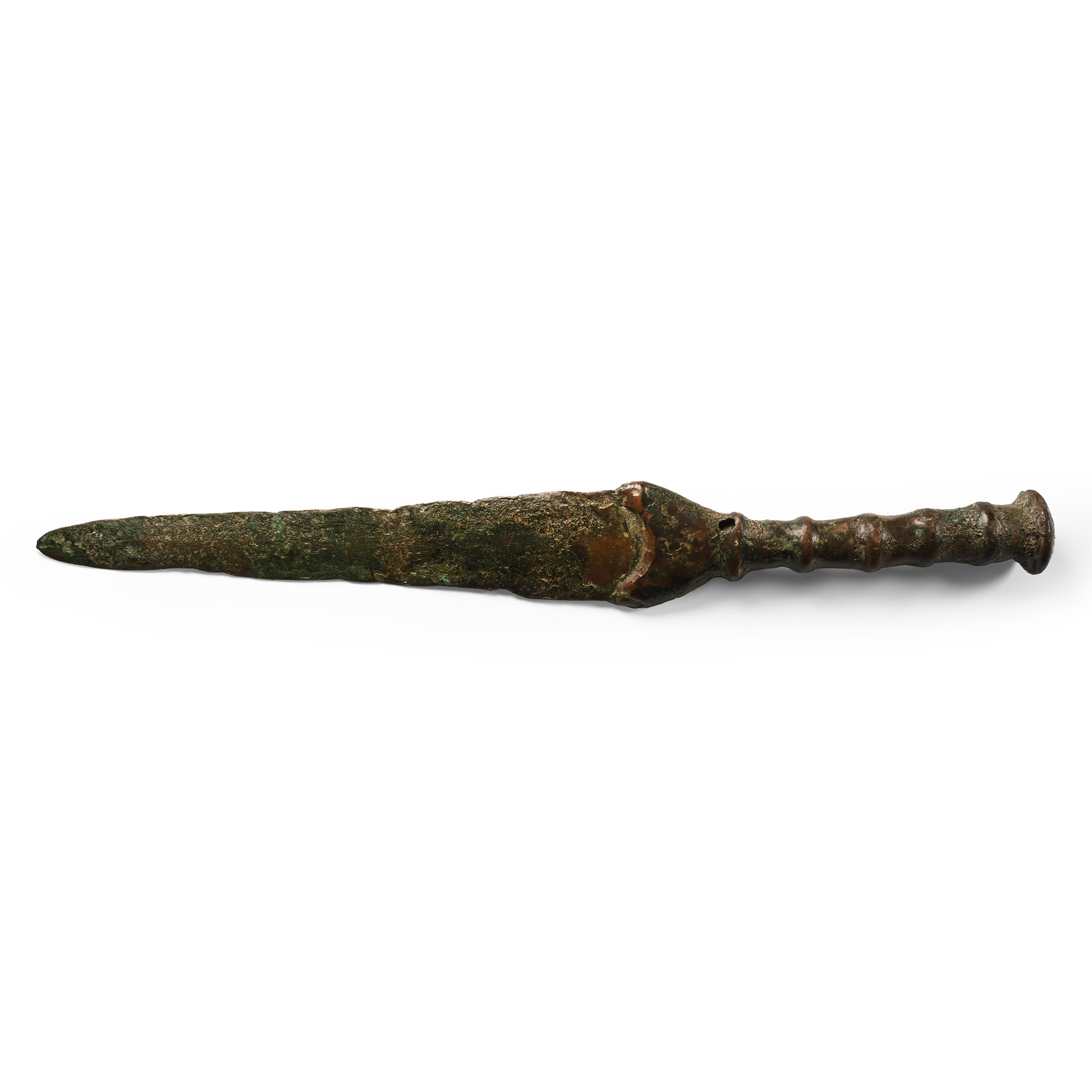
Luristan Bronze Dagger
13TH-7TH CENTURY B.C.
8 in. (93 grams, 20.1 cm).
Comprising a two-edged leaf-shaped lentoid-section blade, crescentic lower guard, ribbed hilt and domed finial.
ProvenanceAcquired before 1983.
Ex London gallery, 1990s.
This lot is accompanied by an illustrated lot declaration signed by the Head of the Antiquities Department, Dr Raffaele D’Amato.
See a similar dagger in Godard, A., Les Bronzes du Luristan, Paris, 1931, pl.VII, no.15, for type.
CONDITIONTimeLine Auctions follows a vetting process to ensure the authenticity and legality of all items, reinforcing our commitment to integrity and responsible trading. Each antiquity, antique, and coin lot undergoes thorough examination by a vetting committee of at least ten external specialists, professional trade association members, scientists, and archaeologists: Our Vetting Process
AUCTIONS:
TimeLine is a leading auction house specialising in antiquities, ancient art, collectables, natural history, coins, medals, and books. Our auctions offer museums, collectors, historians, and enthusiasts the opportunity to acquire unique and historically significant pieces.
-
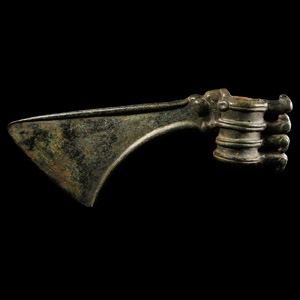
Luristan Bronze Bird Spike-Butted Axehead
11th-8th century B.C.Sold for (Inc. bp): £3,250
Blade with folded upper and lower edge, cylindrical socket with projecting ribs formed as the necks and heads of birds, blade 'projecting' from the mouth of a roaring lion at the neck. 478 grams, 22.5 cm
Ex Parisian private collection. with Cuvreau Expertises Enchères S.A., sale 60, 21 June 2009, lot 105. This lot has been checked against the Interpol Database of stolen works of art and is accompanied by search certificate number no.11876-206787. This lot has been cleared against the Art Loss Register database, and is accompanied by an illustrated lot declaration signed by the Head of the Antiquities Department, Dr Raffaele D’Amato. -
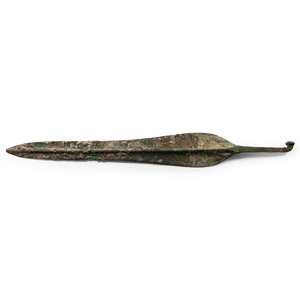
Luristan Bronze Spearhead
Early 2nd millennium B.C.Estimate: £100 - 140 (+bp*)
Opening Bid: £50
Having foliate blade with central rib and slender shoulders, short rectangular shaft and tang with a bent end. 412 grams, 42.5 cm
Acquired 1980-2015. Ex Abelita family collection. This lot is accompanied by an illustrated lot declaration signed by the Head of the Antiquities Department, Dr Raffaele D’Amato.
A number of similar blades, some considered to be spearheads and others to be daggers, all with bent tang, derived from Tepe Hissar Culture III. Some of them, like our specimen, have a button terminal, some others have a plain, pointed terminal. The general dating of these specimens is fixed to the early 2nd millennium B.C. -
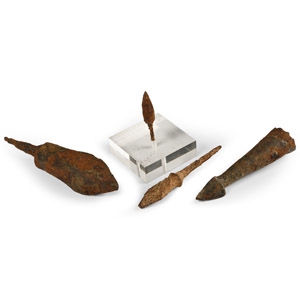
Medieval Iron Crossbow Bolt and Arrowhead Collection
12th-16th century A.D.Sold for (Inc. bp): £52
Comprising a heavy quadrilateral bolt with short tang, two tanged arrowheads and one with a conical socket. 77 grams total, 33-71 mm
One acquired from Coincraft, London, UK. From the private collection of Kenneth Machin (1936-2020), Buckinghamshire, UK; his collection of antiquities and natural history was formed since 1948; thence by descent. Accompanied by an original certificate of authenticity from Coincraft. This lot is accompanied by an illustrated lot declaration signed by the Head of the Antiquities Department, Dr Raffaele D’Amato.
