
Loading, please wait...
LOT 1660
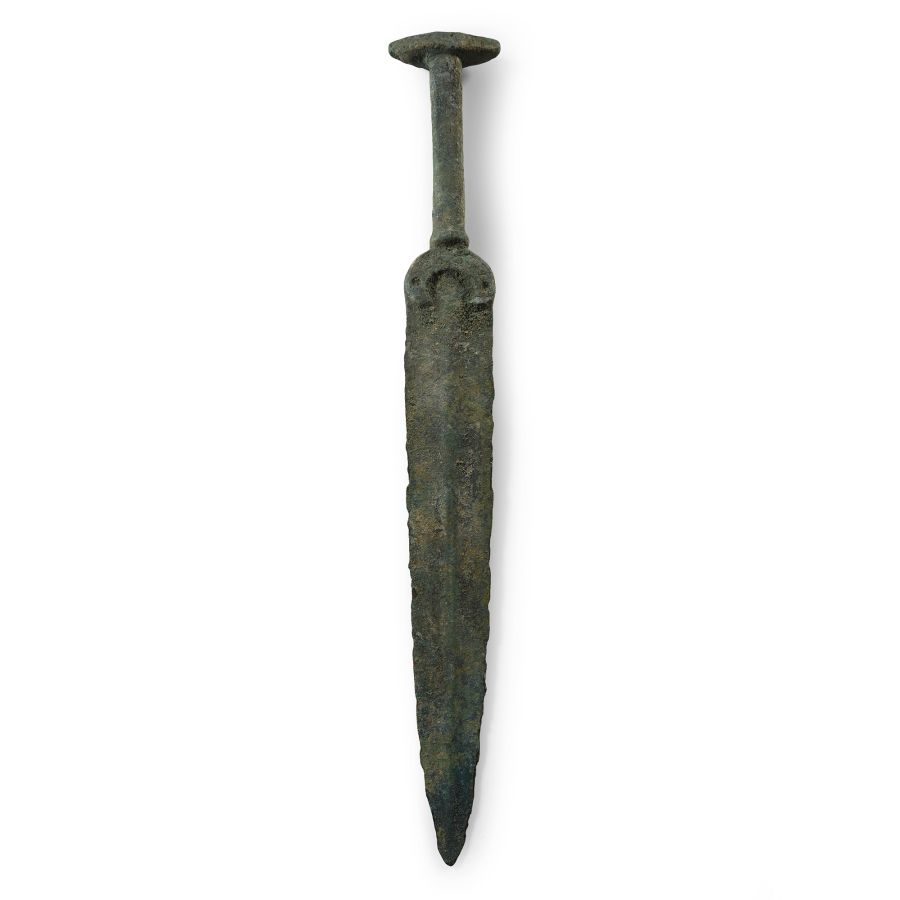
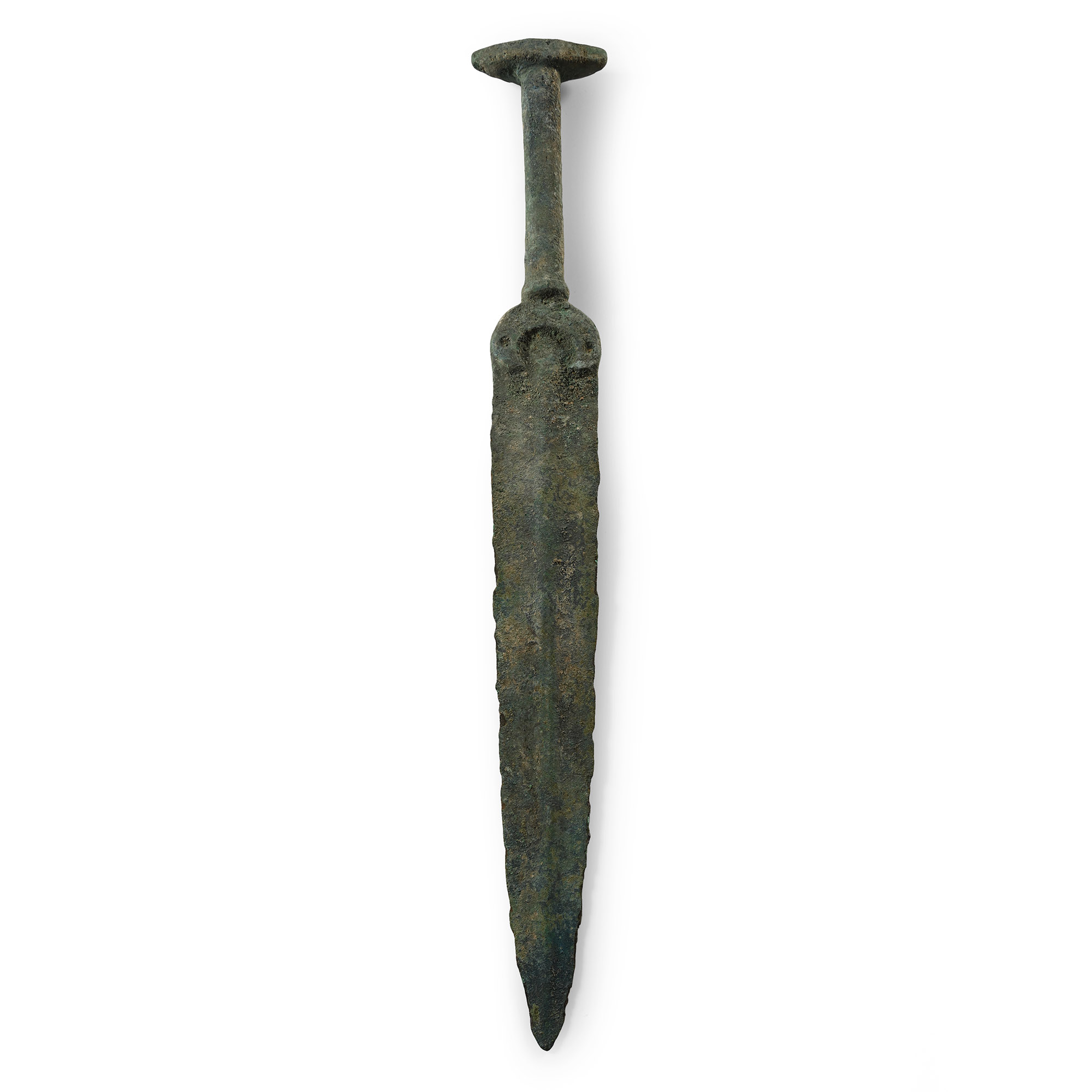
Luristan Bronze Dagger
12TH CENTURY B.C.
12 in. (165 grams, 30.5 cm).
The blade with raised central shallow rib and with separated crescent quillon, fitted with an integral rectangular-section lentoid pommel.
ProvenanceAcquired 1980-2015.
Ex Abelita family collection.
This lot is accompanied by an illustrated lot declaration signed by the Head of the Antiquities Department, Dr Raffaele D’Amato.
See a similar dagger in Godard, A., Les Bronzes du Luristan, Paris, 1931, pl.VII, no.15, for the type.
FootnotesThe men who built the gravestones found in Luristan in the Middle Bronze Age, favoured offensive weaponry: bow, dagger, sword, spear, and javelin. The oldest daggers consisted of a blade and a wooden hilt. The blades were cast together with the tang and regularly featured a groove in the middle. Over time, during the Late Bronze Age, in addition to hilts filled with organic material, the daggers in which the hilt was cast in one piece with the blade developed.
CONDITIONTimeLine Auctions follows a vetting process to ensure the authenticity and legality of all items, reinforcing our commitment to integrity and responsible trading. Each antiquity, antique, and coin lot undergoes thorough examination by a vetting committee of at least ten external specialists, professional trade association members, scientists, and archaeologists: Our Vetting Process
AUCTIONS:
TimeLine is a leading auction house specialising in antiquities, ancient art, collectables, natural history, coins, medals, and books. Our auctions offer museums, collectors, historians, and enthusiasts the opportunity to acquire unique and historically significant pieces.
-
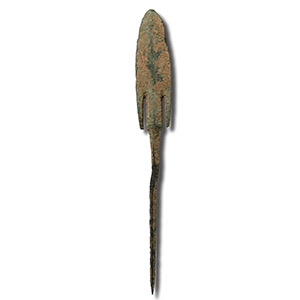
Luristan Barbed Bronze Arrowhead
13th-6th century B.C.Sold for (Inc. bp): £33
Comprising a paddle-shaped blade with long barbs, circular-section socket and a tapering square-section tang. 16.2 grams, 12.9 cm
Acquired 1980-2015. Ex Abelita family collection. This lot is accompanied by an illustrated lot declaration signed by the Head of the Antiquities Department, Dr Raffaele D’Amato. -
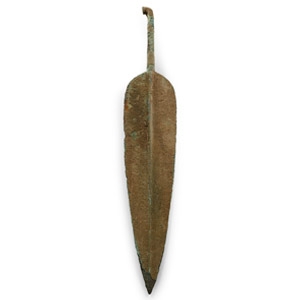
Western Asiatic Bronze Blade
14th-10th century B.C.Estimate: £100 - 140 (+bp*)
Opening Bid: £50
The leaf-shaped ovate blade with rounded, gently curved shoulders and raised midrib, flat rectangular-sectioned tang tapering to a bent end with the remains of a fastening button. 348 grams, 34 cm
Acquired 1980-2015. Ex Abelita family collection. This lot is accompanied by an illustrated lot declaration signed by the Head of the Antiquities Department, Dr Raffaele D’Amato.
Similar spearheads were excavated in the Marlik Royal cemetery by Dr Negahban, see for example in tomb 47, Trench XXIIE. They were the evolution of a typology which began much earlier in Mesopotamia and the fertile crescent, the type 4 of the Stronach classification, with straight square-section tang, usually thickened at the base with a button tang. The foliate blade was wide and exaggerated in some specimens excavated at Marlik. -
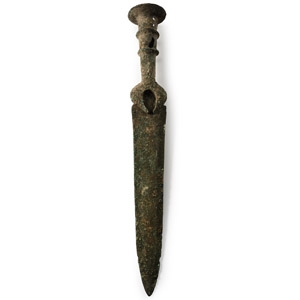
North-Western Persian Bronze Dagger
Late 2nd-early 1st millennium B.C.Sold for (Inc. bp): £1,170
The blade with shallow midrib, hilt cast with two horizontal grooves and crescentic guard. 354 grams, 31.5 cm
Acquired 1980-2015. Ex Abelita family collection. This lot is accompanied by an illustrated lot declaration signed by the Head of the Antiquities Department, Dr Raffaele D’Amato.
Moorey, Gordon and Khorasani created a classification of bladed weapons, according to which daggers are edged weapons not greater than 36cm in length, dirks (short swords) are between 36cm and 50cm in length, and swords are edged weapons greater than 50cm in length.
