
Loading, please wait...


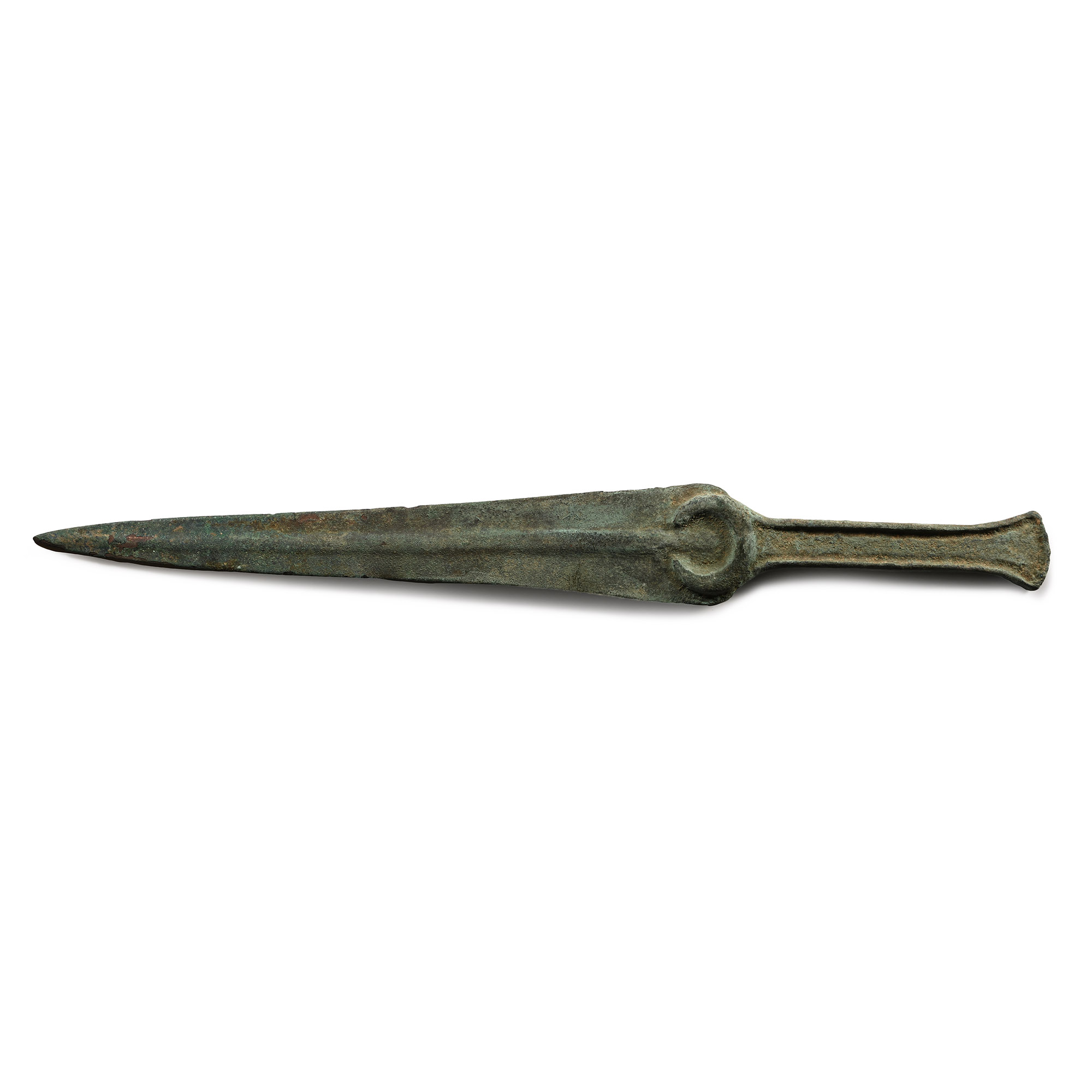
LOT 1381
Luristan Bronze Dagger
14TH-10TH CENTURY B.C.
13 3/8 in. (154 grams, 34 cm).
A short dagger with slender triangular blade, low round shallow midrib with flat upper face, annular guard and round shoulders, columnar grip with open sides to receive organic hilt, crescent pommel.
ProvenanceAcquired 1980-2015.
Ex Abelita family collection.
Cf. Khorasani, M.M., Arms and Armour from Iran. The Bronze Age to the End of the Qajar Period, Tübingen, 2006, items 41 and 42
FootnotesMoorey, Gordon and Khorasani created a classification of bladed weapons, according to which daggers are edged weapons no greater than 36cm in length, dirks (short swords) are between 36cm and 50cm in length, and swords are edged weapons greater than 50cm in length.
CONDITIONTimeLine Auctions follows a vetting process to ensure the authenticity and legality of all items, reinforcing our commitment to integrity and responsible trading. Each antiquity, antique, and coin lot undergoes thorough examination by a vetting committee of at least ten external specialists, professional trade association members, scientists, and archaeologists: Our Vetting Process
AUCTIONS:
TimeLine is a leading auction house specialising in antiquities, ancient art, collectables, natural history, coins, medals, and books. Our auctions offer museums, collectors, historians, and enthusiasts the opportunity to acquire unique and historically significant pieces.
LOT 1381
Luristan Bronze Dagger
Estimate £300 - 400€350 - 460 (for guidance only)$410 - 540 (for guidance only)
-
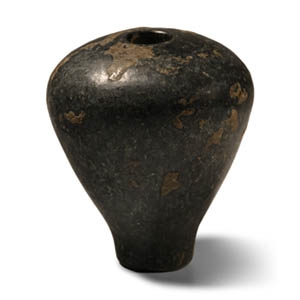
Western Asiatic Mottled Black Stone Mace Head
3rd-2nd millennium B.C.Sold for (Inc. bp): £117
Piriform in profile with vertical socket expanding towards the base, short neck. 459 grams, 80 mm
Ex London gentleman's collection, 1990s. -
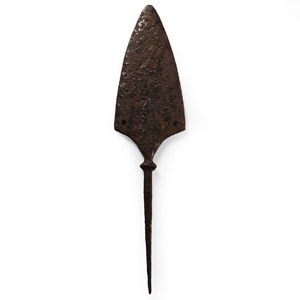
Medieval Pierced Incendiary Fire Arrowhead
Circa 12th-14th century A.D.Sold for (Inc. bp): £59
With heater-shaped profile and holes to the trailing edge, baluster to the neck, square-section tang. 100 grams, 21.5 cm
Private Buckingham, UK, collection, formed before 2000. -
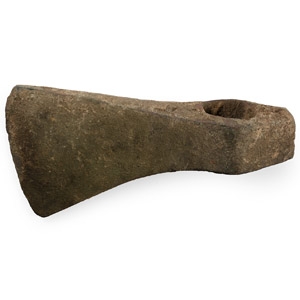
Luristan Heavy Bronze Axehead
13th-7th century B.C.Sold for (Inc. bp): £156
With broad tapering blade and curved edge, wide socket, hammer-face to rear. 1.28 kg, 19.5 cm
Acquired on the UK art market before 2000. Property of an Essex, UK, gentleman.
