
Loading, please wait...
LOT 1044
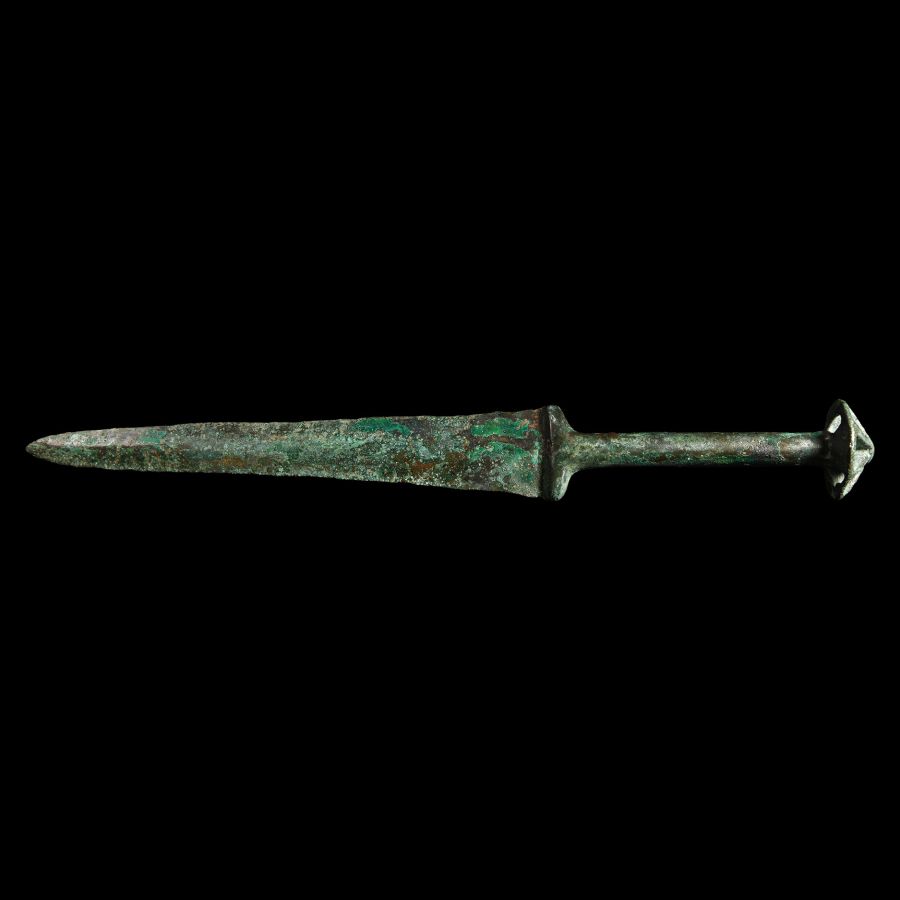
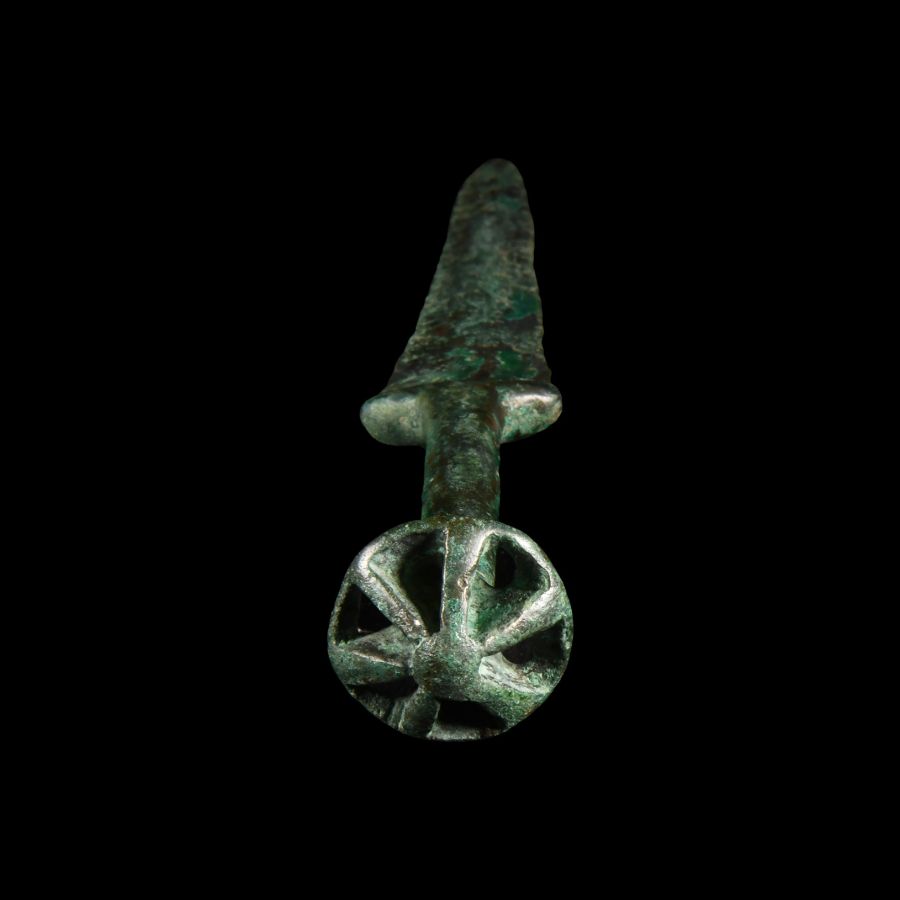
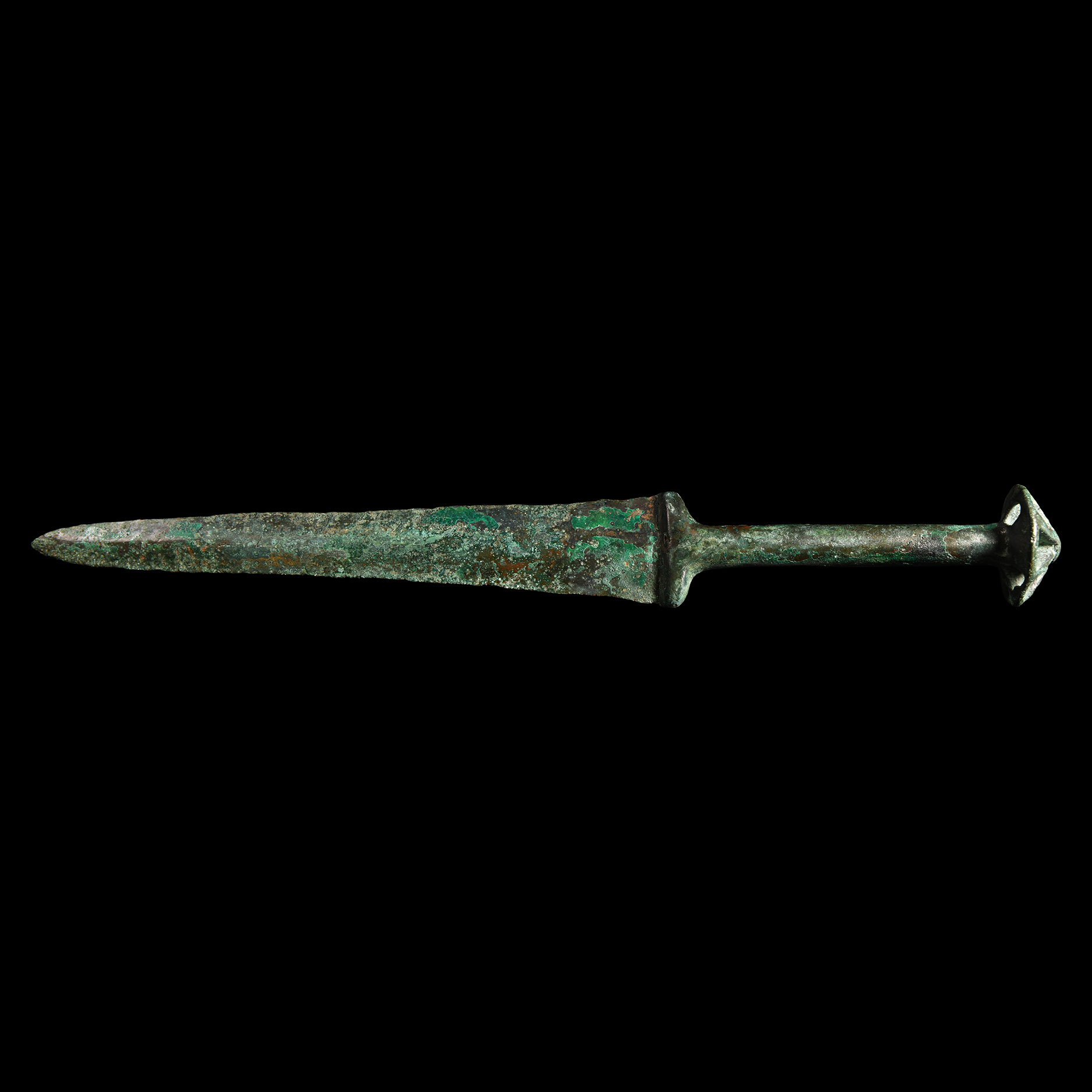
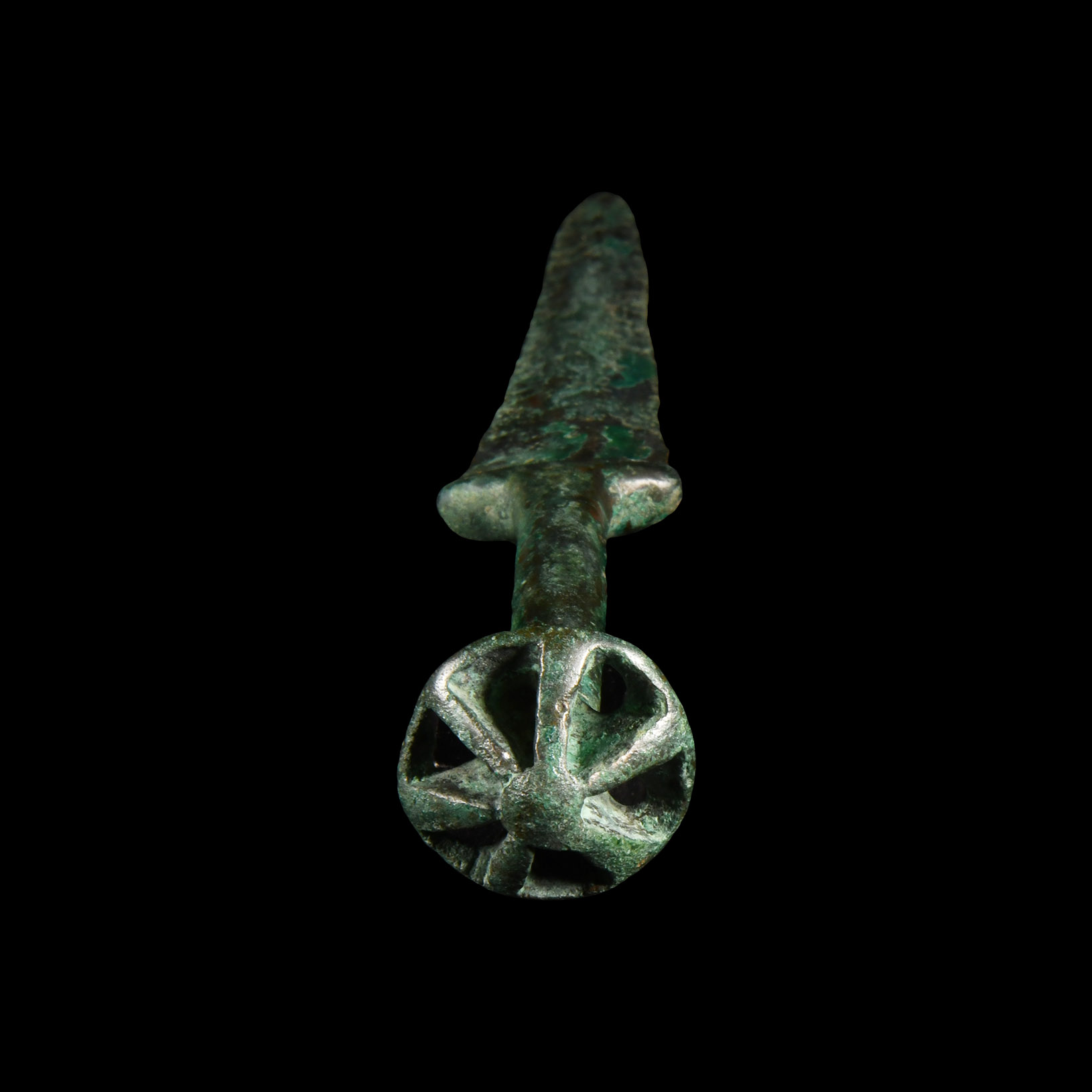
Luristan Bronze Dagger
14TH-10TH CENTURY B.C.
10 1/2 in. (156 grams, 26.5 cm).
A bronze dagger with lentoid-section two-edged triangular blade, rounded lower guard, columnar grip and domed pommel with six radiating spokes and void between.
ProvenanceEx S. Motamed collection.
with Bellman's Auctions, 20th-26th June 2015, lot 2482.
Property of a London gentleman.
Cf. Khorasani, M.M., Arms and Armour from Iran. The Bronze Age to the End of the Qajar Period, Tübingen, 2006, item 7, for type.
CONDITIONTimeLine Auctions follows a vetting process to ensure the authenticity and legality of all items, reinforcing our commitment to integrity and responsible trading. Each antiquity, antique, and coin lot undergoes thorough examination by a vetting committee of at least ten external specialists, professional trade association members, scientists, and archaeologists: Our Vetting Process
AUCTIONS:
TimeLine is a leading auction house specialising in antiquities, ancient art, collectables, natural history, coins, medals, and books. Our auctions offer museums, collectors, historians, and enthusiasts the opportunity to acquire unique and historically significant pieces.
-

Luristan Socketted Cudgel
13th-7th century B.C.Estimate: £300 - 400 (+bp*)
Opening Bid: £150
A bronze cudgel or handle of an axe or mace reinforced at both ends by raised moulding, the handle adorned with a double spiral in relief. 473 grams, 15.5 cm wide
Fine condition.
Private family collection formed in London, mid 1980s to early 1990s. -
Western Asiatic Tanged Leaf-Shaped Spearhead
Circa 21st-mid 15th century B.C.Estimate: £100 - 140 (+bp*)
Opening Bid: £50
A large bronze tripartite spearhead with biconvex blade and flattened tang. 315 grams, 27.7 cm
Fine condition.
Ex Abelita family collection, 1980-2015.
The spearhead belongs to the subtype L2.B.d of the Gernez classification. -
Luristan 'Cotton Reel' Pommel Sword
13th-6th century B.C.Sold for (Inc. bp): £889
A bronze sword with a broad double-edged blade with a central ridge on both sides, square bronze hilt with goblet-shaped pommel surmounted by a disc. 725 grams, 51 cm
Fine condition.
Acquired 1980-2015. Ex Abelita family collection.
Bimetallic swords (some examples are entirely cast in iron and others entirely cast in bronze) with disc pommel, slender cylindrical grip and tapering blades of this type are among the most common types of daggers / swords in Northern Iranian graveyards. This type has occasionally been referred to as the 'cotton reel' pommel, as below the flat circular pommel there is a second, a rather wide disc, and a plain or incised cylindrical grip in between.
