
Loading, please wait...
LOT 2016
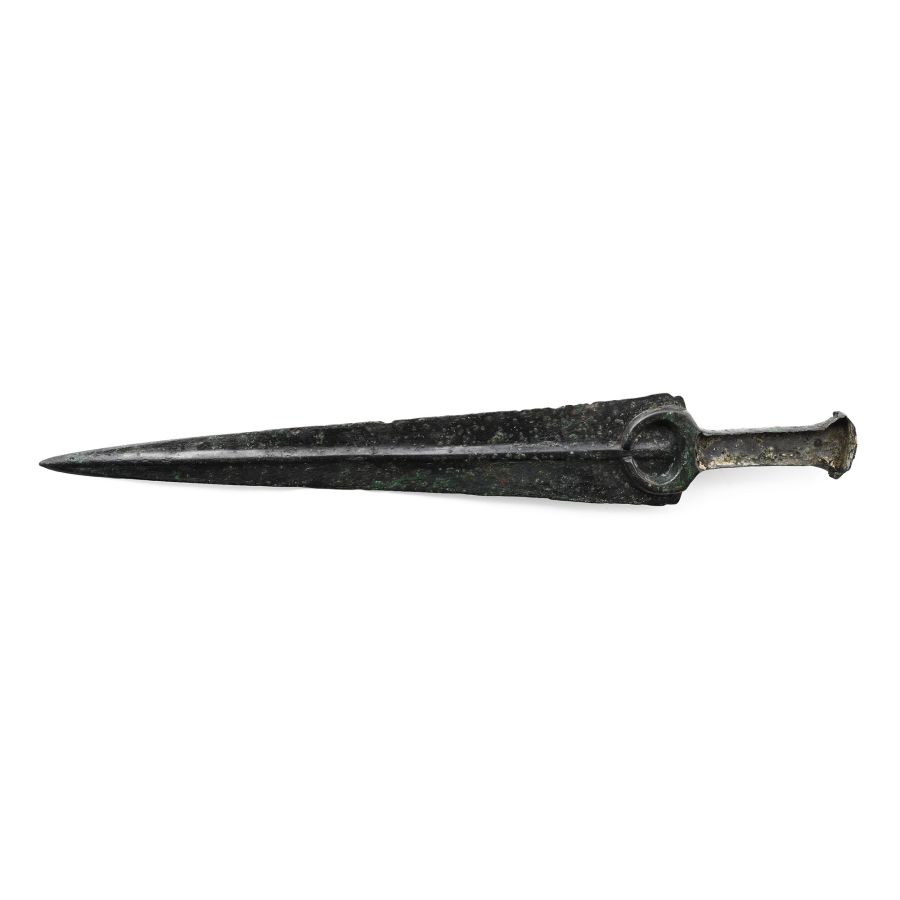
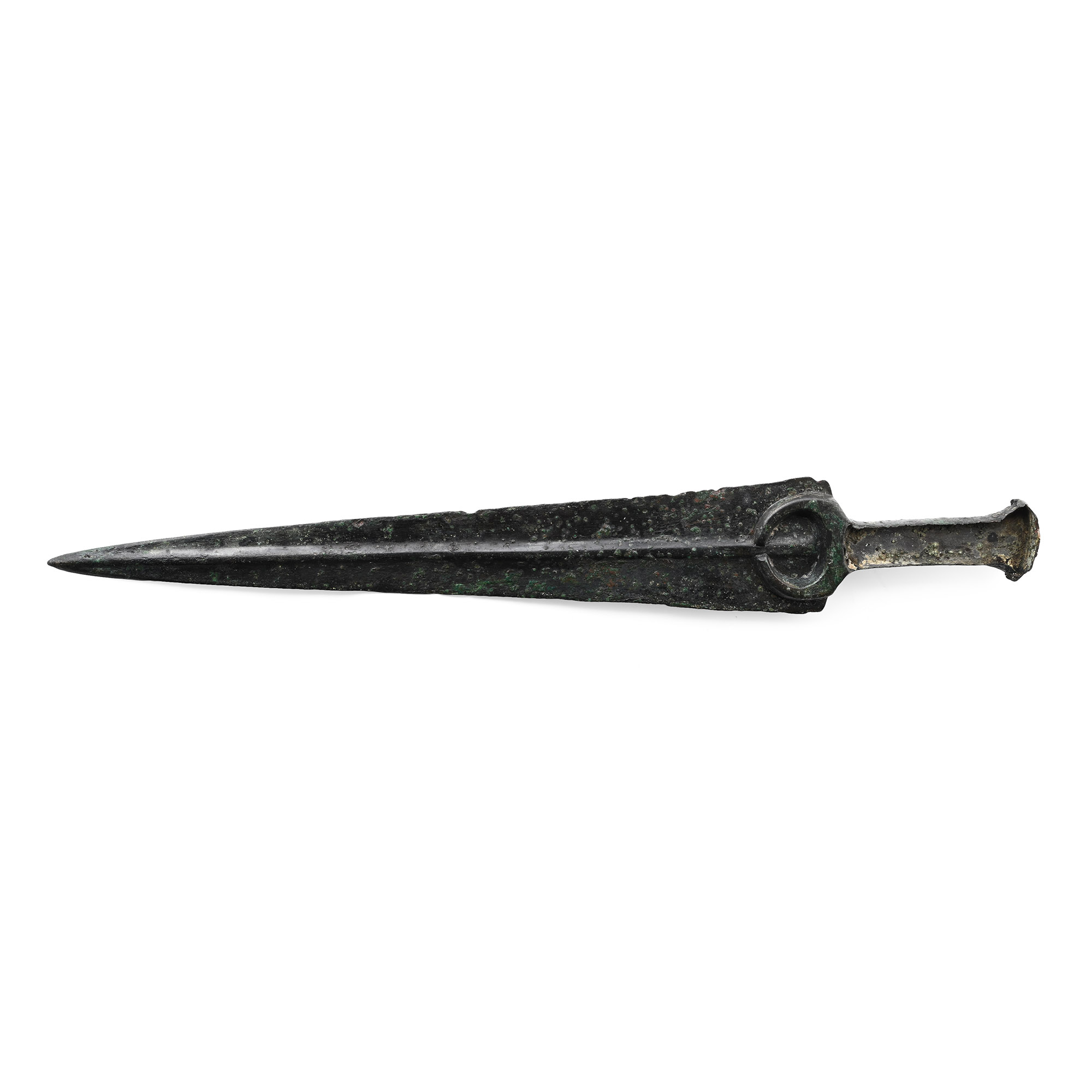
Luristan Bronze Dagger with Integral Handle
BRONZE AGE, 2ND-1ST MILLENNIUM B.C.
15 1/8 in. (340 grams, 38.5 cm).
Two-edged triangular blade with a thick median rib, crescentic pennannular guard; grip with integral pommel, socket to each face to accept a bone inlay.
ProvenanceEx German art market, 2000s.
Acquired from an EU collector living in London.
From the collection of a Surrey, UK, gentleman.
See Godard, A., Les Bronzes du Luristan, Paris, 1931, pl.VII, no.14, for similar; Khorasani, M.M., Arms and Armour from Iran. The Bronze Age to the End of the Qajar Period, Tübingen, 2006, items 41 and 42.
FootnotesThese bronze daggers or dirks, typical of Marlik culture, were cast in a one-piece mould according to Negahban, although in some specimens the penannular guard was cast later into the blade. The separate sets of encircling ribs on the grips are again typical of swords from the Marlik area.
CONDITIONTimeLine Auctions follows a vetting process to ensure the authenticity and legality of all items, reinforcing our commitment to integrity and responsible trading. Each antiquity, antique, and coin lot undergoes thorough examination by a vetting committee of at least ten external specialists, professional trade association members, scientists, and archaeologists: Our Vetting Process
AUCTIONS:
TimeLine is a leading auction house specialising in antiquities, ancient art, collectables, natural history, coins, medals, and books. Our auctions offer museums, collectors, historians, and enthusiasts the opportunity to acquire unique and historically significant pieces.
LOT 2016
Luristan Bronze Dagger with Integral Handle
Estimate £400 - 600€460 - 700 (for guidance only)$540 - 810 (for guidance only)
Opening Bid
£200 (EUR 232; USD 270) +BP*
-
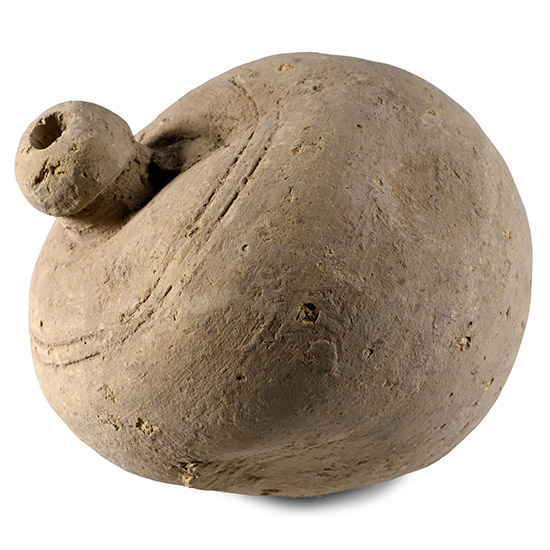
Byzantine 'Greek Fire' Ceramic Fire Bomb or Hand Grenade
9th-11th century A.D.Estimate: £70 - 90 (+bp*)
Opening Bid: £5
Bulbous body with rounded base and domed filler hole, two circumferential bands above the shoulder; intended to be filled with explosive liquid and a wick, and used as a hand grenade. 760 grams, 11.6 cm
Ex important collection of weaponry, London, UK, 1980-1990s. Accompanied by an academic paper by military specialist Dr Raffaele D'Amato, dated 15 July 2019 and titled 'Eastern Roman Empire - Greek Fire Bomb or Hand Grenade (μεσαίον kακάβιον) 9th-11th century AD'.
Apart from the use of siphons or manual flame-throwers called cheirosiphona, special corps of Roman soldiers employed terracotta grenades, in the form of small jars, abundantly evidenced in archaeological excavations. They were called μεσαία kακαβιά or κυτροκακάβια, where the former had a bulbous shape and the latter a more cylindrical form. -
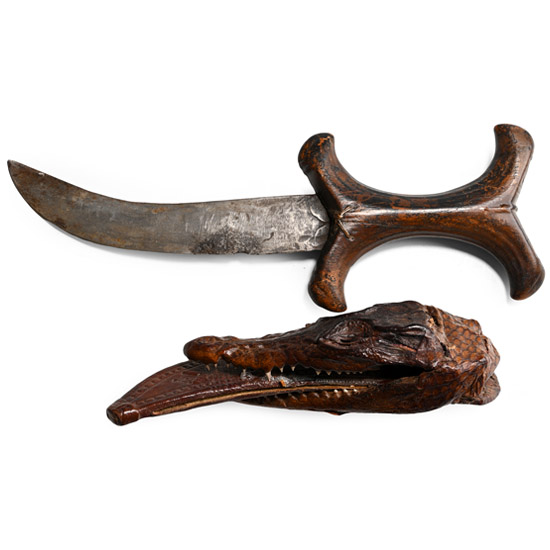
Beja or Hadendoa Curved Dagger with Crocodile-Head Sheath
Sudan, late 19th-early 20th century A.D.Estimate: £120 - 170 (+bp*)
Opening Bid: £5
Comprising a thin two-edged blade with curved tip and X-shaped wooden hilt with rounded fluting; leather sheath with moulded detailing and stamped roundels adorned with the preserved head of a crocodile placed vertically at the top as if the dagger were between its jaws. 190 grams, 27.5 cm
From the private collection of Peter Clayton, FCILIP, Dip, Arch, FSA, FRNS, Hemel Hempstead, Hertfordshire, UK; formed since the late 1950s. -
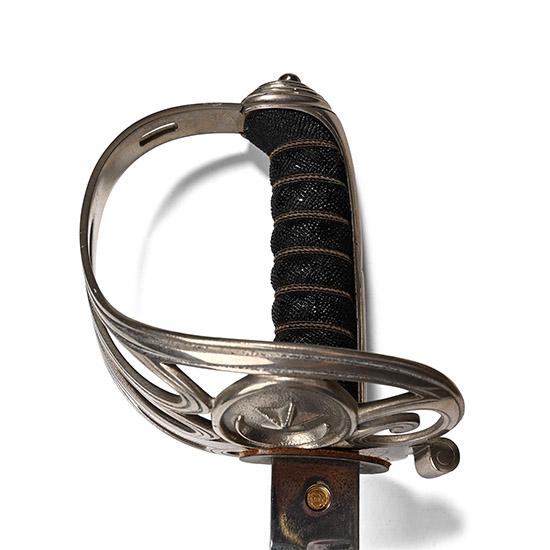
Ottoman Rifle Officer's Sword with Scabbard
Late 19th-early 20th century A.D.Estimate: £200 - 300 (+bp*)
Opening Bid: £5
British M1827 Pattern sword, with narrow fullered blade engraved with tendrils and 'star-and-crescent ' motif; swept openwork 'Gothic' steel guard with 'star-and-crescent' motif; shagreen grip; leather scabbard with plain chape and steel frog, stitching split; leather suspension strap and mounting loops; possibly from the Mahdist War (1881-99). 1.42 kg total, 98.5 cm
From the private collection of Peter Clayton, FCILIP, Dip, Arch, FSA, FRNS, Hemel Hempstead, Hertfordshire, UK; formed since the late 1950s.
