
Loading, please wait...
LOT 0936
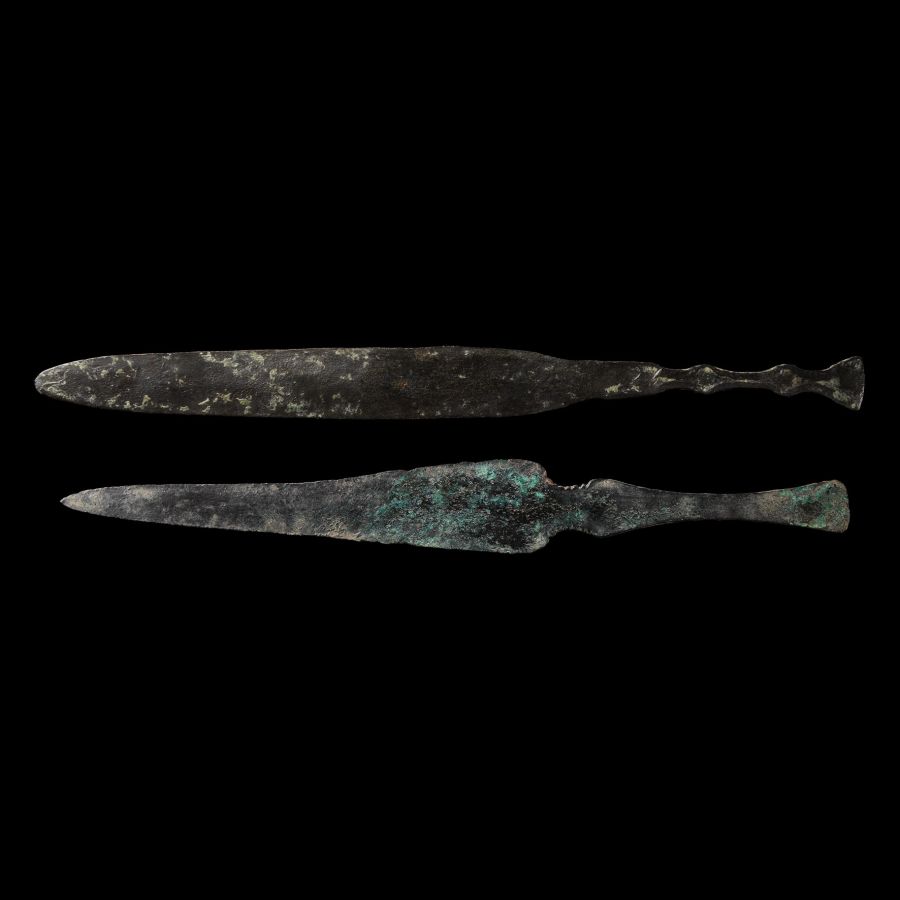
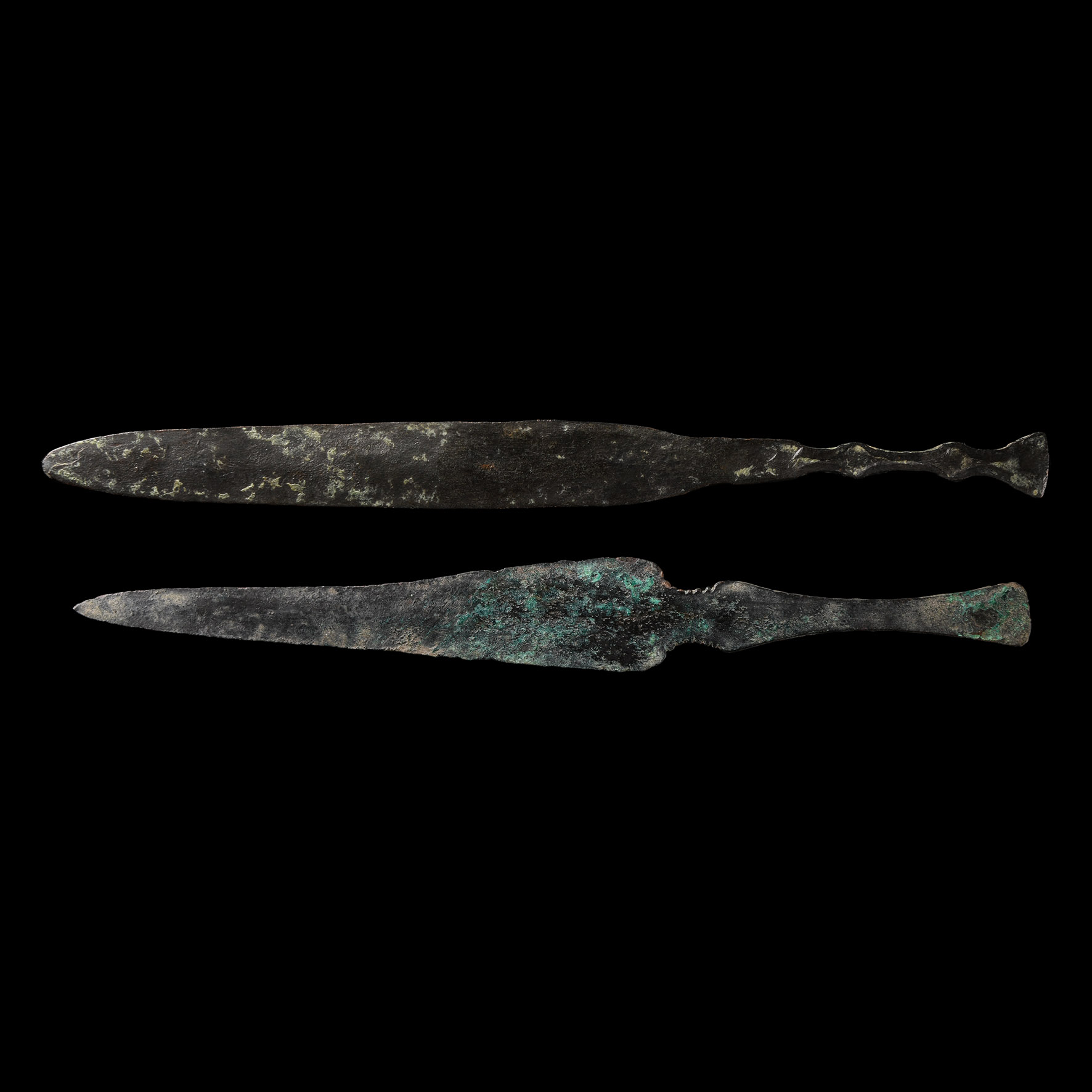
Luristan Bronze Dagger Pair
13TH-7TH CENTURY B.C.
6 7/8 - 7 1/4 in. (38 grams total, 17.5-18.5 cm).
Comprising two thin flat leaf-shaped blades with integral handles. [2, No Reserve]
ProvenanceEx old English collection.
London art market, 1980s.
TimeLine Auctions follows a vetting process to ensure the authenticity and legality of all items, reinforcing our commitment to integrity and responsible trading. Each antiquity, antique, and coin lot undergoes thorough examination by a vetting committee of at least ten external specialists, professional trade association members, scientists, and archaeologists: Our Vetting Process
AUCTIONS:
TimeLine is a leading auction house specialising in antiquities, ancient art, collectables, natural history, coins, medals, and books. Our auctions offer museums, collectors, historians, and enthusiasts the opportunity to acquire unique and historically significant pieces.
-
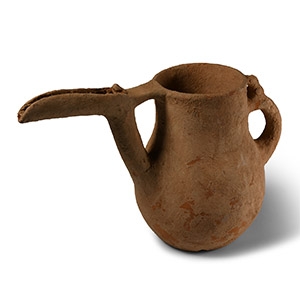
Luristan Bird-Spouted Terracotta Vessel with Animal Handle
13th-7th century B.C.Sold for (Inc. bp): £156
Piriform-bodied with a broad neck, slender spout with zoomorphic U-section terminal, double looped handle also zoomorphic in form, featuring applied pellets. 845 grams, 26 cm wide
Ex Rabi gallery, 1990s. Private collection of Iranian art. -
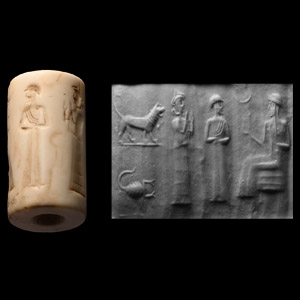
Western Asiatic Marble Cylinder Seal with Presentation Scene
2nd-1st millennium B.C.Sold for (Inc. bp): £845
With large central hole, incised frieze of a seated figure offering a cup to a figure in floor-length garment, second figure behind him in a tiered robe, canine and scorpion to the rear. 17 grams, 31 mm
Acquired 1970s-1996. Property of a North American collector; collection no.04. London collection, 2016. -
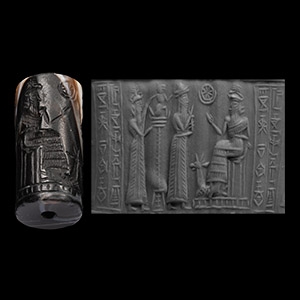
Western Asiatic Banded Quartz Cylinder Seal with Presentation Scene
2nd-1st millennium B.C.Sold for (Inc. bp): £1,170
With frieze depicting a throne-room scene, seated king in tiered robe confronted by two robed supplicants with an altar and idol, two columns of later added cuneiform text. 5.4 grams, 23 mm
Acquired 1970s-1996. Property of a North American collector, collection no.25. London collection, 2016.
