
Loading, please wait...

LOT 1343
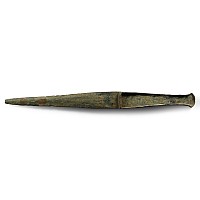
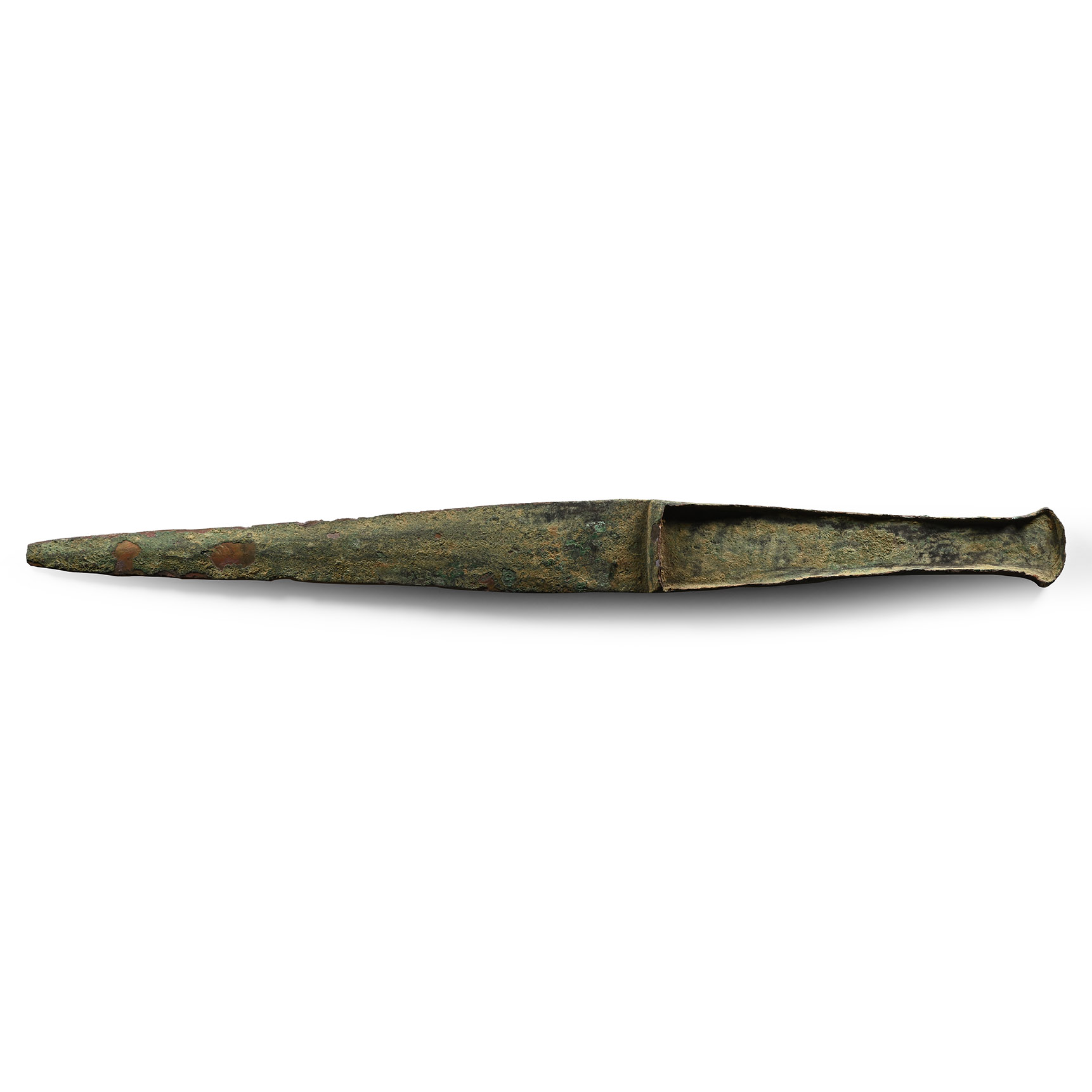
Luristan Bronze Dagger Blade
12TH CENTURY B.C.
12 3/8 in. (131 grams, 31.5 cm).
With lentoid-section blade, tongue-shaped in plan with integral tapering hilt with flared finial, lateral flanges to accept a panel of bone or wood to each face forming the grip.
ProvenanceAcquired 1980-2015.
Ex Abelita family collection.
Cf. Khorasani, M.M., Arms and Armour from Iran - The Bronze Age to the End of the Qajar Period, Tübingen, 2006, p.377, cat.6, for the type (IIIa bronze dirk).
FootnotesThe art of Luristan can be described as the art of nomadic herdsmen and horsemen with an emphasis on the crafting of small, easily portable objects, among these a great number of bronze weapons. The rich and noble aristocrats of the Luristan, Elamites, Hurrians, Lullubians, Kutians, and Kassites, went to battle splendidly equipped and wore magnificent bronze armour, using maces, spears and daggers as offensive weapons, alongside spears, bows and arrows.
CONDITIONTimeLine Auctions follows a vetting process to ensure the authenticity and legality of all items, reinforcing our commitment to integrity and responsible trading. Each antiquity, antique, and coin lot undergoes thorough examination by a vetting committee of at least ten external specialists, professional trade association members, scientists, and archaeologists: Our Vetting Process
AUCTIONS:
TimeLine is a leading auction house specialising in antiquities, ancient art, collectables, natural history, coins, medals, and books. Our auctions offer museums, collectors, historians, and enthusiasts the opportunity to acquire unique and historically significant pieces.
-
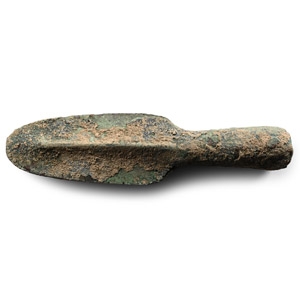
Western Asiatic Socketted Spearhead
21st-20th century B.C.Sold for (Inc. bp): £33
With a pointed biconvex blade of thick rhomboid section and strong midrib. 240 grams, 15.5 cm
Acquired 1980-2015. Ex Abelita family collection.
This spearhead is classified as subtype L 5.B.c of the mid-length spearheads by Gernez. This typology of spears is essentially known from the East Arabian Peninsula (Jebel Hafit, Samad al Shan). Various spearheads were found in the temple area at Barbar (Bahrain). One specimen was also found in Tepe Hissar (Tepe Hissar IIIC period). -
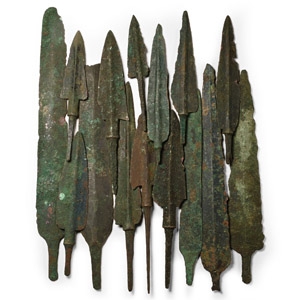
Luristan Bronze Arrows and Blades
13th-7th century B.C.Sold for (Inc. bp): £455
Including barbed-and-tanged, slender leaf-shaped and other types. 504 grams total, 10-22.2 cm
Ex London, UK, collection, 1990s. -
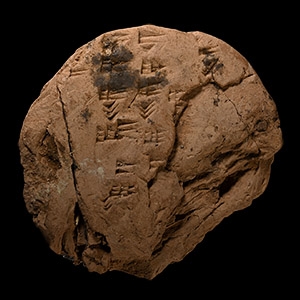
Mesopotamian Terracotta Cuneiform School Exercise Tablet
Circa 1950-1700 B.C.Sold for (Inc. bp): £468
Discoid in plan and lentoid in section, bearing cuneiform scribal work in large characters on one side. 250 grams, 10.3 cm
From a specialised collection of cuneiform texts, the property of a London gentleman and housed in London before 1992. Thence by descent to family members and dispersed in 1988 in London and Geneva.
Such scribal tablets are always of this round shape. Type IV tablets, also known as 'lentils', are circular tablets containing one or a few lines of a composition written out once by the teacher and then a second time by the student, either underneath (typical of Nippur tablets), or on the reverse. This would appear to be an example of the former.
