
Loading, please wait...


LOT 0282
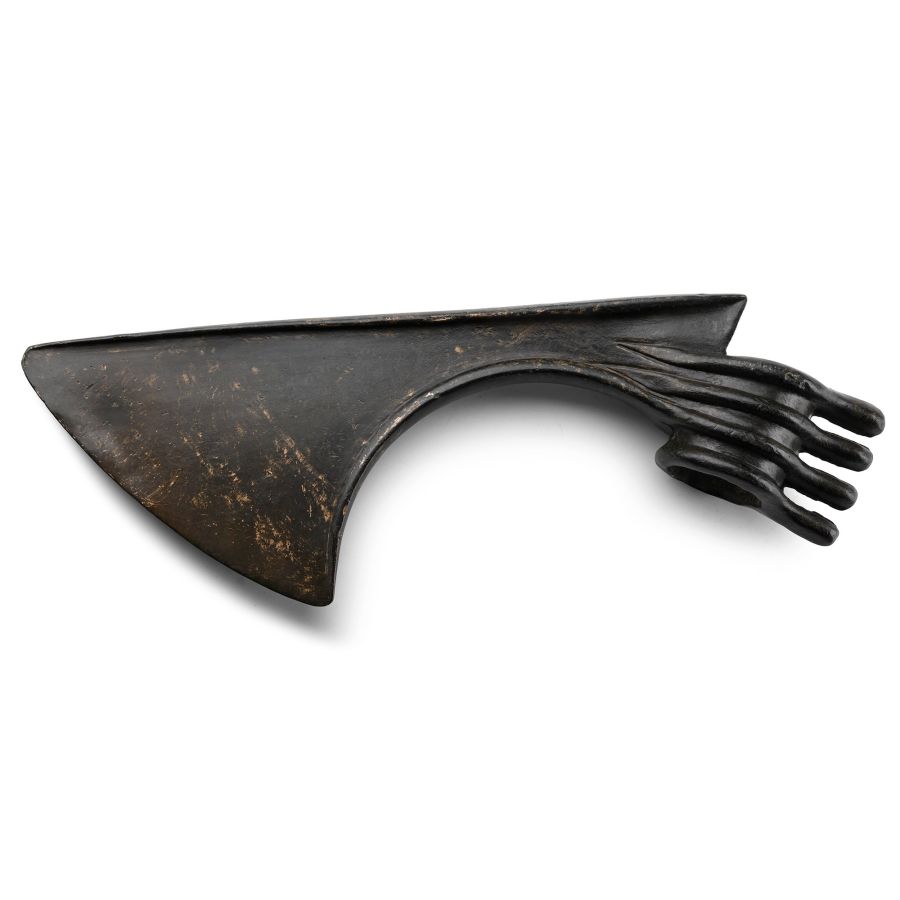
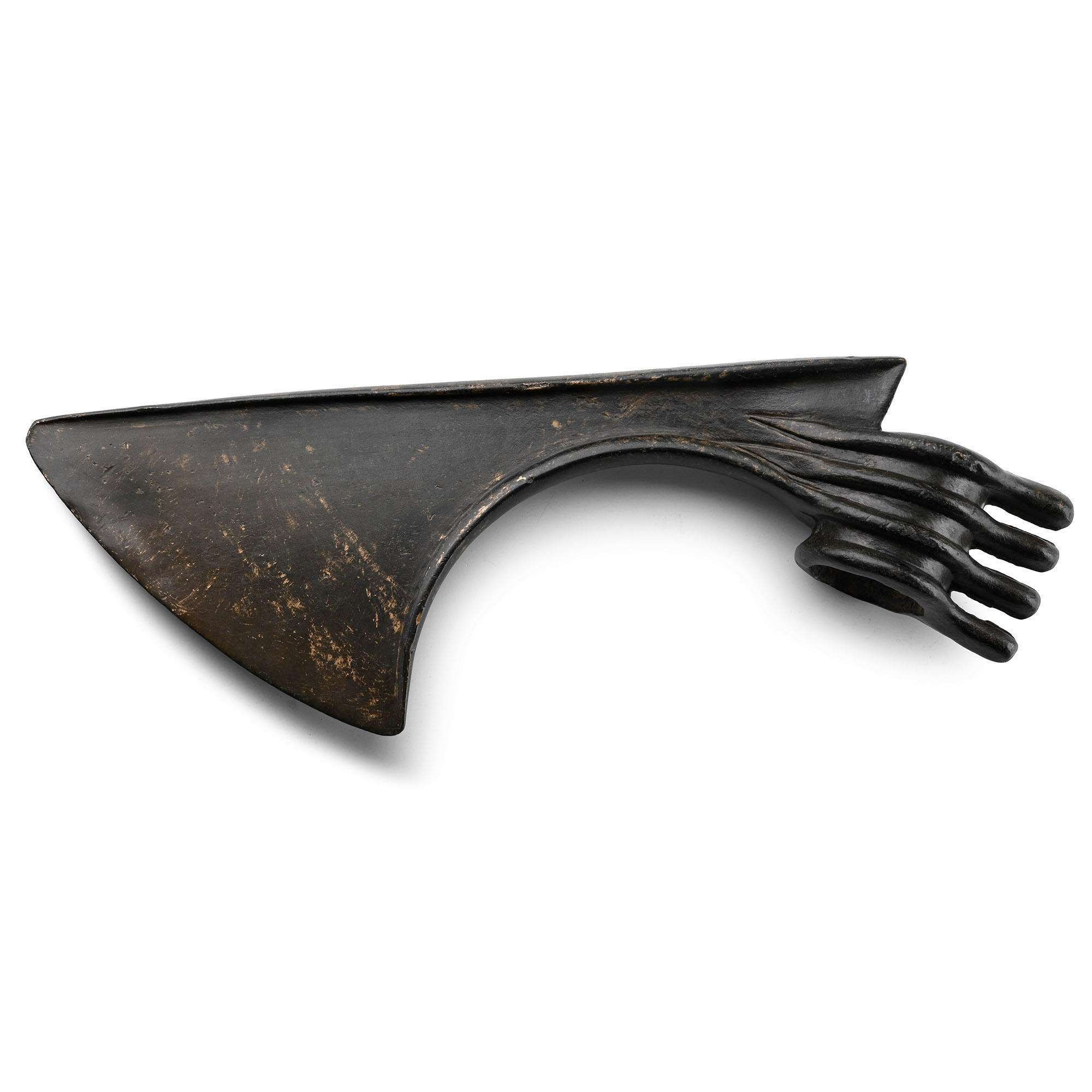
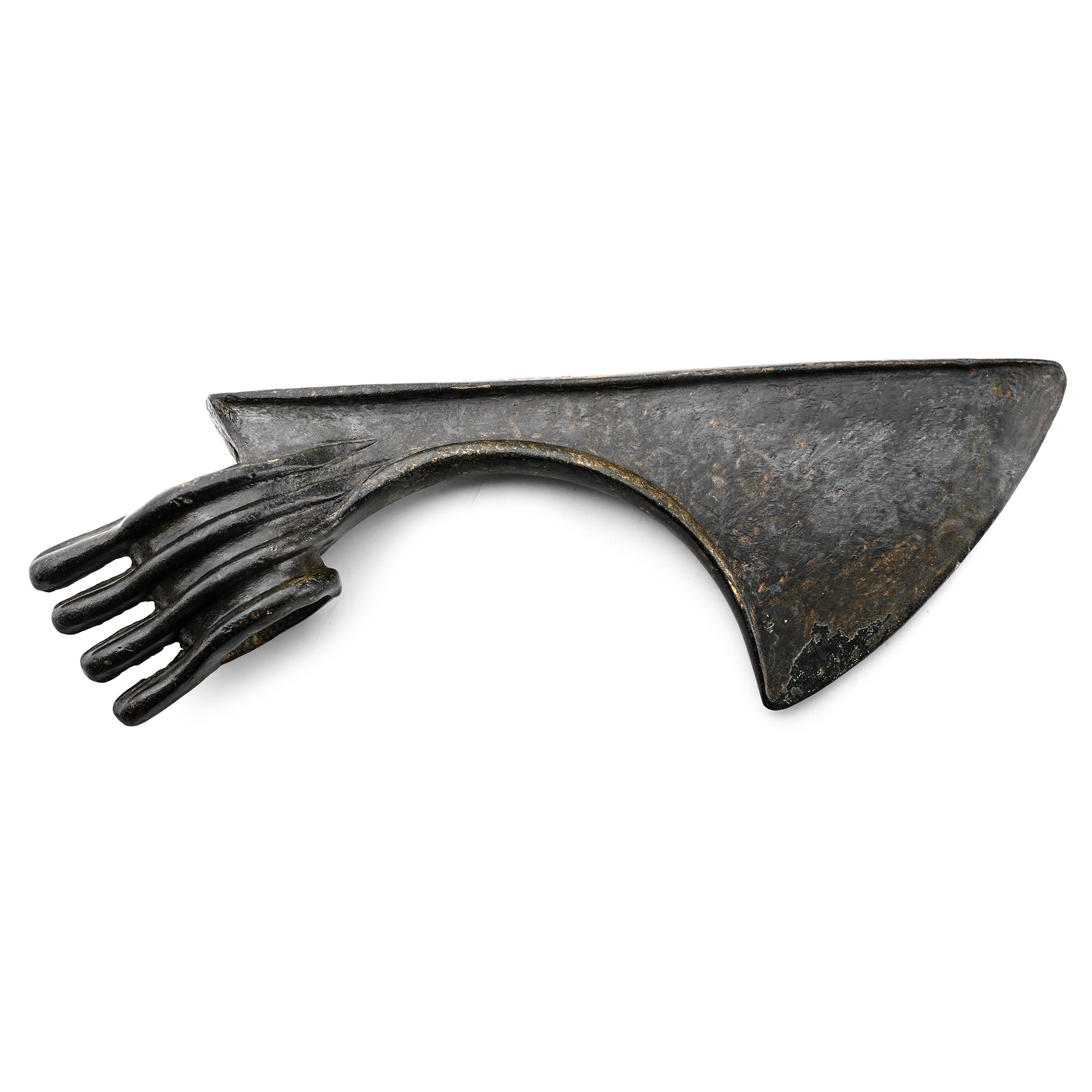
Luristan Bronze Comb-Backed Axehead
2ND-1ST MILLENNIUM B.C.
8 1/2 in. (368 grams, 21.5 cm).
With ribbed socket terminating in a butt formed of four cones, the blade expanding from the socket in a swept arc with reinforcing rim to upper and lower edges.
ProvenanceEx Abelita collection, 1980s-2010.
LiteratureCf. Godard, F., The Art of Iran, London, 1965, item 99, for type.
CONDITIONTimeLine Auctions follows a vetting process to ensure the authenticity and legality of all items, reinforcing our commitment to integrity and responsible trading. Each antiquity, antique, and coin lot undergoes thorough examination by a vetting committee of at least ten external specialists, professional trade association members, scientists, and archaeologists: Our Vetting Process
AUCTIONS:
TimeLine is a leading auction house specialising in antiquities, ancient art, collectables, natural history, coins, medals, and books. Our auctions offer museums, collectors, historians, and enthusiasts the opportunity to acquire unique and historically significant pieces.
LOT 0282
Luristan Bronze Comb-Backed Axehead
Estimate £500 - 700€580 - 810 (for guidance only)$680 - 950 (for guidance only)
Opening Bid
£275 (EUR 319; USD 371) +BP*
-
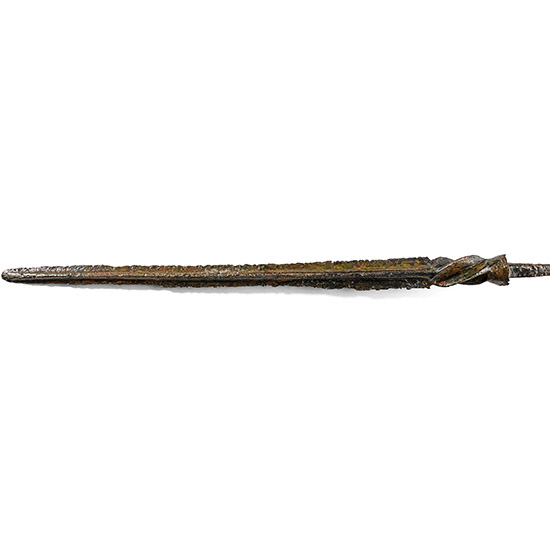
Luristan Bronze Twisted Javelin Head
2nd-1st millennium B.C.Estimate: £180 - 240 (+bp*)
Opening Bid: £90
Comprising a slender two-edged blade with gusseted midrib, rounded tip; the neck twisted through 90° ending in a conical flange; square-section tang with right-angled bend and square button finial. 320 grams, 44.5 cm
Ex Abelita collection, 1980s-2010. -
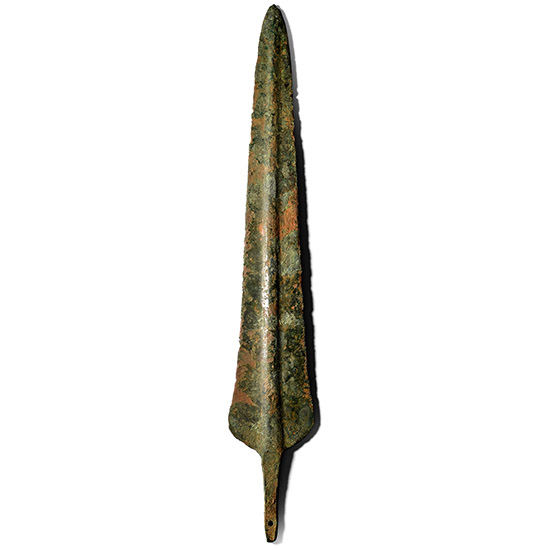
Western Asiatic Bronze Spearhead
2nd-1st millennium B.C.Estimate: £100 - 140 (+bp*)
Opening Bid: £50
Slender blade with a raised midrib and flat-section tang with attachment hole. 222 grams, 33.9 cm
Ex Abelita collection, 1980-2010. -
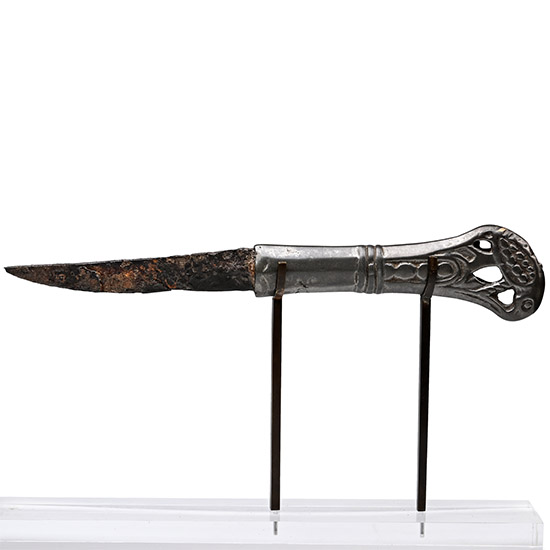
Western Siberian Iron Knife with Handle in the Shape of a Raptor
Circa 10th century A.D.Estimate: £1,800 - 2,400 (‡+bp*)
Opening Bid: £900
Single-edged iron blade attached to the hexagonal baluster in high-tin bronze; triple band forming a collar at the transition to the figural butt formed as a pecking raptor with long claws sitting on a stylised tree; annular punched eyes and pellets on the wings and the interior of the tree; mounted on a custom-made stand. 155 grams total, knife: 17 cm, 17.9 cm wide including stand
Ex W.L., USA, early 1990s. with Artemis Gallery, 26 September 2016, USA. This lot has been checked against the Interpol Database of stolen works of art and is accompanied by search certificate no.13528-263112.
Objects created in the West Siberian animal style served as ornamentation, offered protection against evil forces, and brought good fortune, while simultaneously signalling the high status of their owners. The West Siberian animal style represents a vivid artistic chapter in the history of the peoples of Western Siberia. Today, it is recognised—alongside the well-known ‘Scytho-Siberian’ and ‘Permian’ animal styles—as a distinct cultural phenomenon.
