
Loading, please wait...
LOT 1143
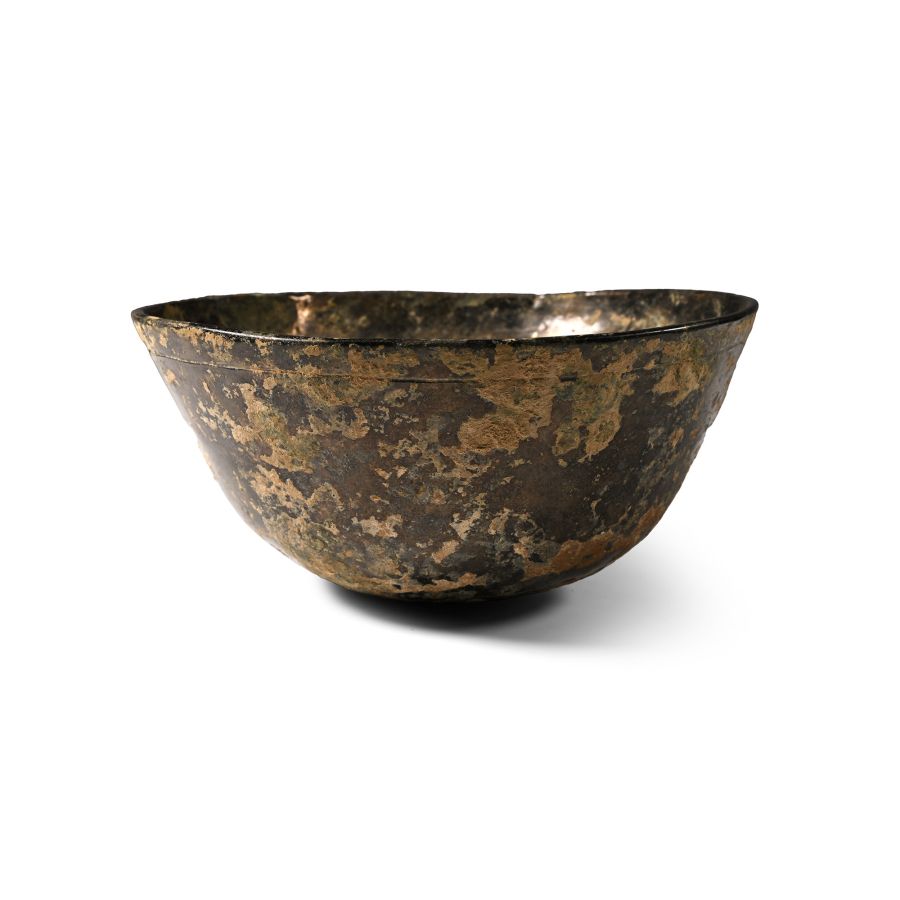
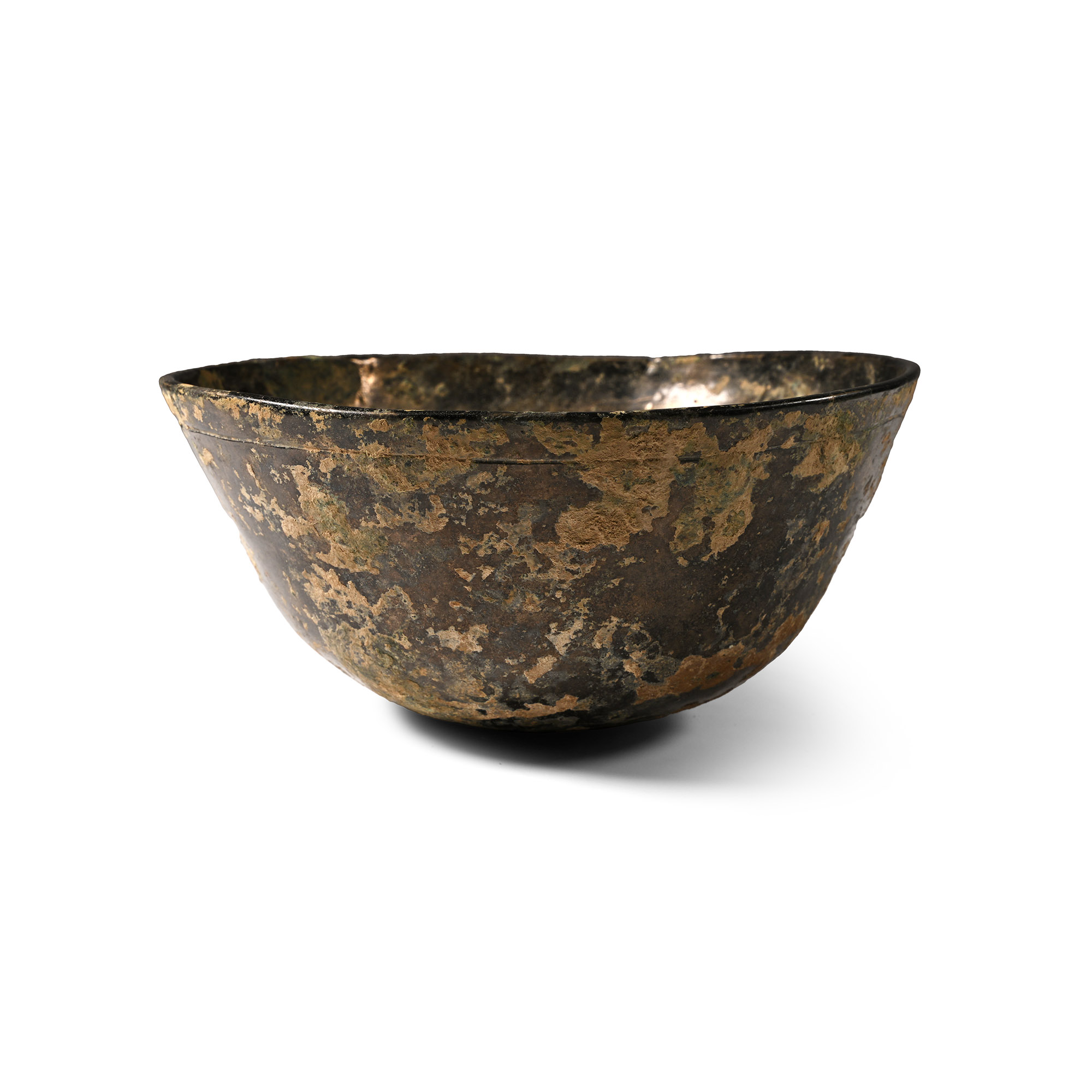
Luristan Bronze Bowl
CIRCA 1000 B.C.
6 1/8 in. (365 grams, 15.7 cm).
Of a rounded profile with rounded base, circumferential groove beneath the rim. [No Reserve]
ProvenanceEx London, UK, collections, 1990s-2000s.
This lot has been cleared against the Art Loss Register database, and is accompanied by an illustrated lot declaration signed by the Head of the Antiquities Department, Dr Raffaele D'Amato.
In the Ancient East this was a form of vessel very common at every period. Such bronze dishes with a lip were, however, extremely rare. The specimens kept in Brussels and Berlin Museums, without lips, were also found in Luristan, but are of Mesopotamian manufacture.
CONDITIONTimeLine Auctions follows a vetting process to ensure the authenticity and legality of all items, reinforcing our commitment to integrity and responsible trading. Each antiquity, antique, and coin lot undergoes thorough examination by a vetting committee of at least ten external specialists, professional trade association members, scientists, and archaeologists: Our Vetting Process
AUCTIONS:
TimeLine is a leading auction house specialising in antiquities, ancient art, collectables, natural history, coins, medals, and books. Our auctions offer museums, collectors, historians, and enthusiasts the opportunity to acquire unique and historically significant pieces.
-
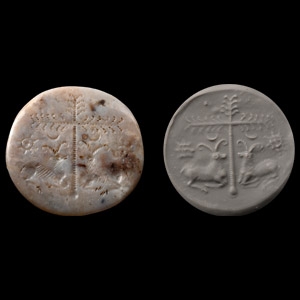
Early Dynastic Agate Stamp Seal with Recumbent Ibexes
2nd millennium B.C. or laterSold for (Inc. bp): £91
Plano-convex in profile with later intaglio central tree with three branches, on each side a recumbent ibex, crescent moon between antlers and sun behind; supplied with a museum-quality impression. 43.9 grams, 44 mm
Ex property of a London collector; acquired 1960s. Property of a North London, UK, lady. This lot has been cleared against the Art Loss Register database, and is accompanied by an illustrated lot declaration signed by the Head of the Antiquities Department, Dr Raffaele D'Amato. -
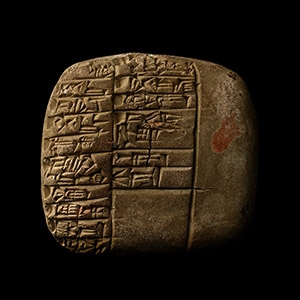
Sumerian Cuneiform Tablet Listing Goods Including 10 Shekels of Silver
Akkadian Period, circa 2300-2200 B.C.Sold for (Inc. bp): £1,950
Pillow-shaped ceramic tablet with one segmented surface; accompanied by an old scholarly note, typed and signed by W.G. Lambert, late Professor of Assyriology, University of Birmingham, 1970-1993, which states: 'Clay tablet, 53x57 mm, with 16 Lines of Sumerian Cuneiform. There are two columns of writing on the obverse only, the second not quite complete. The script dates the tablet to the Akkadian period, c.2300-2200 B.C. There is a chip off the lower edge, but all the writing is in perfect state of preservation. The text is a scholarly list of words and phrases such as scribed writing ur legal and commercial documents might use. Not everything has been understood so far, but some things are perfectly clear: A pot of lard; Bronze; x* of a mina of copper * apparently a fraction; Female kid; Male kid; Its silver 10 shekels; Bed of oak? Scholarly tablets of this kind are extremely rare for the Old Akkadian period. They are part of the scholarly list tradition which is a prominent feature of this civilization.' 68 grams, 58 mm
Ex private collection of Mr S H; thence by descent,1980-1990. Accompanied by an original typed and signed scholarly note by the late W.G. Lambert, Professor of Assyriology at the University of Birmingham, 1970-1993. This lot has been cleared against the Art Loss Register database, and is accompanied by an illustrated lot declaration signed by the Head of the Antiquities Department, Dr Raffaele D'Amato. -
.jpg)
Mesopotamian Cuneiform Tablet Fragment
Early 2nd millennium B.C.Sold for (Inc. bp): £247
Pillow-shaped fragment with cuneiform text to both broad faces. 35.3 grams, 42 mm
Specialised collection of cuneiform texts, the property of a London gentleman and housed in London before 1992. Thence by descent to family members. Examined by Professor Wilfrid George Lambert FBA (1926-2011), historian, archaeologist, and specialist in Assyriology and Near Eastern archaeology, in the late 1980s and early 1990s. This small collection is exceptional for the variety of types, including some very rare and well preserved examples. This lot has been cleared against the Art Loss Register database, and is accompanied by an illustrated lot declaration signed by the Head of the Antiquities Department, Dr Raffaele D'Amato.
