
Loading, please wait...
LOT 1324
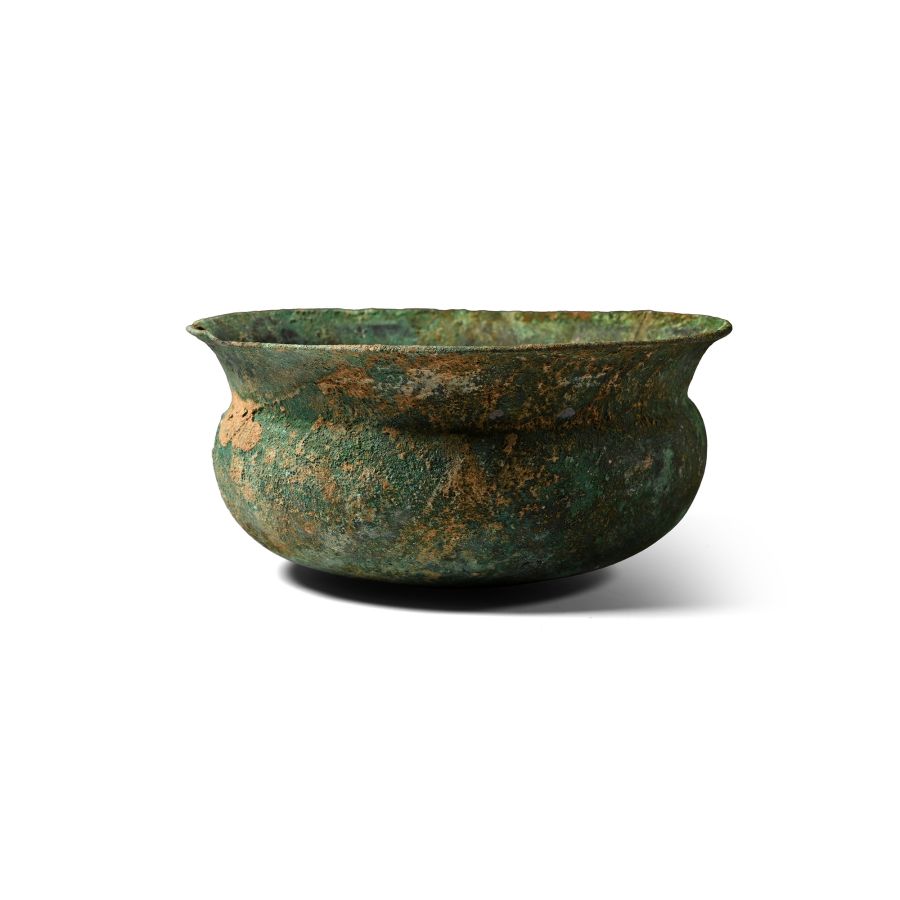
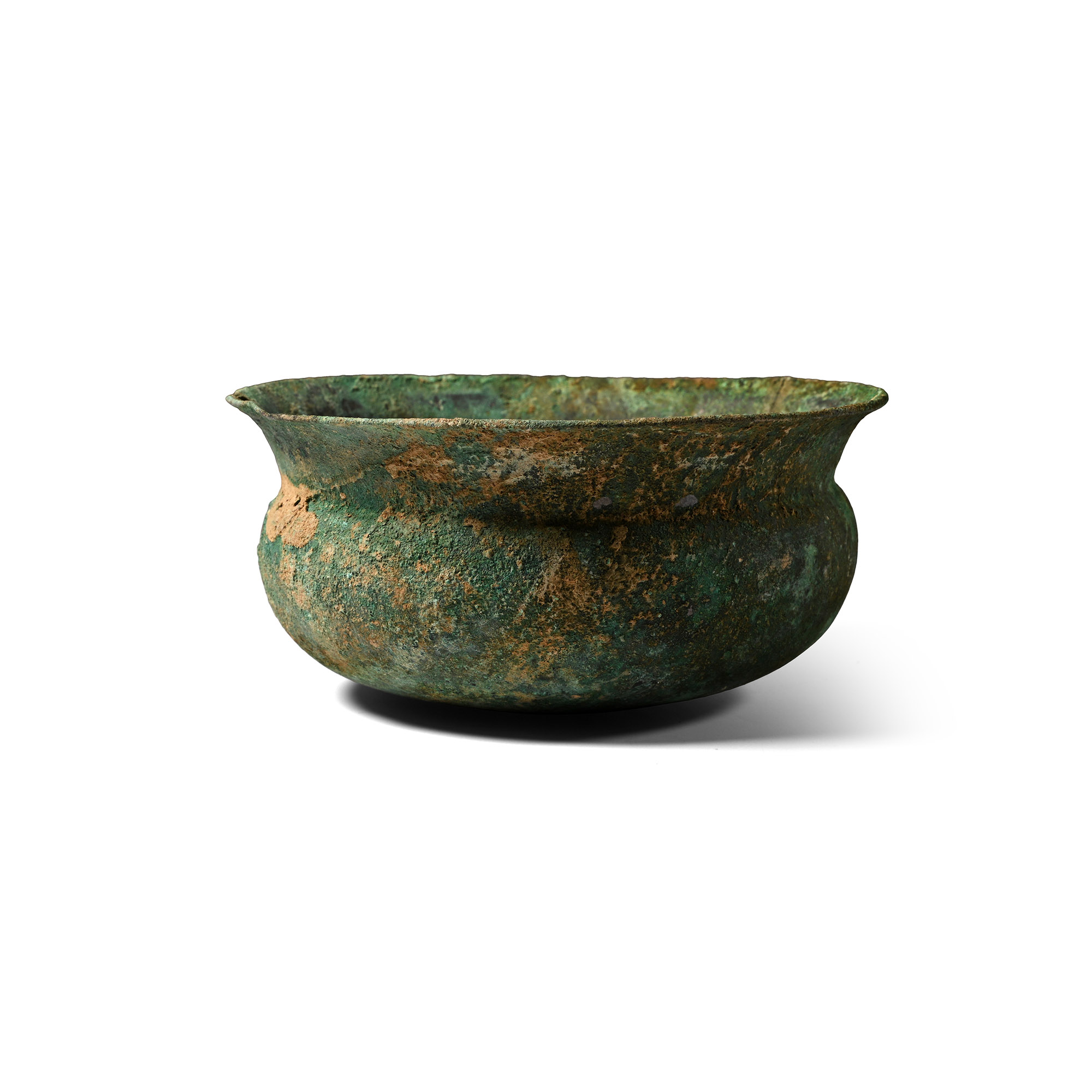
Luristan Bronze Bowl
CIRCA 1000 B.C.
4 3/4 in. (138 grams, 12.1 cm).
With globular body, round profile and flared rim. [No Reserve]
ProvenanceEx London, UK, collections, 1990s-2000s.
This lot has been cleared against the Art Loss Register database, and is accompanied by an illustrated lot declaration signed by the Head of the Antiquities Department, Dr Raffaele D'Amato.
Cf. Godard, A., Les Bronzes du Luristan, Paris, 1931, pl.LIX, no.217, for a similar bowl.
FootnotesThe people of Luristan were nomadic, constantly moving in summer and winter pastures, and needed metal utensils. Therefore, in addition to weapons, these excellent metal workers produced, in considerable numbers, light and elegant bronze vases and cups.
CONDITIONTimeLine Auctions follows a vetting process to ensure the authenticity and legality of all items, reinforcing our commitment to integrity and responsible trading. Each antiquity, antique, and coin lot undergoes thorough examination by a vetting committee of at least ten external specialists, professional trade association members, scientists, and archaeologists: Our Vetting Process
AUCTIONS:
TimeLine is a leading auction house specialising in antiquities, ancient art, collectables, natural history, coins, medals, and books. Our auctions offer museums, collectors, historians, and enthusiasts the opportunity to acquire unique and historically significant pieces.
-
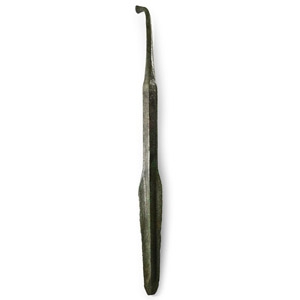
Luristan Bronze Decorated Spearhead
1200-1100 B.C.Estimate: £180 - 240 (+bp*)
Opening Bid: £90
With ovate blade, central rib and curved shoulders, the lozenge-section long shaft with edge chanel decoration tapering towards the end, rectangular tang with bent tip. 267 grams, 34.5 cm
Acquired 1980-2015. Ex Abelita family collection. This lot has been cleared against the Art Loss Register database, and is accompanied by an illustrated lot declaration signed by the Head of the Antiquities Department, Dr Raffaele D'Amato.
The spearhead represents a slender variant of type 1 of Khorasani classification. The type 1 was characterised by the bent tang. It was the evolution of a typology which began much earlier in Mesopotamia and the fertile crescent, the type 4 of the Stronach classification, with straight tang and square section, usually thickened at the base with a button tang. -
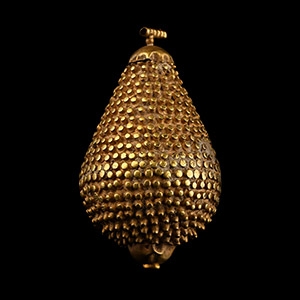
Bactrian Gold Pendant
3rd millennium B.C.Sold for (Inc. bp): £1,560
Biconvex in profile with ribbed suspension bar above, rows of regularly applied granules to the sidewall, domed end with granule finial. 14.53 grams, 41 mm
Ex private European collection, 1980s. Private collection, Switzerland, acquired in 1998. This lot has been cleared against the Art Loss Register database, and is accompanied by an illustrated lot declaration signed by the Head of the Antiquities Department, Dr Raffaele D'Amato. -
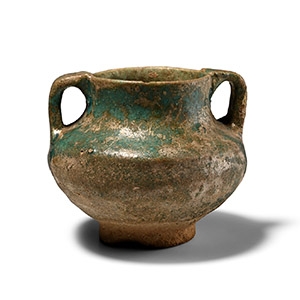
Western Asiatic Turquoise Glazed Handled Jar
12th-13th century A.D.Sold for (Inc. bp): £182
Spherical body with cylindrical neck fitted with two handles and a ring-foot, turquoise glaze and remains of iridescence; some restoration at the neck. 236 grams, 10.2 cm wide
From the private family collection of Ersula Barter-Hemmerich, the longest serving member of staff working at the United Nations, her private collection formed in the 1950s and 1960s; thence by descent to her grandson. This lot has been cleared against the Art Loss Register database, and is accompanied by an illustrated lot declaration signed by the Head of the Antiquities Department, Dr Raffaele D'Amato.
