
Loading, please wait...

LOT 1389
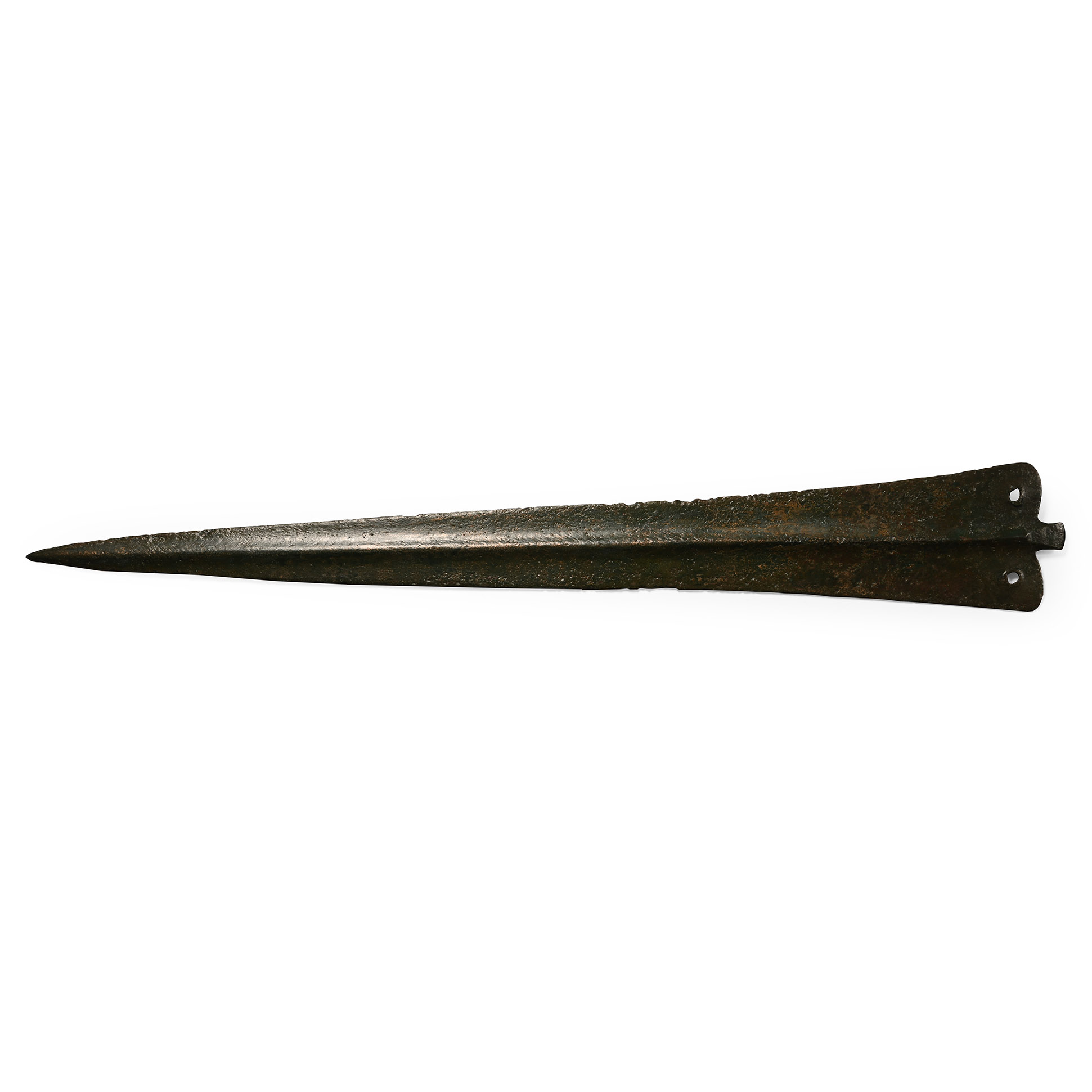
Luristan Bronze Blade
1200-1100 B.C.
14 3/8 in. (193 grams, 36.5 cm).
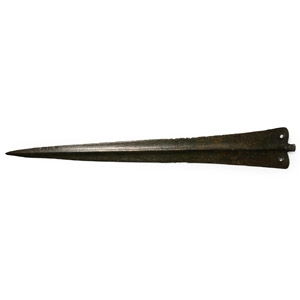
With a long pointed triangular blade and a short tang, two rivet holes at the base of the blade.
ProvenanceAcquired 1980-2015.
Ex Abelita family collection.
See Khorasani, M.M., Arms and Armor from Iran: The Bronze Age to the End of the Qajar Period, Tübingen, 2006, p.632, no.283, for type.
FootnotesThe Luri people produced a quantity of fine metalwork, which according to Dr. Khorasani, could be due to a settled period which arose as a result of the defeat of the Elamites by the Babylonians, leaving the Luristani people in relative peace for a period of time after 1200 BC. According to Khorasani 'A culture of innovation and experimentation flourished, and the repertoire of the Luristan smiths expanded in the period between 1150–1050 BC.'
CONDITIONTimeLine Auctions follows a vetting process to ensure the authenticity and legality of all items, reinforcing our commitment to integrity and responsible trading. Each antiquity, antique, and coin lot undergoes thorough examination by a vetting committee of at least ten external specialists, professional trade association members, scientists, and archaeologists: Our Vetting Process
AUCTIONS:
TimeLine is a leading auction house specialising in antiquities, ancient art, collectables, natural history, coins, medals, and books. Our auctions offer museums, collectors, historians, and enthusiasts the opportunity to acquire unique and historically significant pieces.
LOT 1389
Luristan Bronze Blade
Estimate £250 - 350€290 - 410 (for guidance only)$340 - 470 (for guidance only)
-
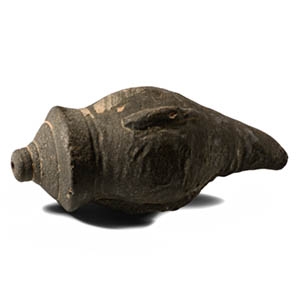
Turco-Mongol 'Greek Fire' Ceramic Fire Bomb or Hand Grenade
13th-15th century A.D.Sold for (Inc. bp): £78
A hollow vessel with cylindrical body, short neck and domed mouth, four raised lugs to the body; intended to be filled with explosive liquid and a wick, and used as a hand grenade. 427 grams, 16.2 cm
From a specialist London, UK, arms and armour collection, 1990s.
This was a type of ceramic fire grenade, similar to the ones used by the Eastern Romans but of Turco-Mongol type. Apart from the use of manual flame-throwers, special corps of soldiers employed terracotta grenades, in the form of small jars, abundantly evidenced in archaeological excavations. -
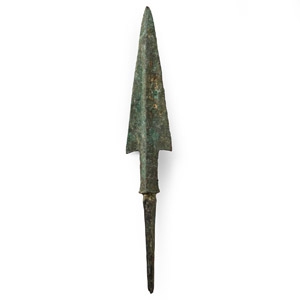
Luristan Bronze Arrowhead
13th-6th century B.C.Sold for (Inc. bp): £33
Lozengiform in section, triangular in profile with slight barbs to lower edge, stepped neck and short tang. 28.5 grams, 13.2 cm
From the private collection of Kenneth Machin (1936-2020), Buckinghamshire, UK; with collection no.BA27; his collection of antiquities and natural history was formed since 1948; thence by descent. -
Luristan Bronze Blade
1200-1100 B.C.Estimate: £250 - 350 (+bp*)
Opening Bid: £130
With a long pointed triangular blade and a short tang, two rivet holes at the base of the blade. 193 grams, 36.5 cm
Acquired 1980-2015. Ex Abelita family collection.
The Luri people produced a quantity of fine metalwork, which according to Dr. Khorasani, could be due to a settled period which arose as a result of the defeat of the Elamites by the Babylonians, leaving the Luristani people in relative peace for a period of time after 1200 BC. According to Khorasani 'A culture of innovation and experimentation flourished, and the repertoire of the Luristan smiths expanded in the period between 1150–1050 BC.'
