
Loading, please wait...
LOT 1552
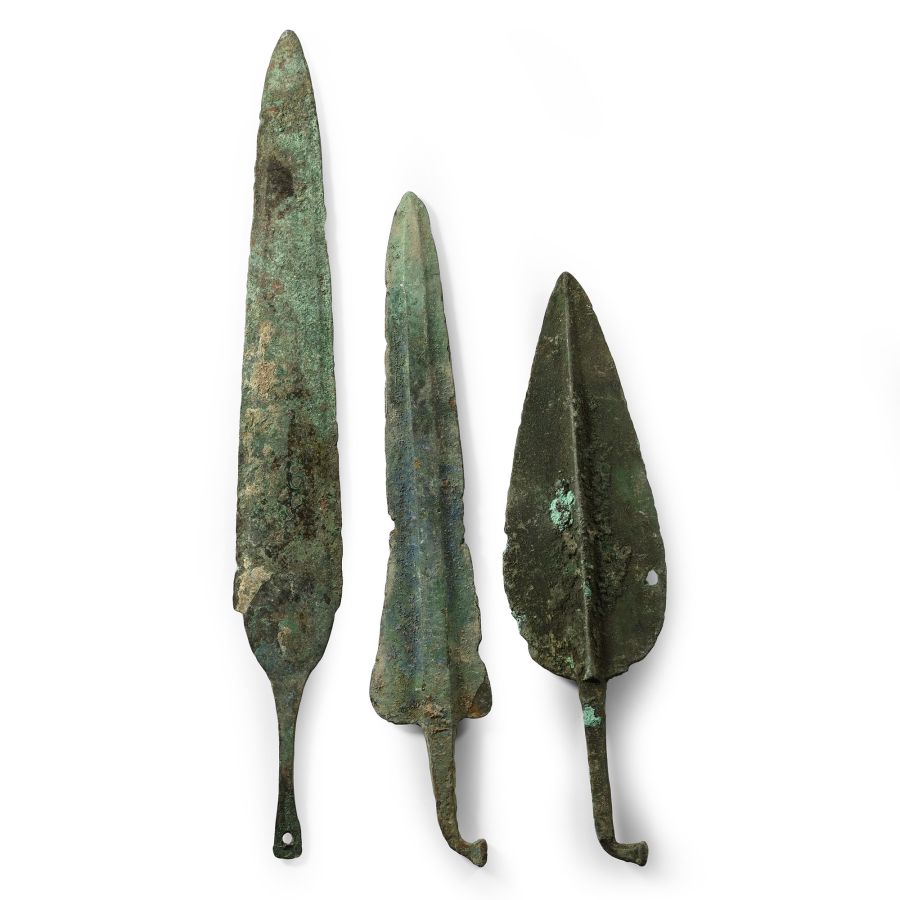
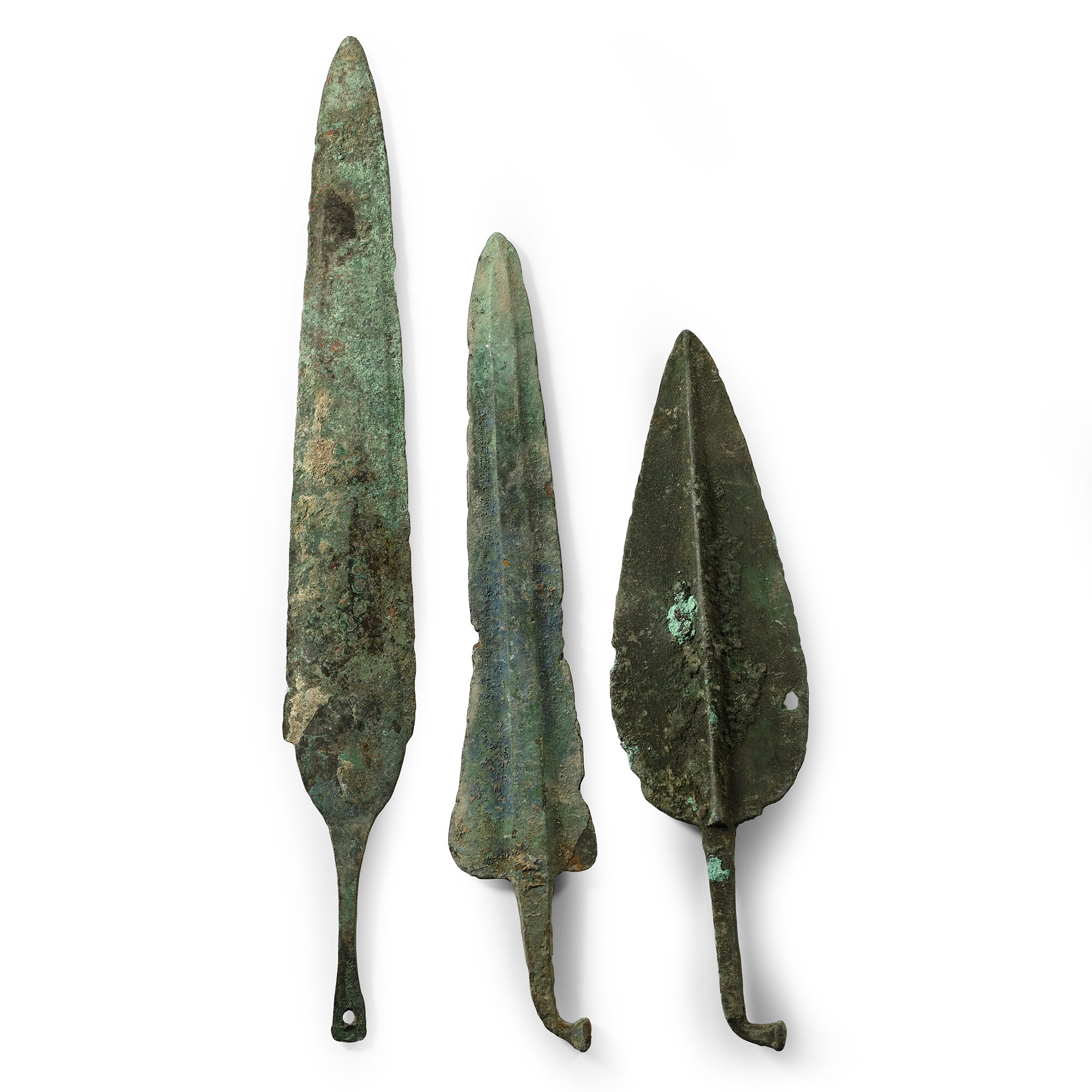
Luristan Bronze Blade Group
14TH-10TH CENTURY B.C.
7 3/8 - 10 5/8 in. (342 grams total, 18.7-27 cm).
Tanged spearheads with foliate blades, one with accentuated midrib and bent tang, another with squared shoulders and bent tang, the third with slender blade and narrow tang with fastening hole. [3]
ProvenanceAcquired 1980-2015.
Ex Abelita family collection.
This lot is accompanied by an illustrated lot declaration signed by the Head of the Antiquities Department, Dr Raffaele D’Amato.
See Khorasani, M.M., Arms and Armour from Iran. The Bronze Age to the End of the Qajar Period, Tübingen, 2006, s.cat.270, 273 and 275, for the typologies of these spearheads.
FootnotesSpearheads with large foliate blades and bent tangs were excavated in the Marlik Royal cemetery by Dr Negahban, see for example in tomb 47, Trench XXIIE. They were the evolution of a typology which began much earlier in Mesopotamia and the fertile crescent, the type 4 of the Stronach classification, with straight tang and square section, usually thickened at the base with a button tang. The foliate blade was wide and exaggerated in some specimens excavated at Marlik.
CONDITIONTimeLine Auctions follows a vetting process to ensure the authenticity and legality of all items, reinforcing our commitment to integrity and responsible trading. Each antiquity, antique, and coin lot undergoes thorough examination by a vetting committee of at least ten external specialists, professional trade association members, scientists, and archaeologists: Our Vetting Process
AUCTIONS:
TimeLine is a leading auction house specialising in antiquities, ancient art, collectables, natural history, coins, medals, and books. Our auctions offer museums, collectors, historians, and enthusiasts the opportunity to acquire unique and historically significant pieces.
-
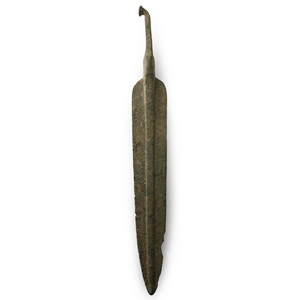
Massive Amlash Bronze Spearhead Blade
13th-12th century B.C.Estimate: £100 - 140 (+bp*)
Opening Bid: £50
With large ovate blade, broad midrib, rounded shoulders and rectangular-section tang with bent tip ending with a button. 370 grams, 42.5 cm
Acquired 1980-2015. Ex Abelita family collection. This lot is accompanied by an illustrated lot declaration signed by the Head of the Antiquities Department, Dr Raffaele D’Amato.
The massive spearhead belongs to type 1 of the Khorasani classification. Similar excavated examples from Marlik attest the use of such spearheads with bent tang in the area, and Stutzinger dated such weapons to 1200-1100 B.C. The type was the evolution of a typology which began much earlier in Mesopotamia and the fertile crescent, the type 4 of the Stronach classification, with straight square-section tang, usually thickened at the base with a button tang. -
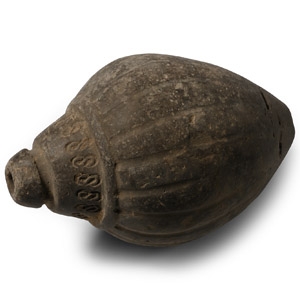
Byzantine 'Greek Fire' Ceramic Fire Bomb or Hand Grenade
9th-11th century A.D.Sold for (Inc. bp): £182
A piriform missile with dimed filler-hole, ribbed body and a band of stamped S-motifs around the neck, intended to be filled with explosive liquid and wick, used as a hand grenade. 560 grams, 14.2 cm
From an important specialist collection, London, UK, 1990s onwards. Accompanied by an academic paper by military specialist Dr Raffaele D'Amato, dated 15 July 2019 and titled 'Eastern Roman Empire - Greek Fire Bomb or Hand Grenade (μεσαίον kακάβιον) 9th-11th century AD'. This lot is accompanied by an illustrated lot declaration signed by the Head of the Antiquities Department, Dr Raffaele D’Amato. -
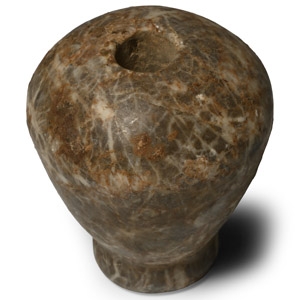
Western Asiatic Stone Macehead
3rd-2nd millennium B.C.Sold for (Inc. bp): £117
Tubular in form with tapering profile and balustered socket. 342 grams, 75 mm
From the collection of a London, UK, gentleman, 1990s. This lot is accompanied by an illustrated lot declaration signed by the Head of the Antiquities Department, Dr Raffaele D’Amato.
