
Loading, please wait...
LOT 0260
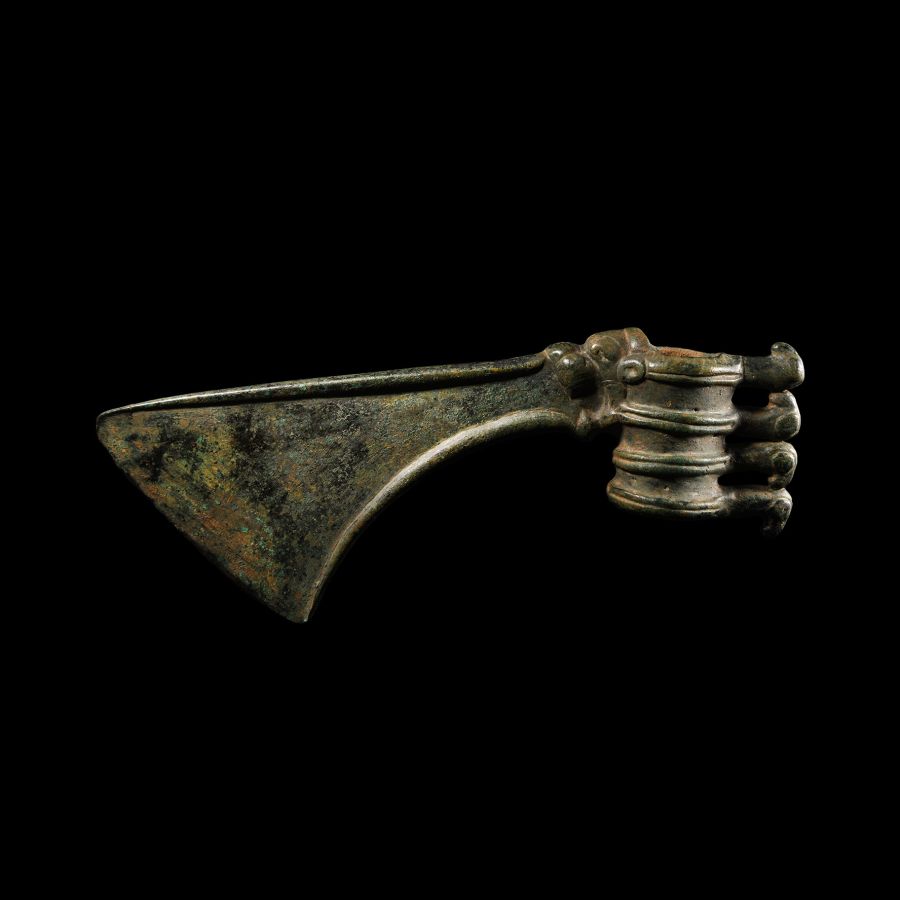
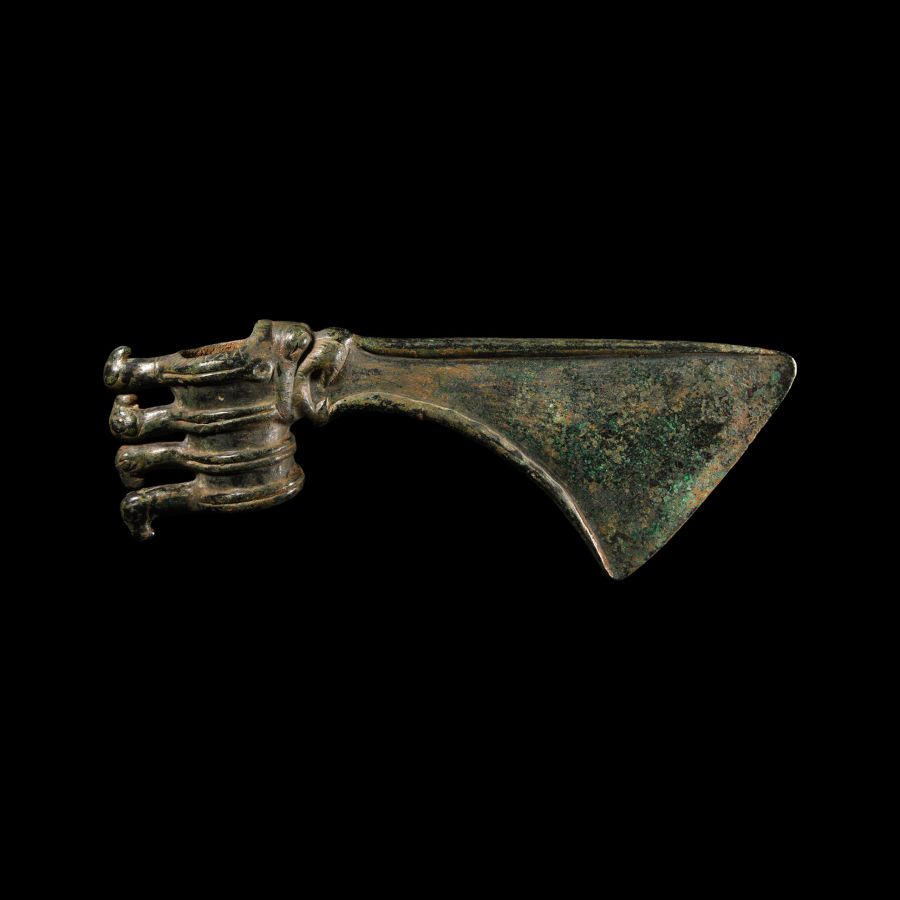
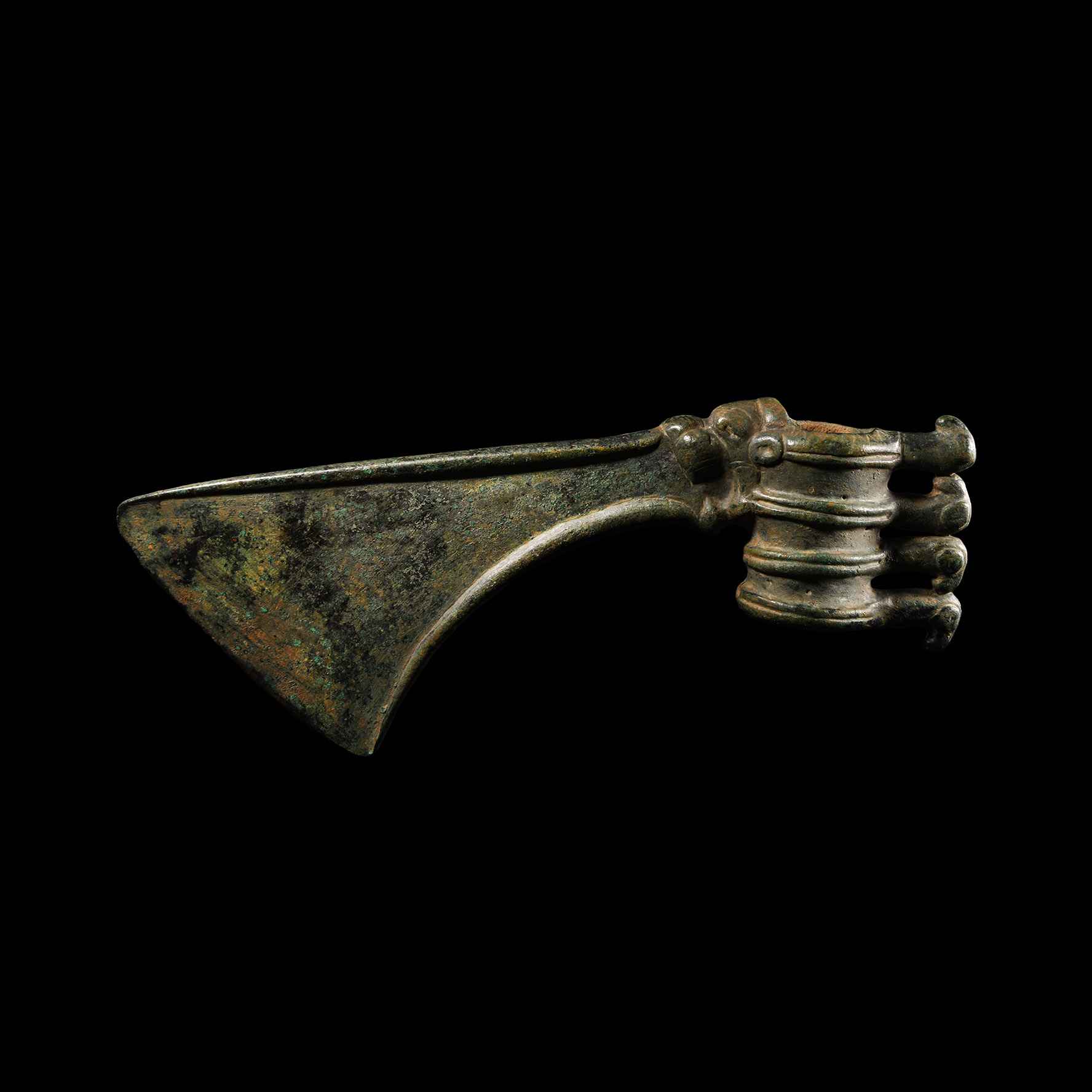
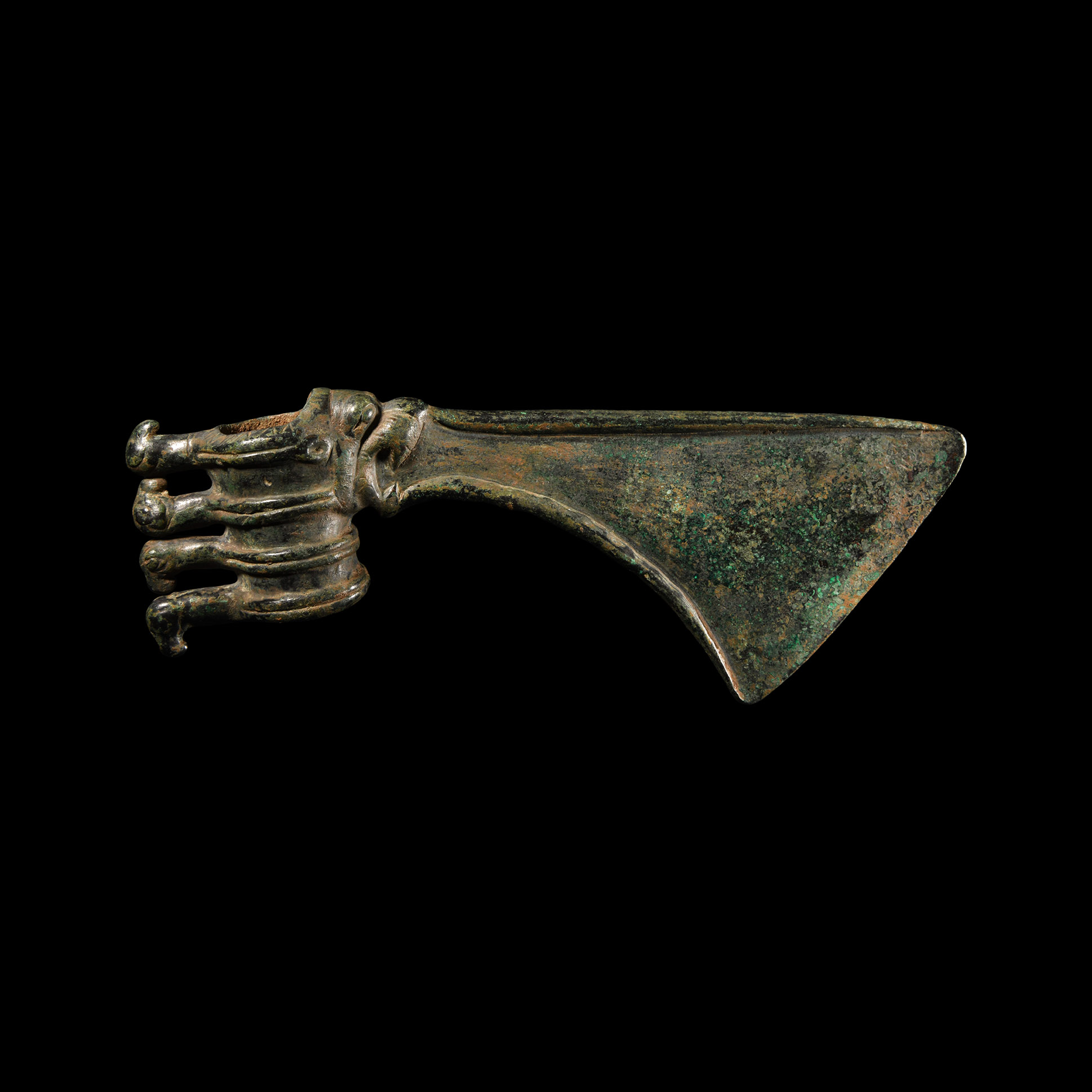
Luristan Bronze Bird Spike-Butted Axehead
11TH-8TH CENTURY B.C.
8 7/8 in. (478 grams, 22.5 cm).
Blade with folded upper and lower edge, cylindrical socket with projecting ribs formed as the necks and heads of birds, blade 'projecting' from the mouth of a roaring lion at the neck.
ProvenanceEx Parisian private collection.
with Cuvreau Expertises Enchères S.A., sale 60, 21 June 2009, lot 105.
This lot has been checked against the Interpol Database of stolen works of art and is accompanied by search certificate number no.11876-206787.
This lot has been cleared against the Art Loss Register database, and is accompanied by an illustrated lot declaration signed by the Head of the Antiquities Department, Dr Raffaele D’Amato.
Cf. The British Museum, museum number 130676 for similar; cf. The Metropolitan Museum, New York, accession numbers 32.161.3 and 1988.102.2, for similar.
CONDITIONTimeLine Auctions follows a vetting process to ensure the authenticity and legality of all items, reinforcing our commitment to integrity and responsible trading. Each antiquity, antique, and coin lot undergoes thorough examination by a vetting committee of at least ten external specialists, professional trade association members, scientists, and archaeologists: Our Vetting Process
AUCTIONS:
TimeLine is a leading auction house specialising in antiquities, ancient art, collectables, natural history, coins, medals, and books. Our auctions offer museums, collectors, historians, and enthusiasts the opportunity to acquire unique and historically significant pieces.
-
Massive Amlash Bronze Spearhead Blade
13th-12th century B.C.Estimate: £100 - 140 (+bp*)
Opening Bid: £50
With large ovate blade, broad midrib, rounded shoulders and rectangular-section tang with bent tip ending with a button. 370 grams, 42.5 cm
Acquired 1980-2015. Ex Abelita family collection. This lot is accompanied by an illustrated lot declaration signed by the Head of the Antiquities Department, Dr Raffaele D’Amato.
The massive spearhead belongs to type 1 of the Khorasani classification. Similar excavated examples from Marlik attest the use of such spearheads with bent tang in the area, and Stutzinger dated such weapons to 1200-1100 B.C. The type was the evolution of a typology which began much earlier in Mesopotamia and the fertile crescent, the type 4 of the Stronach classification, with straight square-section tang, usually thickened at the base with a button tang. -
Turco-Mongol 'Greek Fire' Ceramic Fire Bomb or Hand Grenade
14th-15th century A.D.Sold for (Inc. bp): £78
A hollow vessel with cylindrical body, short neck and domed mouth, impressed decorative bands to the upper body; intended to be filled with explosive liquid and a wick, and used as a hand grenade. 750 grams, 15.5 cm
From an important specialist collection, London, UK, 1990s onwards. Accompanied by an academic paper by military specialist Dr Raffaele D'Amato, dated 15 July 2019 and titled 'Eastern Roman Empire - Greek Fire Bomb or Hand Grenade (μεσαίον kακάβιον) 9th-11th century AD'. This lot is accompanied by an illustrated lot declaration signed by the Head of the Antiquities Department, Dr Raffaele D’Amato. -
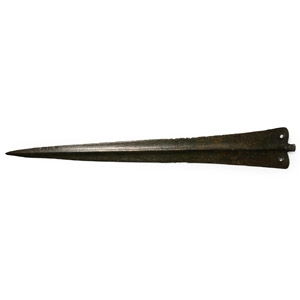
Luristan Bronze Blade
1200-1100 B.C.Estimate: £250 - 350 (+bp*)
Opening Bid: £130
With a long pointed triangular blade and a short tang, two rivet holes at the base of the blade. 193 grams, 36.5 cm
Acquired 1980-2015. Ex Abelita family collection. This lot is accompanied by an illustrated lot declaration signed by the Head of the Antiquities Department, Dr Raffaele D’Amato.
The Luri people produced a quantity of fine metalwork, which according to Dr. Khorasani, could be due to a settled period which arose as a result of the defeat of the Elamites by the Babylonians, leaving the Luristani people in relative peace for a period of time after 1200 BC. According to Khorasani 'A culture of innovation and experimentation flourished, and the repertoire of the Luristan smiths expanded in the period between 1150–1050 BC.'
