
Loading, please wait...
LOT 1581
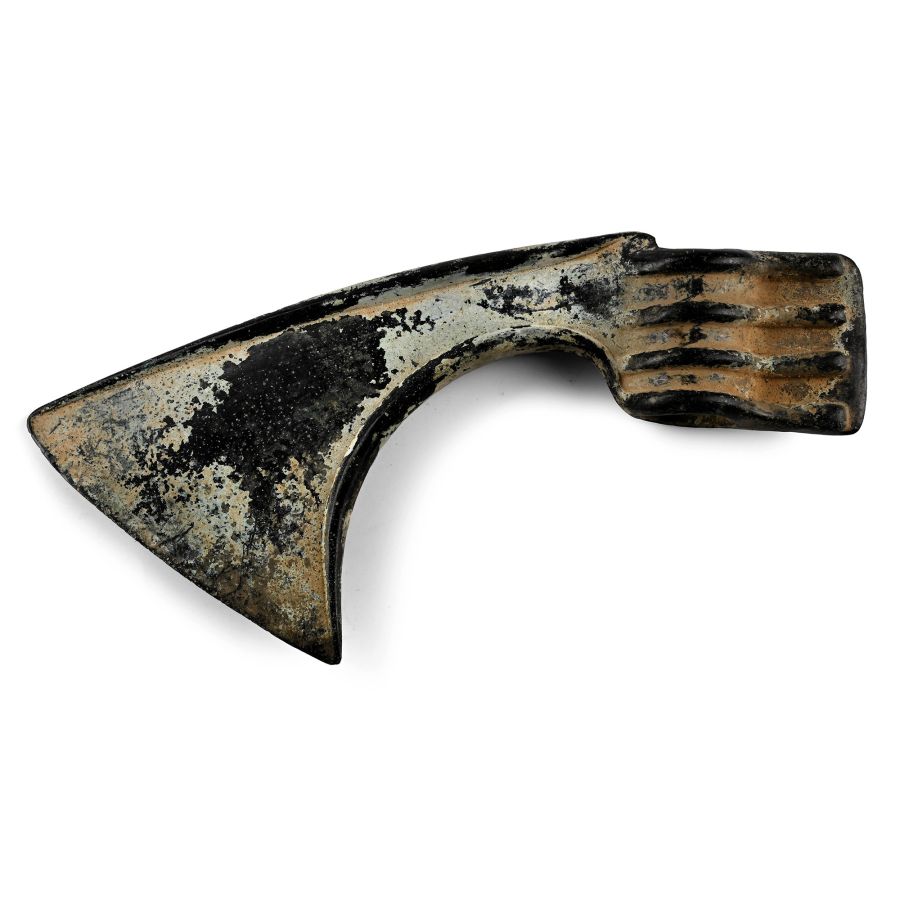
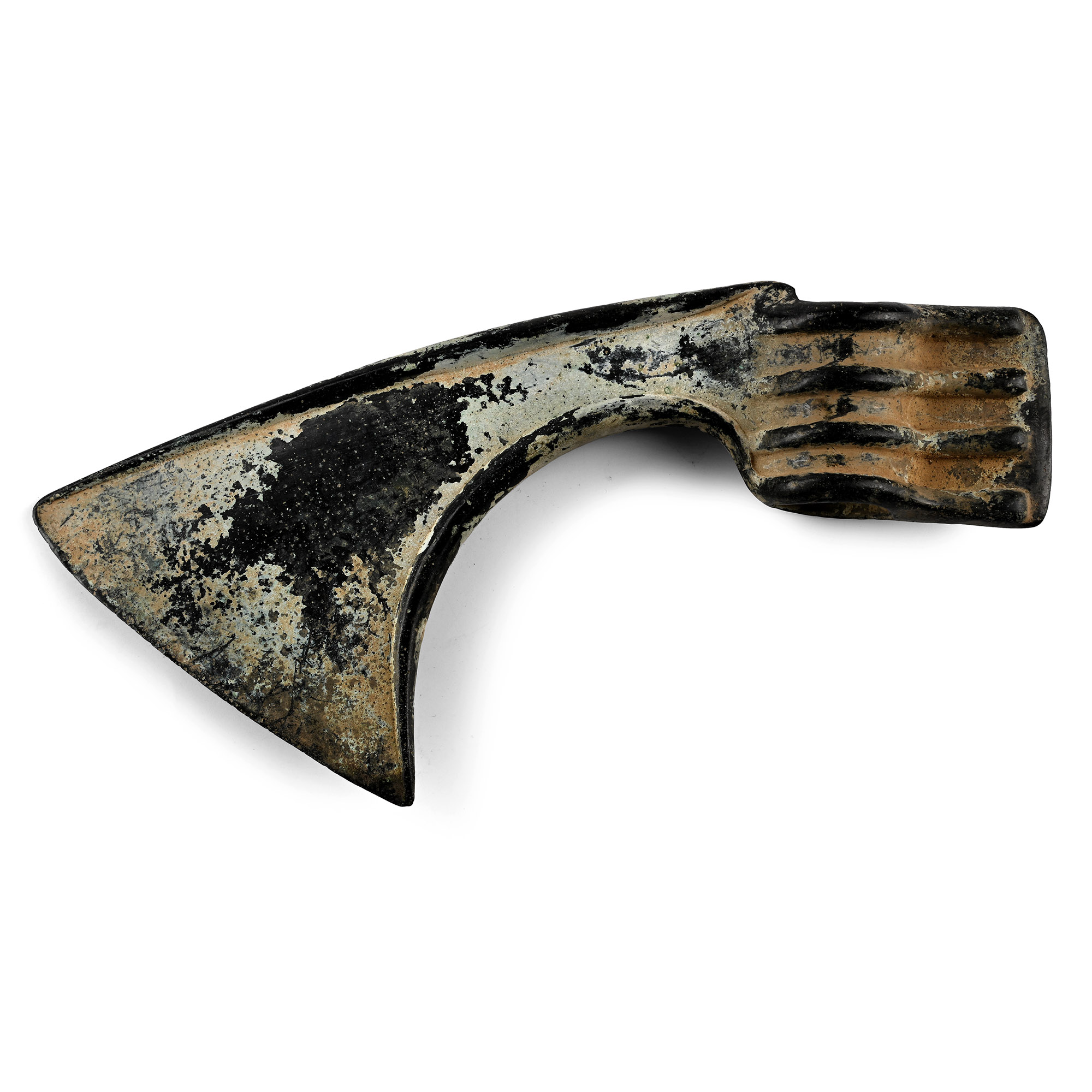
Luristan Bronze Axehead
12TH-11TH CENTURY B.C.
8 5/8 in. (390 grams, 22 cm).
A spike-butted axehead with a short cylindrical socket with four furrowed ribs leading to four short spikes, blade with curved upper and lower edges and a convex cutting edge.
ProvenanceEx Abelita family collection, 1980s-2000s.
LiteratureCf. Moorey, P.R.S., Catalogue of the ancient Persian Bronzes in the Ashmolean Museum, Oxford, 1971, pl.2, nos.14-16, items 51-52; cf. also Musee' Cernuschi, Bronzes de Luristan, enigmes de l'Iran Ancien, IIIe-Ier millenaire av. J.C., Paris, 2008, p.44, fig.1,3; p.97, no.45, for similar types.
FootnotesIt is difficult to know whether this type of axe, given its high decoration in some specimens, was used as a weapon or was a symbol of rank and prestige, employed for ceremonial or cult purposes. However, considering that the concept of parade weapons did not exist in the surrounding areas in Antiquity, these axes were most probably used for both military and ceremonial purposes.
CONDITIONTimeLine Auctions follows a vetting process to ensure the authenticity and legality of all items, reinforcing our commitment to integrity and responsible trading. Each antiquity, antique, and coin lot undergoes thorough examination by a vetting committee of at least ten external specialists, professional trade association members, scientists, and archaeologists: Our Vetting Process
AUCTIONS:
TimeLine is a leading auction house specialising in antiquities, ancient art, collectables, natural history, coins, medals, and books. Our auctions offer museums, collectors, historians, and enthusiasts the opportunity to acquire unique and historically significant pieces.
LOT 1581
Luristan Bronze Axehead
Estimate £300 - 400€350 - 460 (for guidance only)$410 - 540 (for guidance only)
-
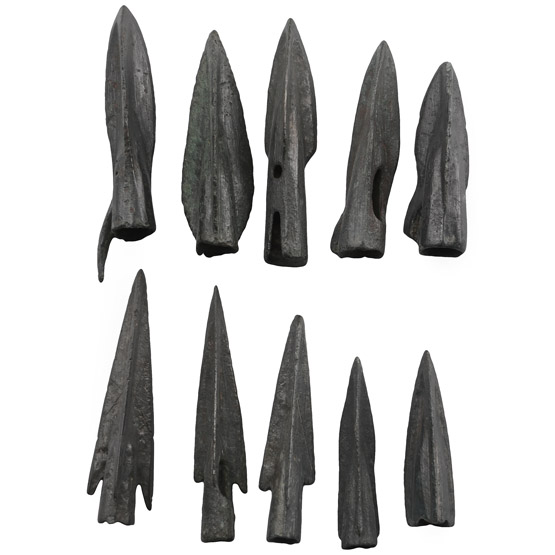
Greek Bronze Arrowhead Group
5th-3rd century B.C.Sold for (Inc. bp): £85
Socketted type with three radiating narrow flanges. 22.92 grams total, 24-38 mm
Ex German art market, 2000s. Acquired from an EU collector living in London. From the collection of a Surrey, UK, gentleman. -
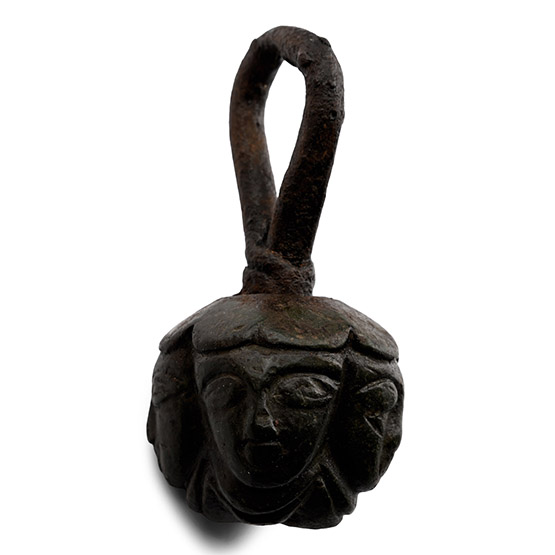
Medieval Bronze Flail Head with Four Heads
14th-15th century A.D.Sold for (Inc. bp): £468
Formed as four radiating D-shaped masks beneath a rosette, substantial suspension loop. 114 grams, 60 mm
From the private collection of a London gentleman, from his grandfather's collection formed before the early 1970s. -
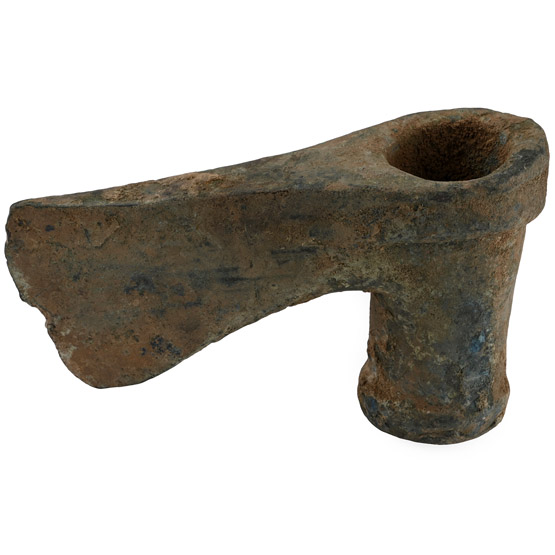
Large Luristan Bronze Socketted Axehead
2nd-1st millennium B.C.Sold for (Inc. bp): £117
With convex cutting edge and prominent round socket. 955 grams, 14.4 cm
Ex Abelita family collection, 1980s-2000s.
