
Loading, please wait...
LOT 1094
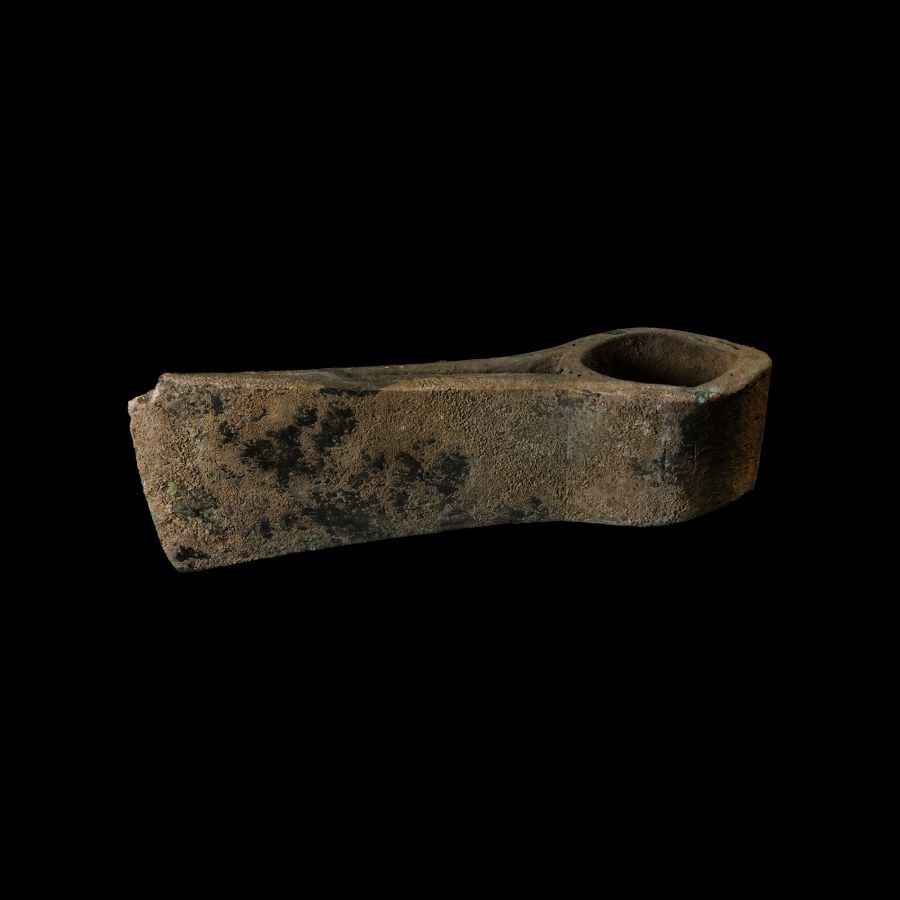
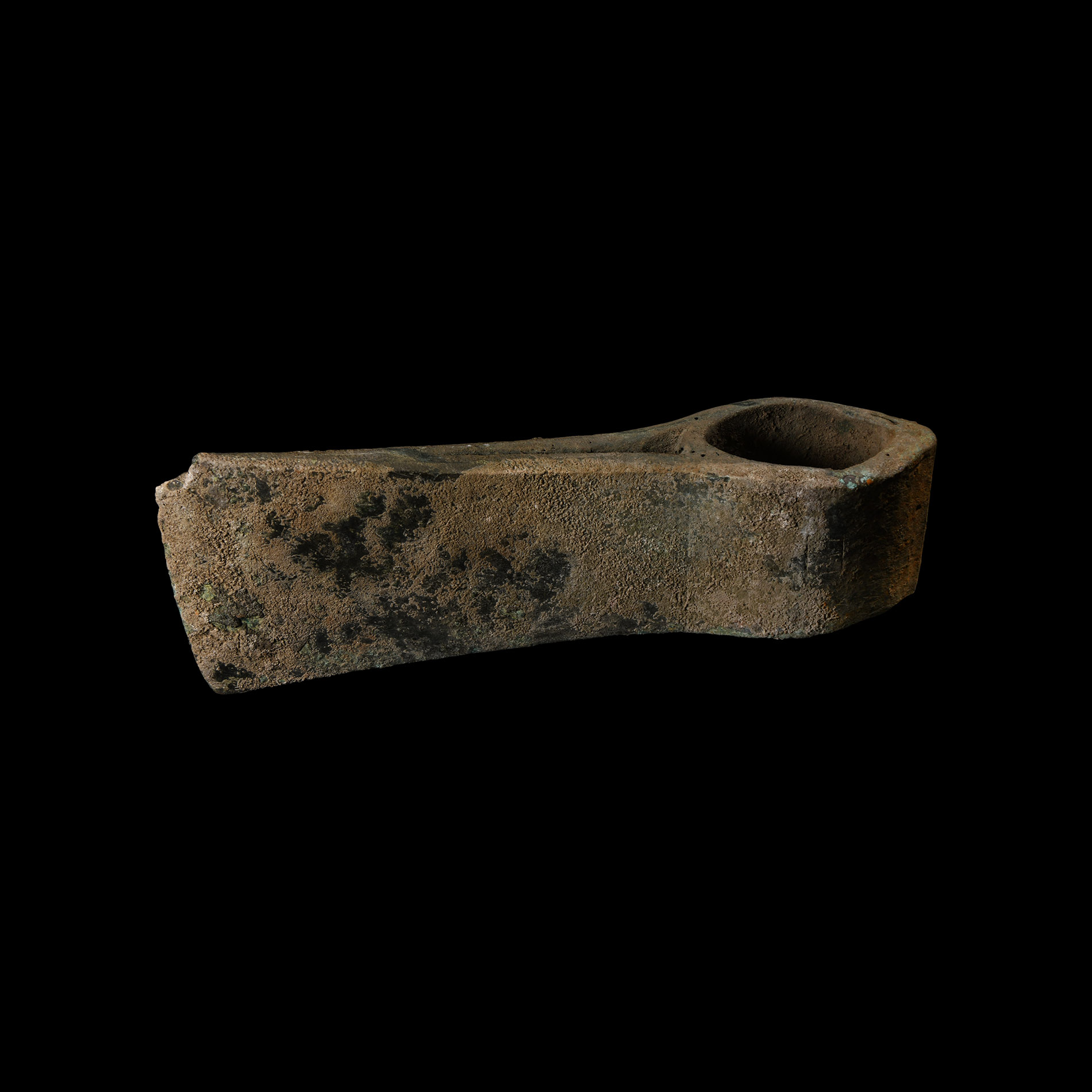
Luristan Bronze Axehead
12TH-11TH CENTURY B.C.
6 7/8 in. (939 grams, 17.5 cm).
With elliptical socket and slightly flaring cheeks with cutting edge.
ProvenanceAcquired 1990s-early 2000s.
East Anglian private collection.
The axe corresponds to the Maxwell-Hyslop Type 20A, similar to specimens from Ordu and purely Asiatic in inspiration. An axe from Giyan has a distinct shaft tube which is not present on the Ordu axe, but the shape of the blade is similar and it is probable that smiths travelling over the Eastern Anatolian and Persian trade routes were responsible for making these typologies of axes.
CONDITIONTimeLine Auctions follows a vetting process to ensure the authenticity and legality of all items, reinforcing our commitment to integrity and responsible trading. Each antiquity, antique, and coin lot undergoes thorough examination by a vetting committee of at least ten external specialists, professional trade association members, scientists, and archaeologists: Our Vetting Process
AUCTIONS:
TimeLine is a leading auction house specialising in antiquities, ancient art, collectables, natural history, coins, medals, and books. Our auctions offer museums, collectors, historians, and enthusiasts the opportunity to acquire unique and historically significant pieces.
-
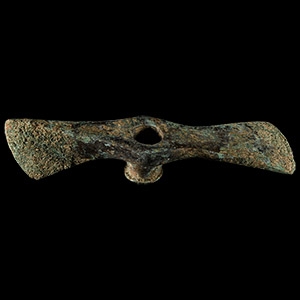
Large Luristan Socketted Adze-Axehead
13th-7th century B.C.Sold for (Inc. bp): £208
With central socket and shaft; cutting blade set vertically at a right-angle; the short pick-adze blade arranged horizontally. 1.43 kg, 26 cm
Acquired 1980-2015. Ex Abelita family collection.
The earliest axes-adzes from the 3rd millennium B.C. were weapons and tools furnished with socket holes. Usually the socket is a more secure way of attaching the object to a wooden haft than having a tang. These weapons developed into a plethora of different forms in the 2nd millennium B.C., and the numerous new forms and were used until at least 800 B.C. -
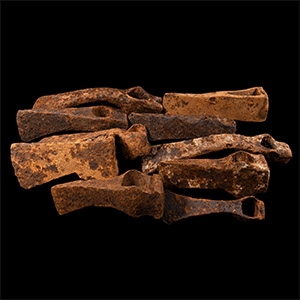
Viking Age and Later Axehead Group
Circa 11th-18th century A.D.Estimate: £100 - 140 (+bp*)
Opening Bid: £50
Comprising socketted axeheads of various types; some possibly stamped with maker's marks. 7 kg total, 16-24.5 cm
Acquired 1990s-early 2000s. East Anglian private collection. -
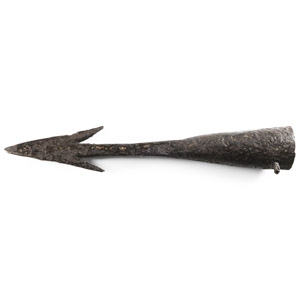
Late Roman Iron Socketted Javelin
4th-6th century A.D.Sold for (Inc. bp): £208
Fitted with a triangular blade with two barbs, expanding tubular socket. 213 grams, 23.5 cm
From the private collection of a London gentleman, from his grandfather's collection formed before the early 1970s.
Since the third century, Roman soldiers increasingly started to use long shafted socketed weapons with barbed heads. These weapons were called bebrae by Vegetius, according to whom they were able to cut heads with a single stroke. They first appeared in Northern Europe, as shown by numerous finds of barbed heads in graves and peat-bogs, especially Danish, and were introduced to the Roman army by Germanic mercenaries.
