
Loading, please wait...
LOT 1235
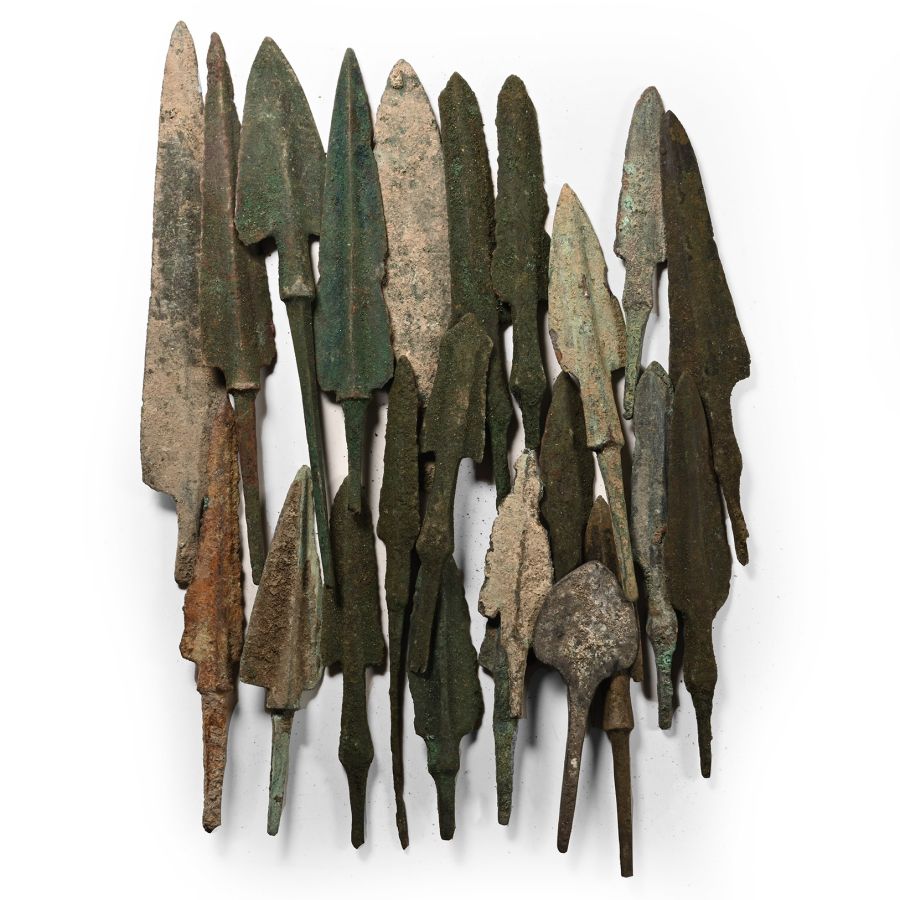
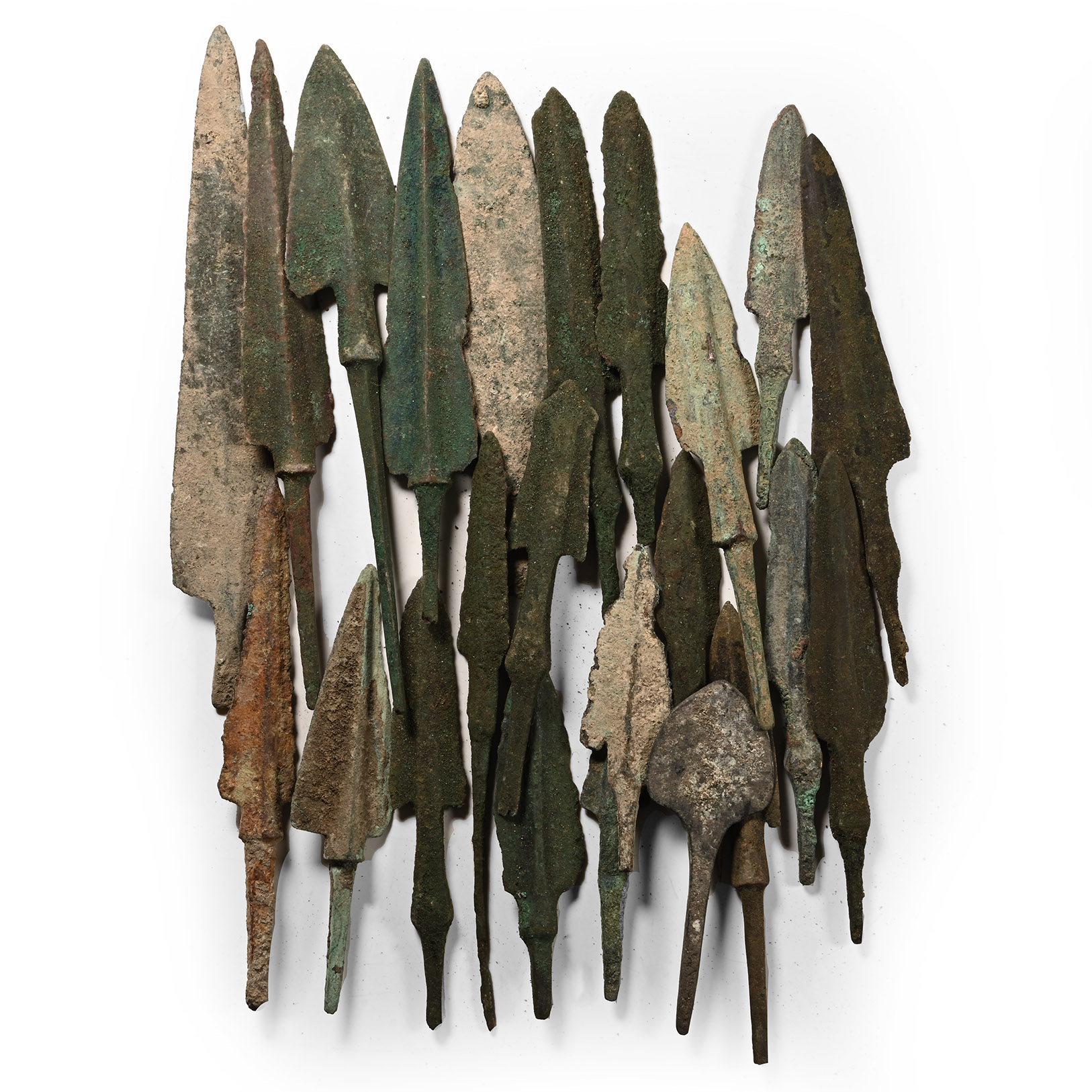
Luristan Bronze Arrows and Blades
13TH-7TH CENTURY B.C.
2 3/8 - 5 3/8 in. (367 grams total, 6.2-13.8 cm).
Including tanged, spade-shaped, leaf-shaped and others. [23]
ProvenanceEx London, UK, collection, 1990s.
CONDITIONTimeLine Auctions follows a vetting process to ensure the authenticity and legality of all items, reinforcing our commitment to integrity and responsible trading. Each antiquity, antique, and coin lot undergoes thorough examination by a vetting committee of at least ten external specialists, professional trade association members, scientists, and archaeologists: Our Vetting Process
AUCTIONS:
TimeLine is a leading auction house specialising in antiquities, ancient art, collectables, natural history, coins, medals, and books. Our auctions offer museums, collectors, historians, and enthusiasts the opportunity to acquire unique and historically significant pieces.
-
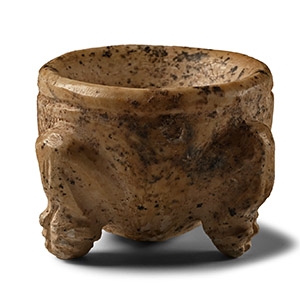
Sumerian Alabaster Cosmetic Dish
Mid 2nd millennium B.C.Sold for (Inc. bp): £312
Featuring a shallow rounded bowl supported by three beast feet, possibly depicting reclining lions; inked inscription to the underside: '88.349', probably recording an acquisition date of 1988. 21.9 grams, 35 mm
Ex Mayfair gallery pre 1999. Accompanied by a previous typed cataloguing card. -
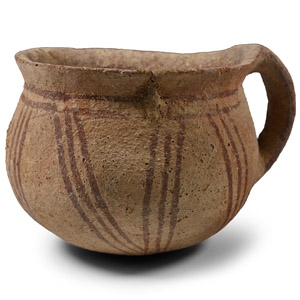
Jordanian Painted Terracotta Cup
2nd millennium B.C.Sold for (Inc. bp): £130
With a bulbous body and rounded base, a single strap handle to the rear with painted linear decoration, circumferential double band below the rim from which triple-banded chevrons extend towards the base. 228 grams, 11.2 cm
Acquired in the mid 1980s-1990s. Private collection, Switzerland, thence by descent. Private collection, since the late 1990s. -
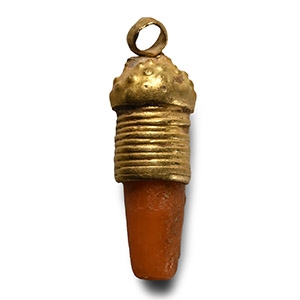
Western Asiatic Gold and Coral-Coloured Bead Pendant
1st millennium B.C.Sold for (Inc. bp): £130
Comprising a tubular sheet-gold sleeve with repoussé domed upper and suspension loop, enclosing a conical fragment. 0.79 grams, 15 mm
Ex Japanese collection, 1970-2010. Accompanied by a previous cataloguing card.
