
Loading, please wait...
LOT 1395
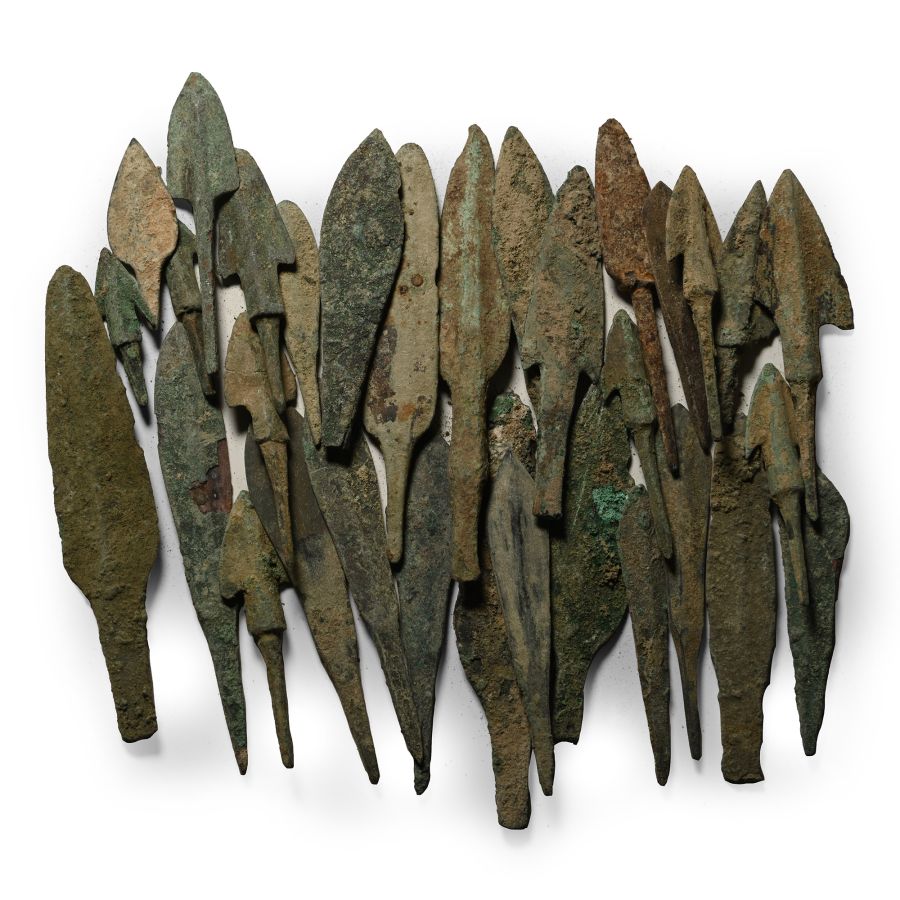
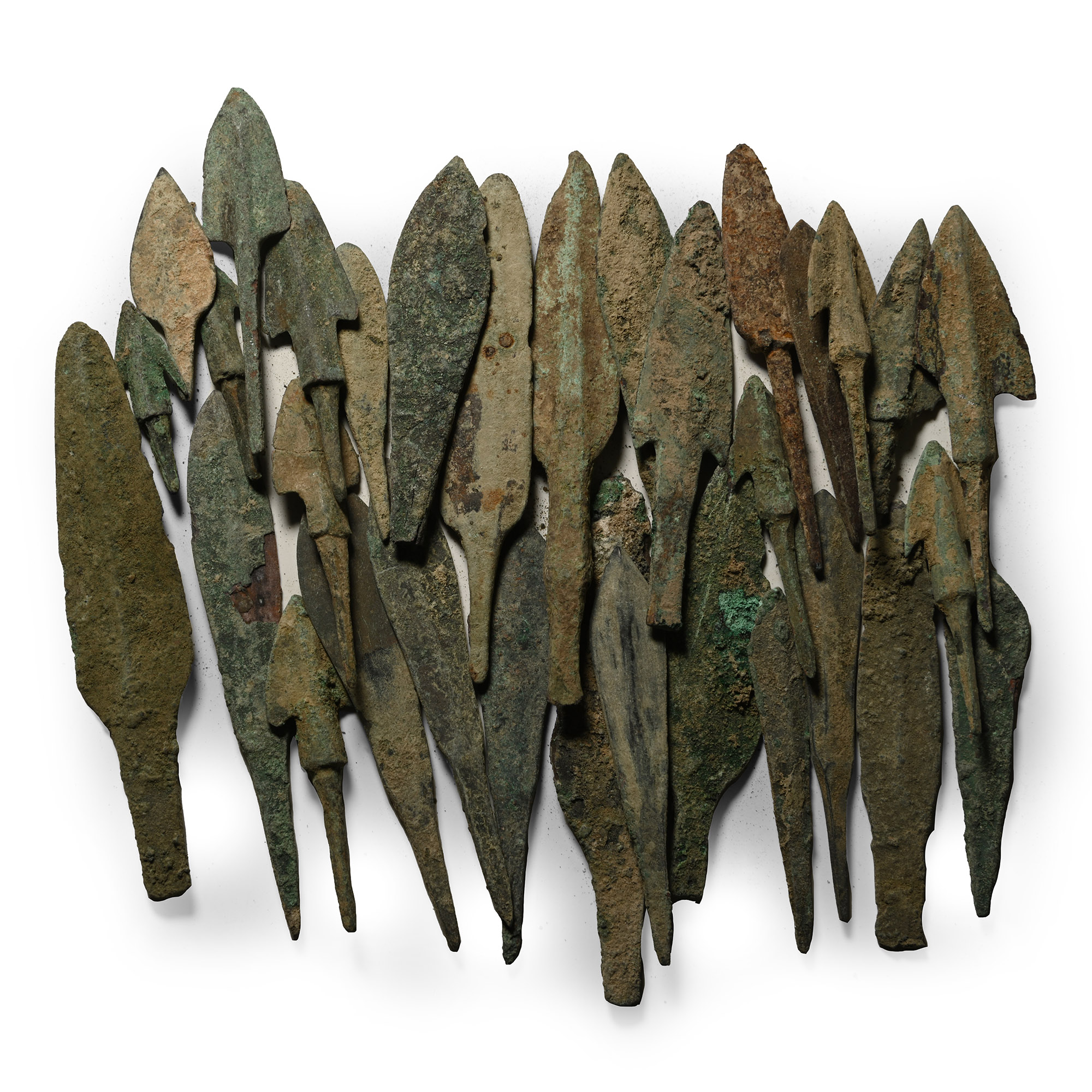
Luristan Bronze Arrowhead Group
13TH-6TH CENTURY B.C.
1 1/2 - 3 3/4 in. (289 grams total, 33-95 mm).
Including barbed-and-tanged, leaf-shaped, tongue-shaped, and other types. [50]
ProvenanceAcquired 1980-2015.
Ex Abelita family collection.
This lot has been cleared against the Art Loss Register database, and is accompanied by an illustrated lot declaration signed by the Head of the Antiquities Department, Dr Raffaele D'Amato.
TimeLine Auctions follows a vetting process to ensure the authenticity and legality of all items, reinforcing our commitment to integrity and responsible trading. Each antiquity, antique, and coin lot undergoes thorough examination by a vetting committee of at least ten external specialists, professional trade association members, scientists, and archaeologists: Our Vetting Process
AUCTIONS:
TimeLine is a leading auction house specialising in antiquities, ancient art, collectables, natural history, coins, medals, and books. Our auctions offer museums, collectors, historians, and enthusiasts the opportunity to acquire unique and historically significant pieces.
-
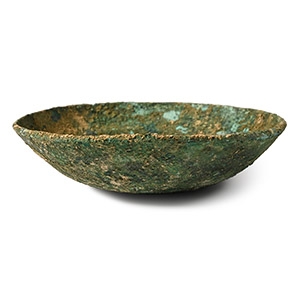
Luristan Bronze Dish
Circa 6th century B.C.Sold for (Inc. bp): £65
With hemispherical body raised from a single sheet. 167 grams, 11.1 cm
Ex London, UK, collections, 1990s-2000s. This lot has been cleared against the Art Loss Register database, and is accompanied by an illustrated lot declaration signed by the Head of the Antiquities Department, Dr Raffaele D'Amato.
The people of Luristan were nomads, constantly moving in summer and winter pastures, and needed metal utensils and tools. Therefore, in addition to weapons, these excellent metal workers produced, in considerable numbers, light and elegant bronze vases and cups. The Luristan vessels show how strongly specialised were the forms of these objects. -
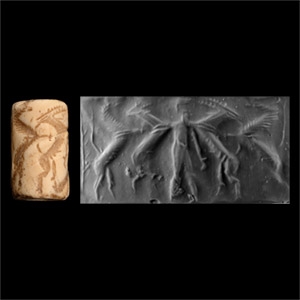
Early Akkadian Shell Cylinder Seal with Divine Hero
Circa 2300 B.C.Sold for (Inc. bp): £182
Cylinder with standing male figure with a pair of animals to each side, restrung pair of red stone beads, old handwritten label '1647'; accompanied by a copy of an old scholarly note, typed and signed by W.G. Lambert, late Professor of Assyriology, University of Birmingham, 1970-1993, which states: 'Cylinder Seal of Cream Fossil Shell, 37 x 22 mm. In the centre stands a divine hero, nude, and gripping the neck of a horned animal on either side, each of which is being attacked by a lion with erect tail. For a terminal there stands a tall tree. This is an early Akkadian seal from Mesopotamia or West Iran, c. 2300 B.C. The symbolism comes from temple herds, which were liable to be attacked by lions at this time. They believed that certain gods and divine heroes could rescue their animals from such attacks, and by showing such scene on their seals they hoped to achieve the result be sympathetic magic.'; accompanied by a museum-quality impression. 37.6 grams, 37 mm
Armand Trampitsch, Glyptique Archéologie, Paris, Hôtel Drouot, 13-14 May 1992, no.23 [Part]. Accompanied by a copy of a scholarly note, typed and signed by Professor Wilfrid George Lambert in 1992. This lot has been cleared against the Art Loss Register database, and is accompanied by an illustrated lot declaration signed by the Head of the Antiquities Department, Dr Raffaele D'Amato. -
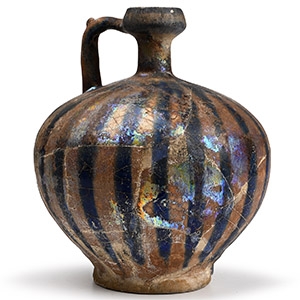
Kashan Glazed Handled Jug
12th-13th century A.D.Sold for (Inc. bp): £845
Spherical body on short ring foot, thin tubular neck, flared spout with D-section handle, blue and white glazed vertical stripes with iridescence; an old label to the underside; repaired. 445 grams, 15.8 cm
From the private family collection of Ersula Barter-Hemmerich, the longest serving member of staff working at the United Nations, her private collection formed in the 1950s and 1960s; thence by descent to her grandson. This lot has been cleared against the Art Loss Register database, and is accompanied by an illustrated lot declaration signed by the Head of the Antiquities Department, Dr Raffaele D'Amato.
