
Loading, please wait...

LOT 1328
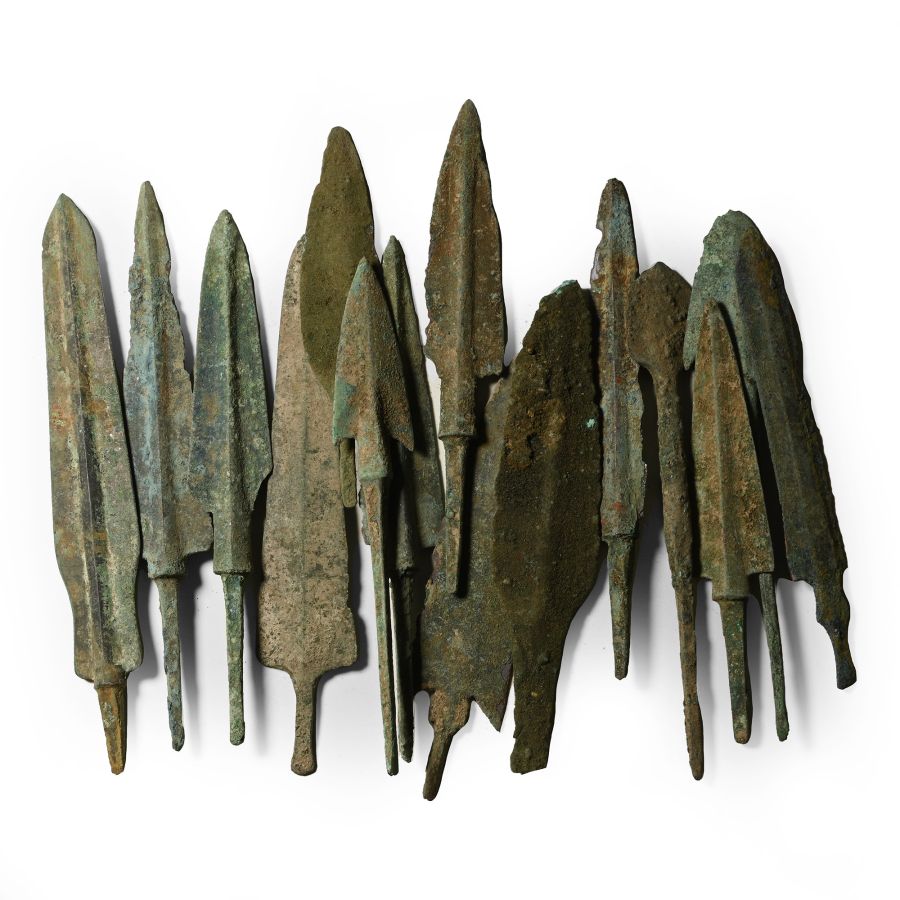
Luristan Bronze Arrowhead Group
13TH-6TH CENTURY B.C.
4 - 5 3/4 in. (380 grams total, 9.9-14.7 cm).
Including leaf-shaped, barbed, narrow triangular, swallowtail and other tanged types. [15]
ProvenanceAcquired 1980-2015.
Ex Abelita family collection.
This lot has been cleared against the Art Loss Register database, and is accompanied by an illustrated lot declaration signed by the Head of the Antiquities Department, Dr Raffaele D'Amato.
TimeLine Auctions follows a vetting process to ensure the authenticity and legality of all items, reinforcing our commitment to integrity and responsible trading. Each antiquity, antique, and coin lot undergoes thorough examination by a vetting committee of at least ten external specialists, professional trade association members, scientists, and archaeologists: Our Vetting Process
AUCTIONS:
TimeLine is a leading auction house specialising in antiquities, ancient art, collectables, natural history, coins, medals, and books. Our auctions offer museums, collectors, historians, and enthusiasts the opportunity to acquire unique and historically significant pieces.
-
Amlash Terracotta Wine Amphora
1st millennium B.C.Sold for (Inc. bp): £117
Piriform in profile with narrow flat base, flared mouth and single loop handle. 283 grams, 21.4 cm
From a London, UK, gentleman's collection of ancient pottery and artefacts, 1990s. This lot has been cleared against the Art Loss Register database, and is accompanied by an illustrated lot declaration signed by the Head of the Antiquities Department, Dr Raffaele D'Amato. -
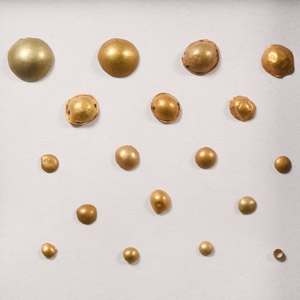
Western Asiatic Gold Disc Ornament Collection
1st millennium B.C.Sold for (Inc. bp): £208
Mixed group of domed appliqués in a display frame. 3.21 grams total, 2-11 mm
From a late Japanese specialist collector, 1970-2000s. This lot has been cleared against the Art Loss Register database, and is accompanied by an illustrated lot declaration signed by the Head of the Antiquities Department, Dr Raffaele D'Amato. -
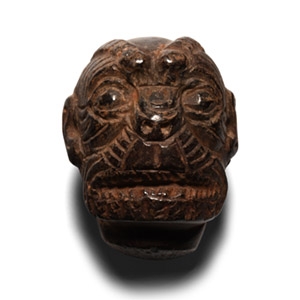
Neo Assyrian Haematite Pazuzu Head
8th-7th century B.C.Sold for (Inc. bp): £546
Modelled in the round with grotesque features and fierce teeth exposed; drilled through the head for suspension. 16.2 grams, 24 mm
UK private collection before 2000. Acquired on the UK art market. Property of a London gentleman. This lot has been cleared against the Art Loss Register database, and is accompanied by an illustrated lot declaration signed by the Head of the Antiquities Department, Dr Raffaele D'Amato.
In Babylonian mythology the demon Pazuzu was the son of the god Hanpa. His consort, the demon Lamaštu, carried fever and preyed upon children and pregnant women. She could be neutralised with appropriate spells and amulets, which also protected against other demons. For this reason, women wore an amulet with the effigy of Pazuzu around their necks during pregnancy.
