
Loading, please wait...


LOT 1551
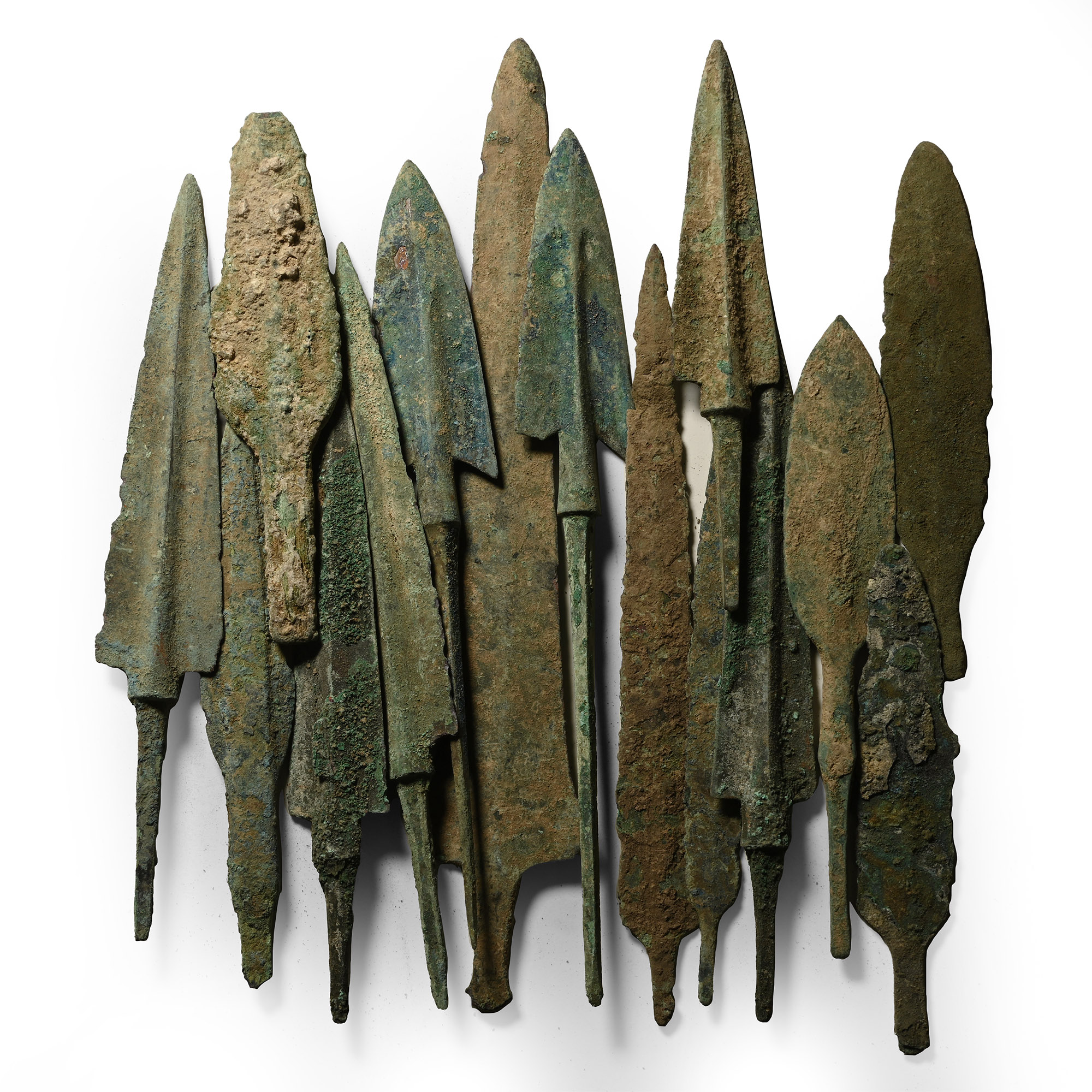
Luristan Bronze Arrowhead Group
13TH-6TH CENTURY B.C.
3 3/4 - 7 1/2 in. (370 grams total, 9.6-19 cm).
Including leaf-shaped, triangular and other tanged types. [15]
ProvenanceAcquired 1980-2015.
Ex Abelita family collection.
This lot is accompanied by an illustrated lot declaration signed by the Head of the Antiquities Department, Dr Raffaele D’Amato.
TimeLine Auctions follows a vetting process to ensure the authenticity and legality of all items, reinforcing our commitment to integrity and responsible trading. Each antiquity, antique, and coin lot undergoes thorough examination by a vetting committee of at least ten external specialists, professional trade association members, scientists, and archaeologists: Our Vetting Process
AUCTIONS:
TimeLine is a leading auction house specialising in antiquities, ancient art, collectables, natural history, coins, medals, and books. Our auctions offer museums, collectors, historians, and enthusiasts the opportunity to acquire unique and historically significant pieces.
-
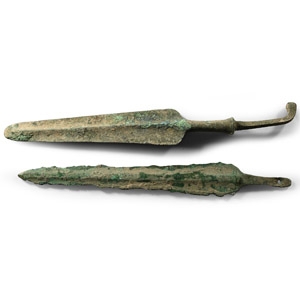
Luristan Bronze Spearhead Group
13th-11th century B.C.Estimate: £100 - 140 (+bp*)
Opening Bid: £50
Comprising a tanged spearhead with heavily ridged and tapered blade, short collared shaft and square-section tapered tang bent at the tip; a spearhead with foliate narrow blade, short tang with fastening hole. 300 grams total, 26.2-28.7 cm
Acquired 1980-2015. Ex Abelita family collection. This lot is accompanied by an illustrated lot declaration signed by the Head of the Antiquities Department, Dr Raffaele D’Amato.
Both types of spearheads were found in Amlash and Marlik, and are connected with the types 1 and 2 of the Khorasani classification. The type 1 is characterised by a bent tang and was the evolution of a typology which began much earlier in Mesopotamia and the fertile crescent, the type 4 of the Stronach classification, with straight square-section tang, usually thickened at the base with a button tang. -
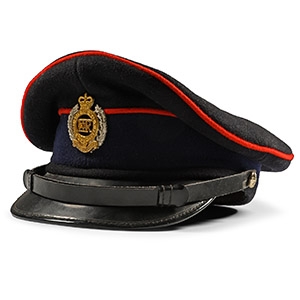
Royal Engineers Officer's Cap
1938-1945 A.D.Sold for (Inc. bp): £20
Army Cap No.1 - British Army, Royal Engineers Officers' Dress Cap with Royal Engineers gilt badge fitted, 'G.D. Golding' maker's label inside; side buttons silver-coloured with Gurkha regiment insignia. 280 grams, 28.5 cm
From a Cambridgeshire, UK, collection. This lot is accompanied by an illustrated lot declaration signed by the Head of the Antiquities Department, Dr Raffaele D’Amato. -
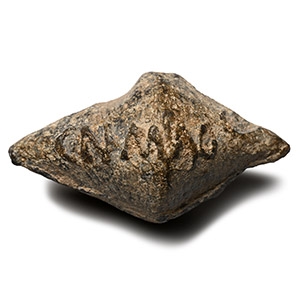
Roman 'Pompey the Great' Lead Slingshot
1st century B.C.Sold for (Inc. bp): £364
Biconical lead slingshot (glans) with inscription in Latin letters 'CN' (Cneius) 'MAG' (Magnus) on one side, and 'IMP' for 'IMPERATOR' (victorious general) to the other side, i.e Gnaeus Pompeius Magnus Imperator (Pompey the Great the victorious general). 81 grams, 47 mm
From the collection of a London antiquarian, formed since the 1980s. This lot is accompanied by an illustrated lot declaration signed by the Head of the Antiquities Department, Dr Raffaele D’Amato.
