
Loading, please wait...
LOT 1217
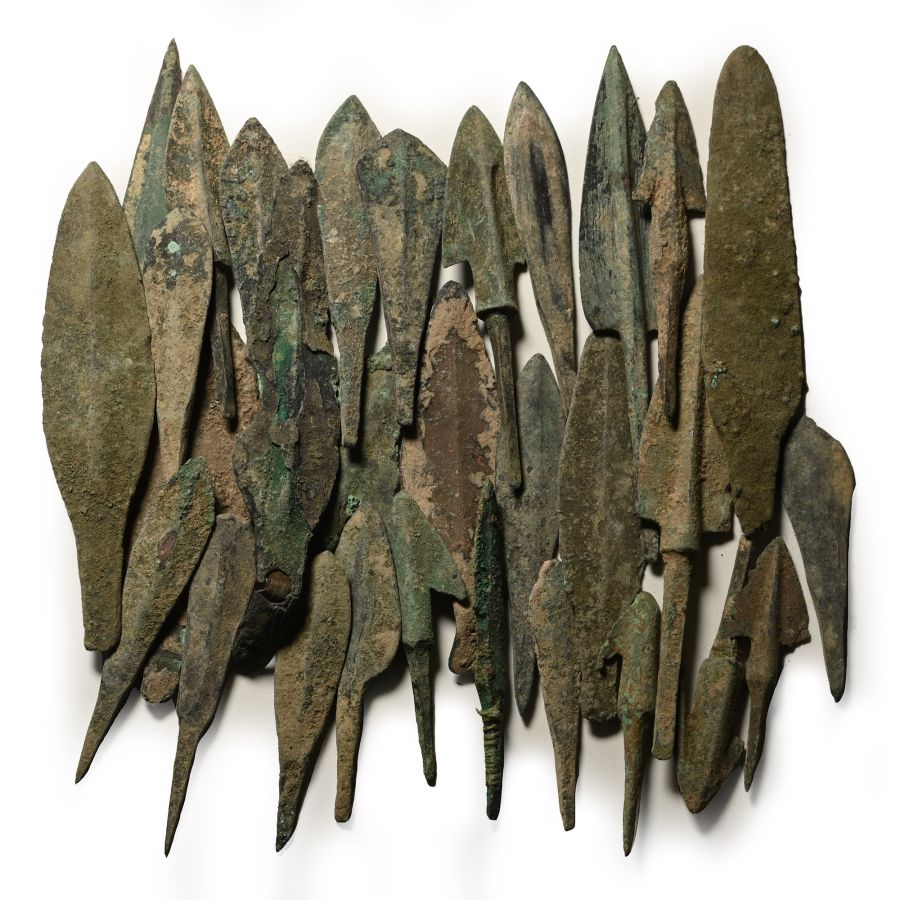
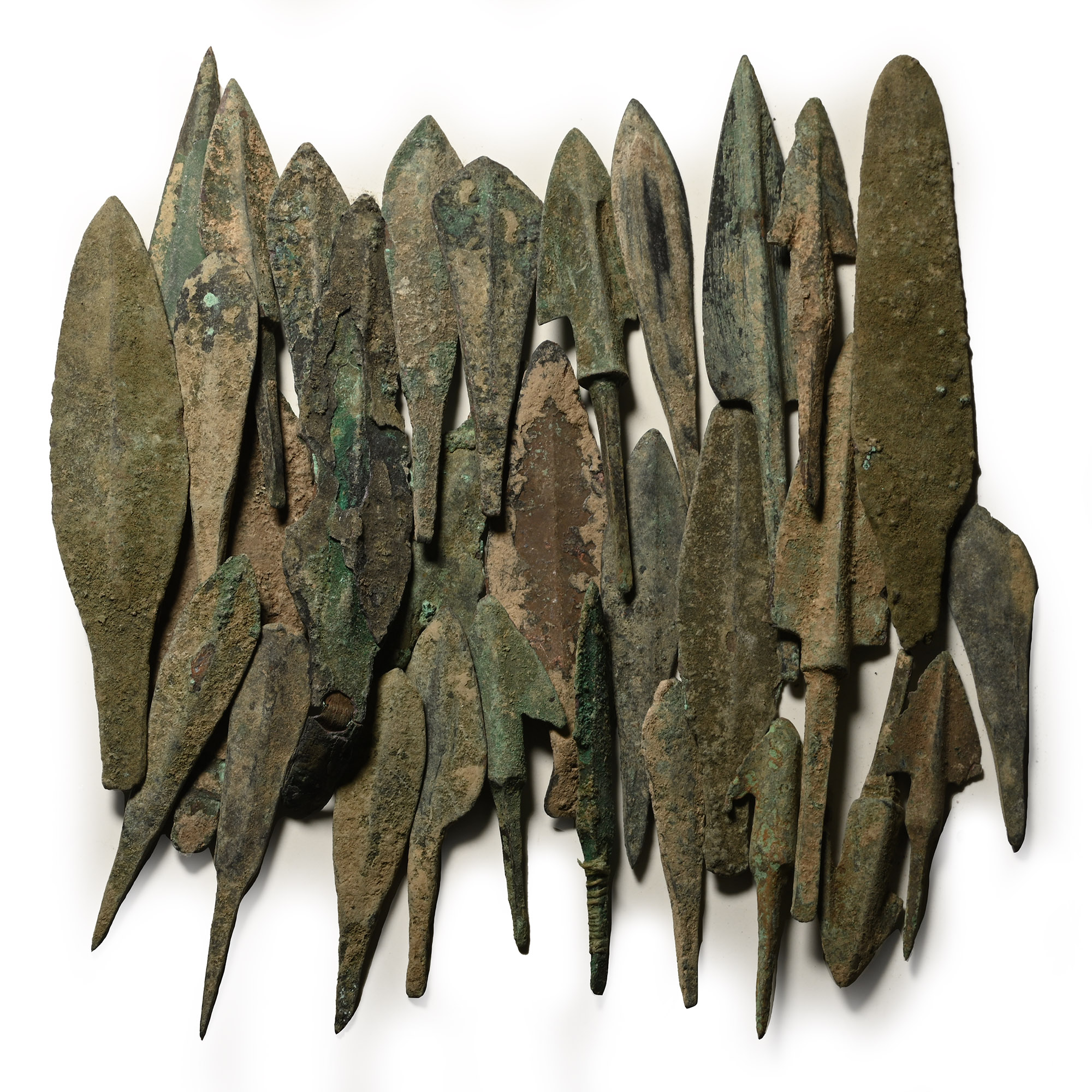
Luristan Bronze Arrowhead Group
13TH-6TH CENTURY B.C.
1 7/8 - 4 1/4 in. (294 grams total, 4.8-10.4 cm).
Including leaf-shaped, barbed, triangular and other tanged types. [30]
ProvenanceAcquired 1980-2015.
Ex Abelita family collection.
This lot has been cleared against the Art Loss Register database, and is accompanied by an illustrated lot declaration signed by the Head of the Antiquities Department, Dr Raffaele D'Amato.
TimeLine Auctions follows a vetting process to ensure the authenticity and legality of all items, reinforcing our commitment to integrity and responsible trading. Each antiquity, antique, and coin lot undergoes thorough examination by a vetting committee of at least ten external specialists, professional trade association members, scientists, and archaeologists: Our Vetting Process
AUCTIONS:
TimeLine is a leading auction house specialising in antiquities, ancient art, collectables, natural history, coins, medals, and books. Our auctions offer museums, collectors, historians, and enthusiasts the opportunity to acquire unique and historically significant pieces.
-
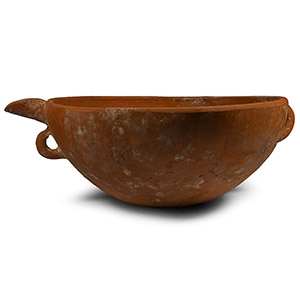
Very Large Amlash Terracotta Spouted Bowl
1st millennium B.C.Sold for (Inc. bp): £208
With broad hemispherical bowl, short U-section spout, integral round-section handle and inturned rim. 2.5 kg, 46.5 cm
From a gentleman's London, UK, collection of ancient pottery and artefacts, 1990s. Accompanied by a thermoluminescence analysis report no.N125a52 from Oxford Authentication. This lot has been cleared against the Art Loss Register database, and is accompanied by an illustrated lot declaration signed by the Head of the Antiquities Department, Dr Raffaele D'Amato. -
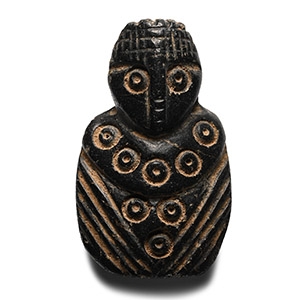
Western Asiatic Black Stone Idol
1st millennium B.C.Sold for (Inc. bp): £260
Carved in the half-round with stylised facial features and ring-and-dot eyes, wearing a striated headdress and long folded garment, wide neck-collar with ring-and-dot motifs. 13.7 grams, 40 mm
Mr F.D. collection, acquired on the European art market, 1975 to present. This lot has been cleared against the Art Loss Register database, and is accompanied by an illustrated lot declaration signed by the Head of the Antiquities Department, Dr Raffaele D'Amato. -
.jpg)
Proto-Sumerian Seal with Animals
Circa 3000 B.C.Estimate: £800 - 1,000 (‡+bp*)
Opening Bid: £400
Plano-convex stamp seal with design of two crouching quadrupeds placed tête-bêche; supplied with a museum-quality impression. 37.4 grams, 40 mm
Acquired in Europe in 2002. European private collection. This lot has been cleared against the Art Loss Register database, and is accompanied by an illustrated lot declaration signed by the Head of the Antiquities Department, Dr Raffaele D'Amato.
The motifs have been created using a drill, hence the rounded appearance.
