
Loading, please wait...


LOT 1629
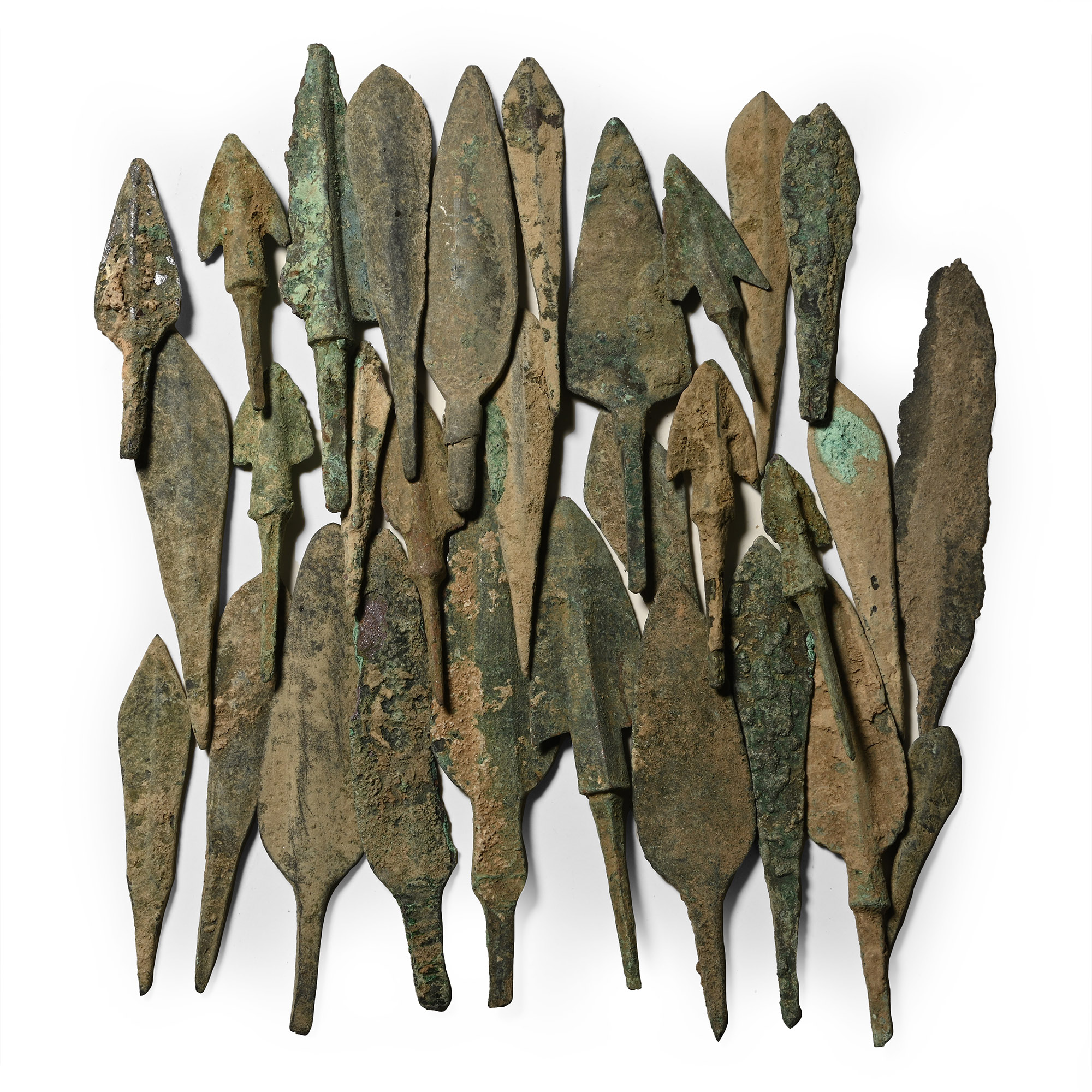
Luristan Bronze Arrowhead Group
13TH-6TH CENTURY B.C.
1 5/8 - 3 1/2 in. (295 grams total, 41-91 mm).
Including barbed-and tanged, leaf-shaped, tongue-shaped, and other types. [30]
ProvenanceAcquired 1980-2015.
Ex Abelita family collection.
This lot is accompanied by an illustrated lot declaration signed by the Head of the Antiquities Department, Dr Raffaele D’Amato.
TimeLine Auctions follows a vetting process to ensure the authenticity and legality of all items, reinforcing our commitment to integrity and responsible trading. Each antiquity, antique, and coin lot undergoes thorough examination by a vetting committee of at least ten external specialists, professional trade association members, scientists, and archaeologists: Our Vetting Process
AUCTIONS:
TimeLine is a leading auction house specialising in antiquities, ancient art, collectables, natural history, coins, medals, and books. Our auctions offer museums, collectors, historians, and enthusiasts the opportunity to acquire unique and historically significant pieces.
-
Luristan Bronze Arrowhead Group
13th-6th century B.C.Sold for (Inc. bp): £182
Including barbed-and tanged, leaf-shaped, slender triangular and other types. 286 grams total, 4.8-16 cm
Acquired 1980-2015. Ex Abelita family collection. This lot is accompanied by an illustrated lot declaration signed by the Head of the Antiquities Department, Dr Raffaele D’Amato. -
.jpg)
Massive Iron Age Celtic Iron La Tene Socketted Spearhead
1st century B.C.-1st century A.D.Estimate: £1,000 - 1,400 (+bp*)
Opening Bid: £500
Slender leaf-shaped blade with median rib, rounded tip, short shoulder, socket with lateral holes to accept a fixing peg. 825 grams, 72.5 cm
Ex German art market, 2000s. Acquired from an EU collector living in London. From the collection of Surrey, UK, gentleman. This lot is accompanied by an illustrated lot declaration signed by the Head of the Antiquities Department, Dr Raffaele D’Amato. -
Western Asiatic Bronze Dagger Group
2nd millennium B.C.Sold for (Inc. bp): £124
With a narrow pointed blade and wide shallow raised flange to the centre, straight sides, well marked shoulders with narrow tang, one rivet hole still preserved in one specimen. 358 grams total, 20.7-33.5 cm
Acquired 1980-2015. Ex Abelita family collection. This lot is accompanied by an illustrated lot declaration signed by the Head of the Antiquities Department, Dr Raffaele D’Amato.
The type was technically more advanced than previous types of blades in the Near East, owing to the shape of the weapon, with its slightly convex sides widening out near the point, which combined the advantages of the leaf-shaped and straight-sided forms. This kind of dagger was used in the early second millennium in Mesopotamia and in Syria, and as late as the mid-first millennium in Luristan.
