
Loading, please wait...


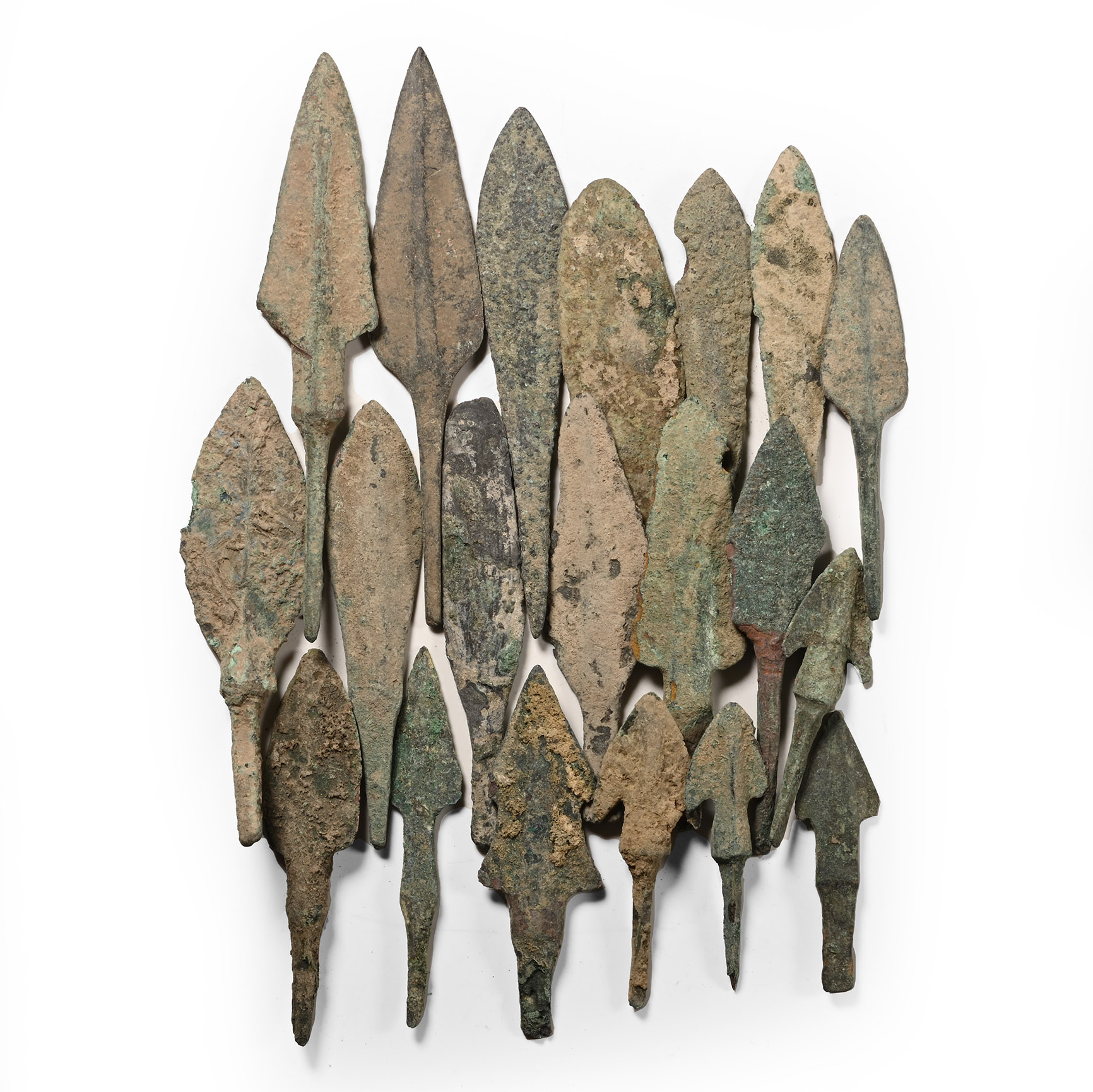
LOT 1353
Luristan Bronze Arrowhead Group
13TH-7TH CENTURY B.C.
1 3/4 - 3 3/4 in. (192 grams total, 46-95 mm).
Including leaf-shaped, triangular, barbed and other types. [20]
ProvenanceEx London, UK, collection, 1990s.
CONDITIONTimeLine Auctions follows a vetting process to ensure the authenticity and legality of all items, reinforcing our commitment to integrity and responsible trading. Each antiquity, antique, and coin lot undergoes thorough examination by a vetting committee of at least ten external specialists, professional trade association members, scientists, and archaeologists: Our Vetting Process
AUCTIONS:
TimeLine is a leading auction house specialising in antiquities, ancient art, collectables, natural history, coins, medals, and books. Our auctions offer museums, collectors, historians, and enthusiasts the opportunity to acquire unique and historically significant pieces.
-
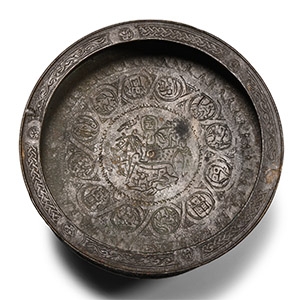
Western Asiatic Decorated Dish with Animal Feet
12th century A.D.Sold for (Inc. bp): £338
With low sidewall and flat everted rim, three radiating feet to the underside, each a quadruped with lowered head; sidewall with band of low-relief roundels each containing a perching bird in profile; rim with knotwork and guilloche panels interrupted by roundels; inner face of the bowl with low-relief band of roundels containing profile birds, hounds and other animals, surrounding a scene depicting a huntsman on horseback with billowing cape, a hound running beside the horse's legs and a bird perching above the horse's head, second hound crouching above the horse's rump. 1.15 kg, 18 cm diameter
Ex London, UK, gallery, 1971-early 2000s. Property of a London gentleman. -

Neo Babylonian Duck Weight
7th-6th century B.C.Sold for (Inc. bp): £124
Carved in the round with head reversed, arched neck forming a loop. 4.1 grams, 20 mm wide
From the collection of a gentleman, acquired on the London art market in the 1990s. -
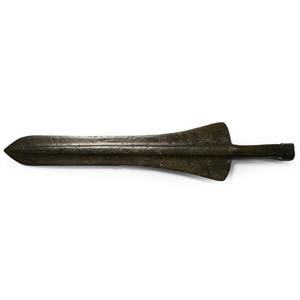
Early Urartu Bronze Spearhead
17th-16th century B.C.Estimate: £250 - 350 (+bp*)
Opening Bid: £130
With leaf-shaped blade, raised midrib extending to a tubular split socket with fastening holes. 165 grams, 29.7 cm
Acquired 1980-2015. Ex Abelita family collection.
With the introduction of the socketted spearhead in the Middle East in the second half of the 3rd millennium B.C., by the middle of the 2nd millennium, these kind of spearheads became predominant throughout the ancient Near East, and the design of the spearhead remained practically unchanged since then.
