
Loading, please wait...
LOT 1140
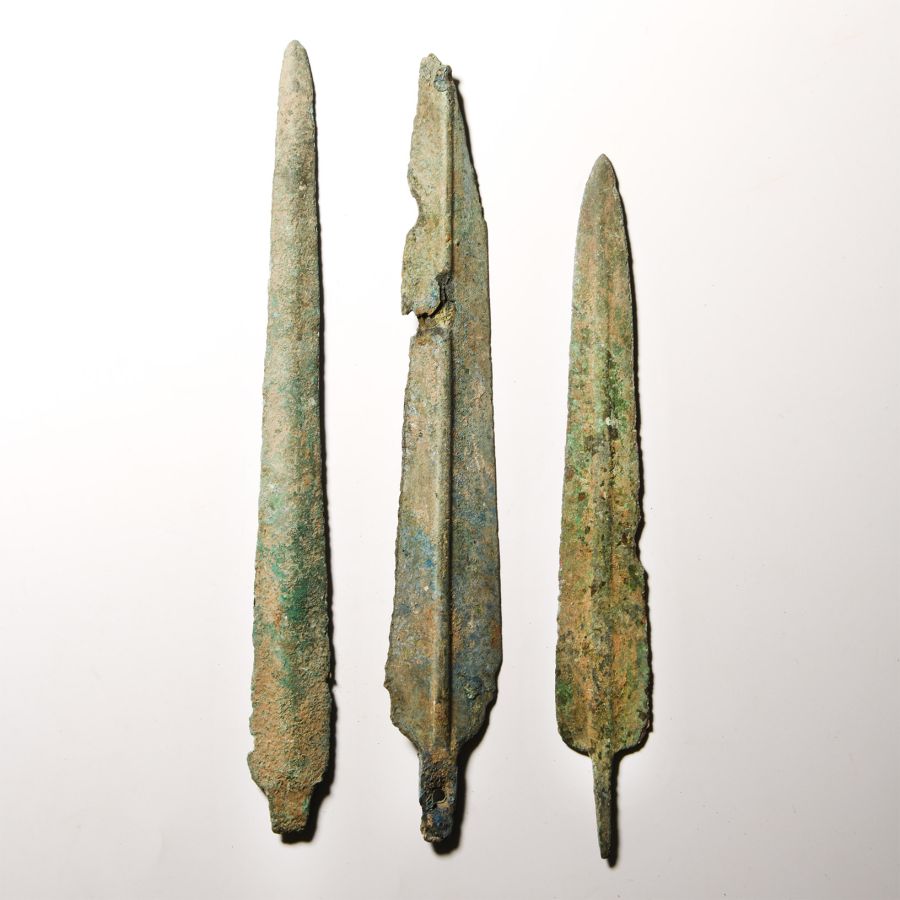
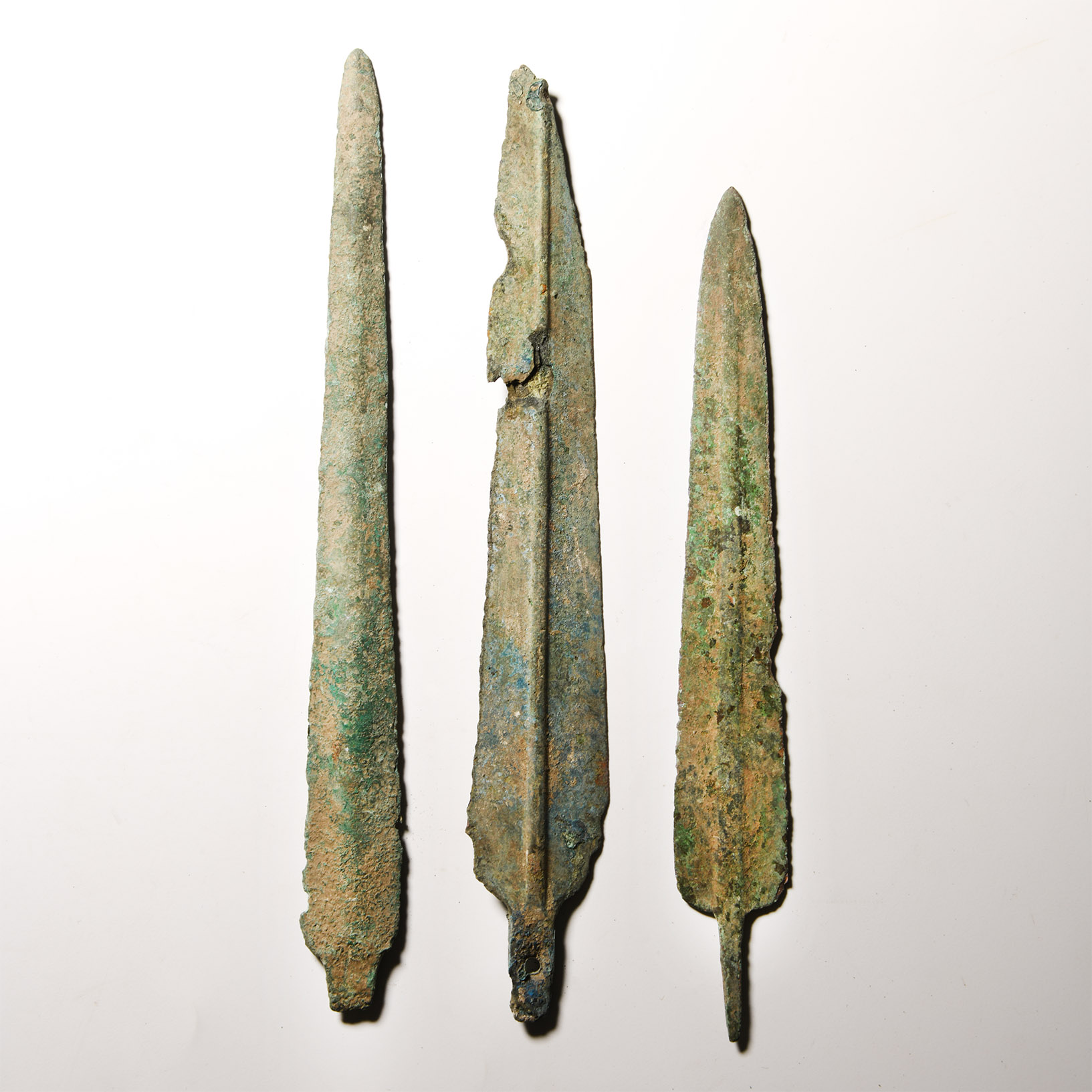
Luristan Bronze Arrowhead Group
2ND-1ST MILLENNIUM B.C.
7 1/2 - 8 1/4 in. (215 grams total, 19-21 cm).
Comprising three leaf-shaped tanged arrowhead types. [3]
ProvenanceAcquired 1980-2015.
Ex Abelita family collection.
TimeLine Auctions follows a vetting process to ensure the authenticity and legality of all items, reinforcing our commitment to integrity and responsible trading. Each antiquity, antique, and coin lot undergoes thorough examination by a vetting committee of at least ten external specialists, professional trade association members, scientists, and archaeologists: Our Vetting Process
AUCTIONS:
TimeLine is a leading auction house specialising in antiquities, ancient art, collectables, natural history, coins, medals, and books. Our auctions offer museums, collectors, historians, and enthusiasts the opportunity to acquire unique and historically significant pieces.
LOT 1140
Luristan Bronze Arrowhead Group
Estimate £100 - 140€120 - 160 (for guidance only)$140 - 190 (for guidance only)
-
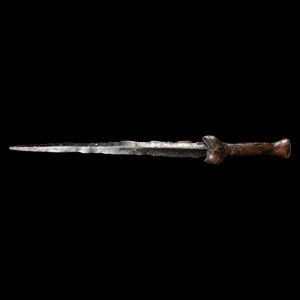
Medieval 'Thames' Iron Kidney Dagger
14th-15th century A.D.Sold for (Inc. bp): £286
The blade with a lozenge-shaped cross-section; restored handle with bulbous cross-guard, waisted grip and flared pommel. 195 grams, 37.2 cm
Found on the Thames foreshore at Vintry, Southwark, London, UK. -
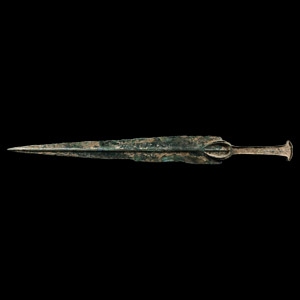
Marlik Bronze Sword
14th-10th century B.C.Sold for (Inc. bp): £416
With a slender triangular blade, raised midrib, penannular guard and scooped shoulders, columnar grip with two gusseted hoops, crescent pommel. 265 grams, 46 cm
Acquired 1980-2015. Ex Abelita family collection.
This short sword or dagger belongs to the category of blades with pennanular guard, with hilt and guard cast in one piece with the grip. Negahban excavated similar weapons from the Marlik cemeteries. Often this type combines grip and penannular guard with flanged hilts open to accept inlays. -
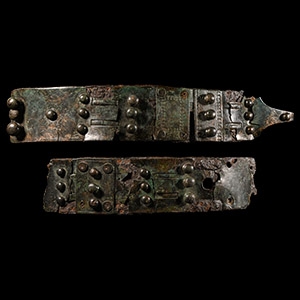
Assyrian Belt Fragment Group
9th-7th century B.C.Sold for (Inc. bp): £442
Comprising two bronze belt sections, each with a ferrous backing; applied sheet-bronze rectangular plates held in place with domed rivets and washers, some decorated with a border of pelleted triangular punchmarks topped with a pellet or ring-and-dot motif; one fragment with finial with remains of a riveted hook, the other with corresponding hole. 609 grams total, 23-30 cm
Ex Axel Guttmann collection.
