
Loading, please wait...
LOT 1177
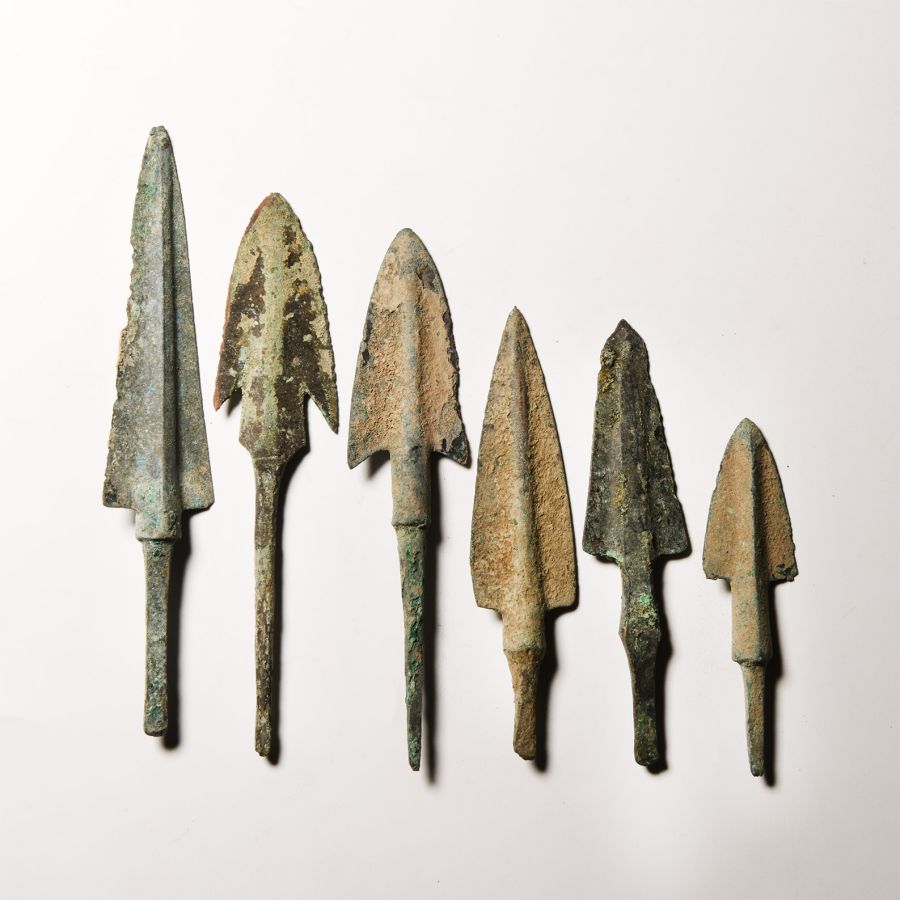
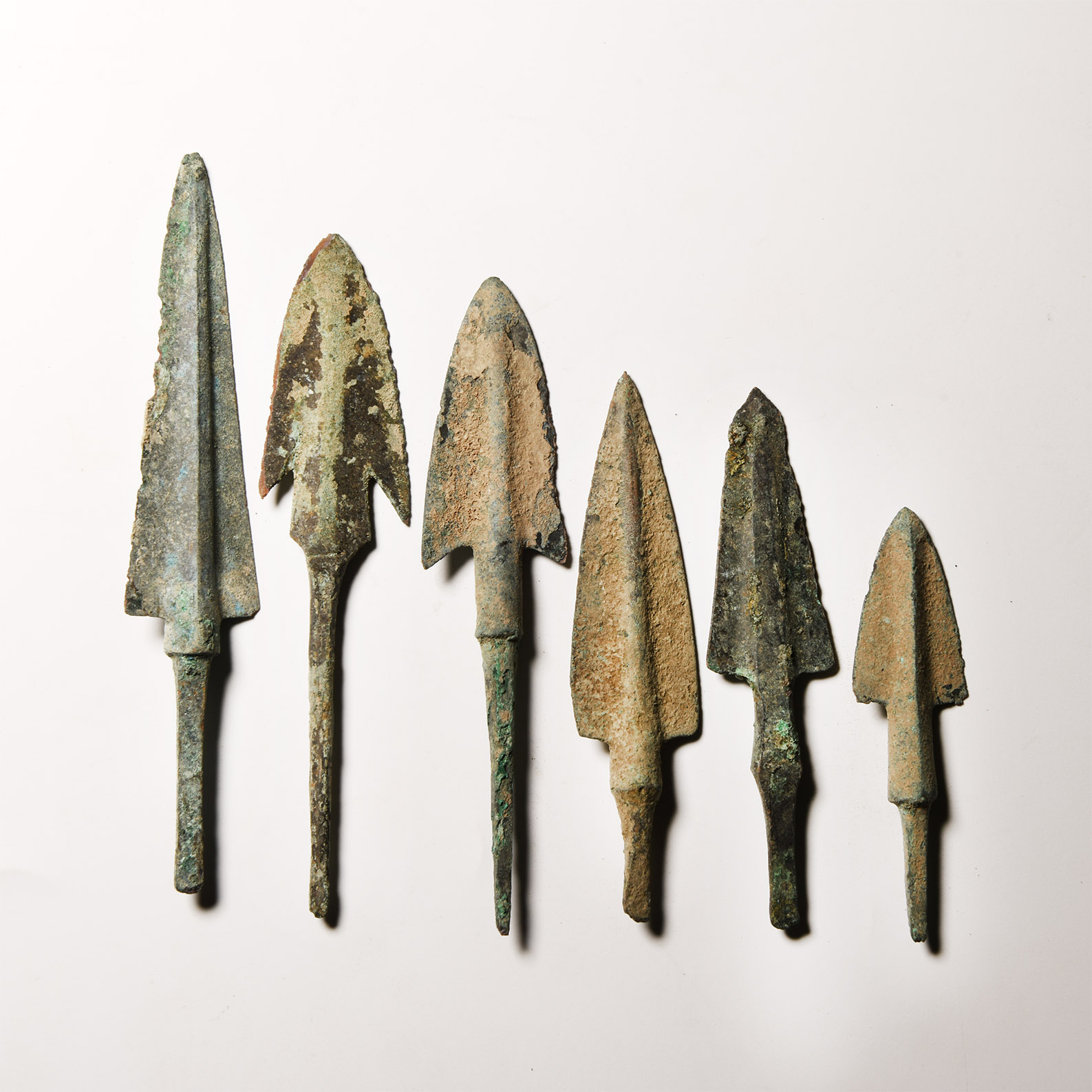
Luristan Bronze Arrowhead Group
12TH-10TH CENTURY B.C.
2 3/4 - 4 5/8 in. (105 grams total, 6.9-11.7 cm).
Comprising six tanged arrowheads, all with large elongated triangular blades and raised midrib, sharp central groove, cylindrical stem with handle for the shaft; three with barbed shoulders and convex or squared sides, two lanceolate with slightly rounded shoulders, one elongated triangular type. [6]
ProvenanceAcquired 1980-2015.
Ex Abelita family collection.
See Khorasani, M.M., Arms and Armour from Iran. The Bronze Age to the End of the Qajar Period, Tübingen, 2006, figures 463, 467, 469-471, for some of these types.
FootnotesThese arrowheads seem to belong to the type V, subcategory types A, B, C and D according to the classification of Khorasani and Negahban. In the four categories of triangular bronze arrowheads from Luristan, Marlik and Northern Iran individuated by Negahban, subtypes C and D of type V are larger arrow or javelin heads, C with barbed shoulders and D with round shoulders.
CONDITIONTimeLine Auctions follows a vetting process to ensure the authenticity and legality of all items, reinforcing our commitment to integrity and responsible trading. Each antiquity, antique, and coin lot undergoes thorough examination by a vetting committee of at least ten external specialists, professional trade association members, scientists, and archaeologists: Our Vetting Process
AUCTIONS:
TimeLine is a leading auction house specialising in antiquities, ancient art, collectables, natural history, coins, medals, and books. Our auctions offer museums, collectors, historians, and enthusiasts the opportunity to acquire unique and historically significant pieces.
LOT 1177
Luristan Bronze Arrowhead Group
Estimate £100 - 140€120 - 160 (for guidance only)$140 - 190 (for guidance only)
-
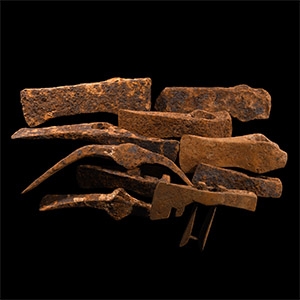
Viking Age and Later Iron Axehead Group
10th-18th century A.D.Estimate: £200 - 300 (+bp*)
Opening Bid: £88
Mainly comprising socketted axeheads and adzes, together with other items; including at least one stamped with maker's marks. 9.5 kg total, 14.5-28.5 cm
Acquired 1990s-early 2000s. East Anglian private collection. -
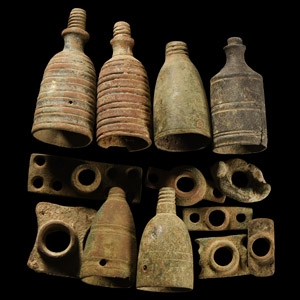
Post Medieval Bronze Helmet Plume Holder Group
19th-20th century A.D.Sold for (Inc. bp): £26
Comprising six various types, together with various fittings; a number of holders decorated with banding. 270 grams total, 22-58 mm
Found Berkshire, UK. -
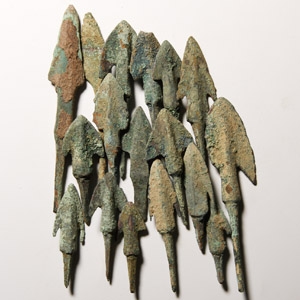
Luristan Bronze Arrowhead Group
12th-10th century B.C.Sold for (Inc. bp): £117
Comprising seventeen tanged arrowheads, most of them having large elongated triangular blades and raised midrib; one with long tang. 105 grams total, 34 - 82 mm
Acquired 1980-2015. Ex Abelita family collection.
Most of these arrowhead seem to belong to the type V, subcategory types A and C according to the classification of Khorasani and Negahban. In the four categories of triangular bronze arrowheads from Luristan, Marlik and Northern Iran individuated by Negahban, subtypes A and C are small triangular arrowheads with barbed shoulders. The arrowhead with squared shoulders belongs to type III of the same classification.
