
Loading, please wait...
LOT 1180
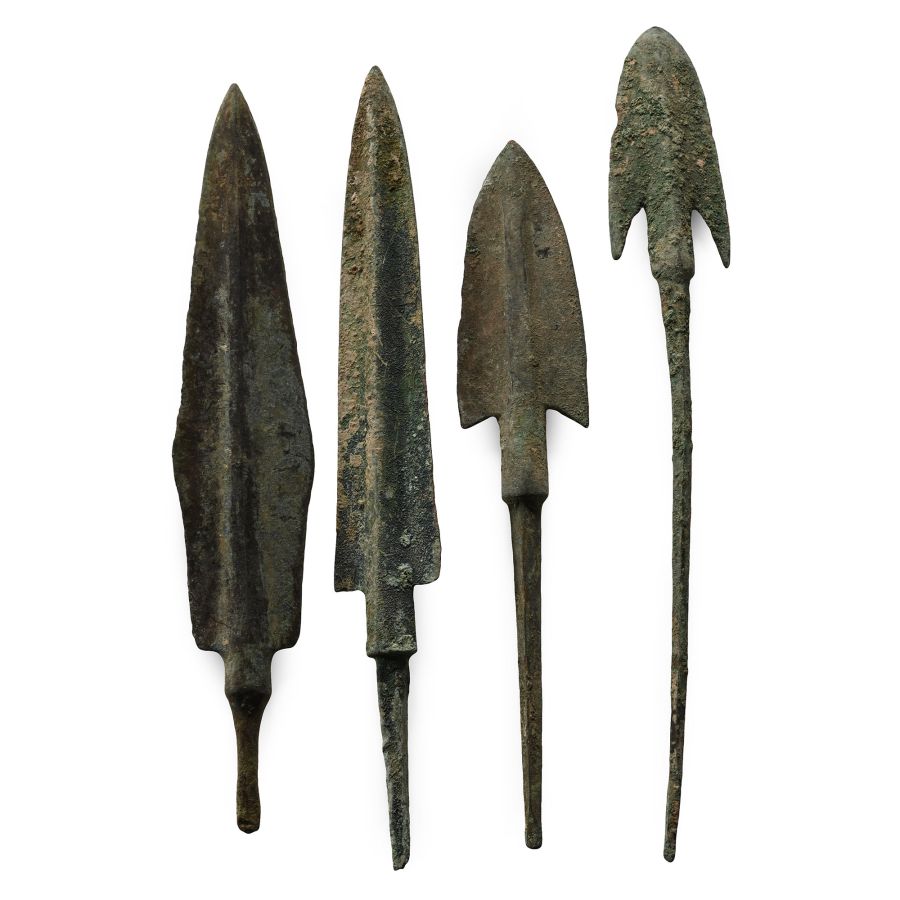
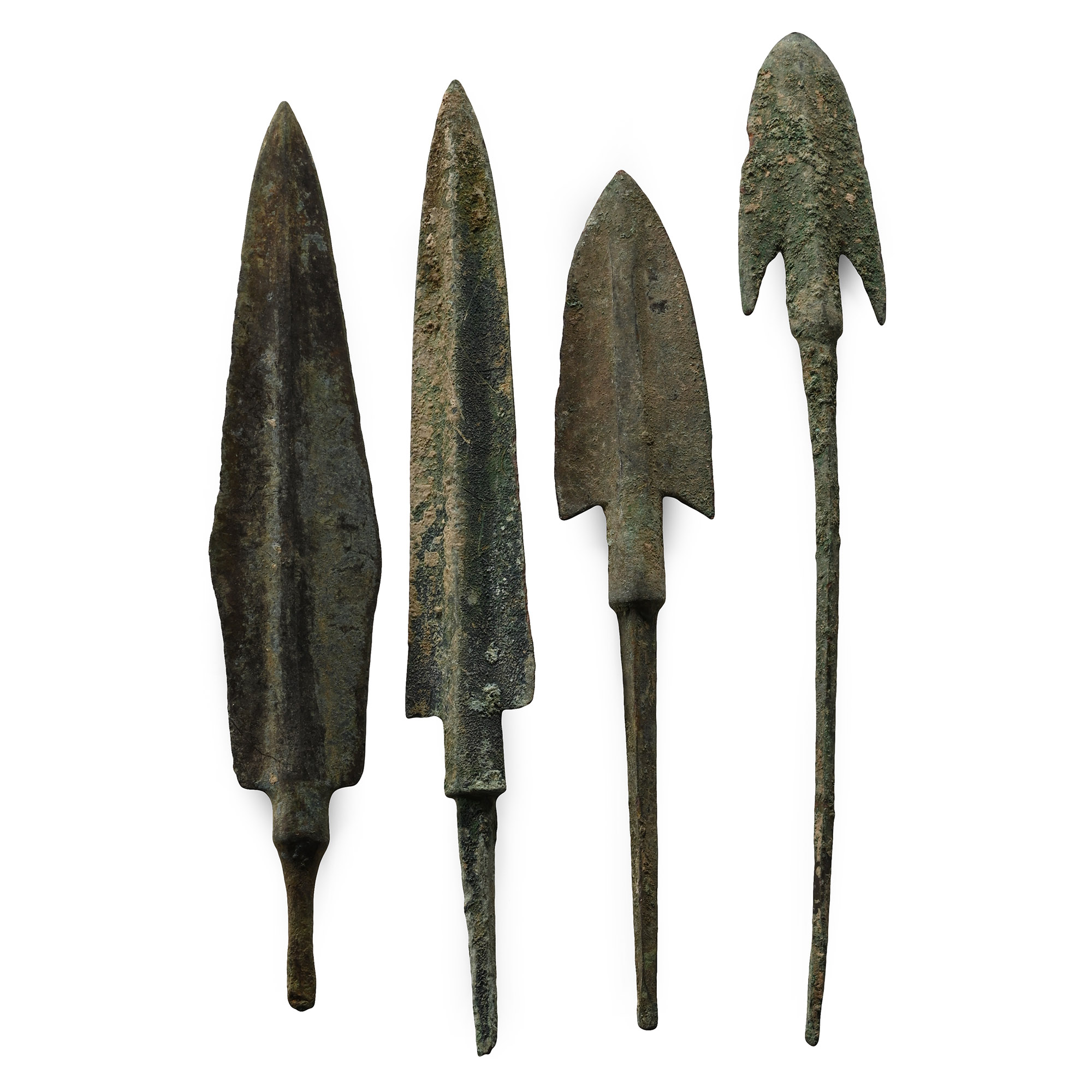
Luristan Bronze Arrowhead Collection
2ND-1ST MILLENNIUM B.C.
5 - 5 7/8 in. (122 grams total, 12.7-15 cm).
Comprising: two large tanged arrowheads, mainly of triangular type with mid-rib; two arrowheads with barbed shoulders, midrib and a stop on the blade with a long tang. [4]
ProvenanceAcquired in the 1990s.
Ex Abelita family collection.
See Muscarella, O.W., Bronze and Iron Ancient Near Eastern Artifacts in the Metropolitan Museum of Art, New York, 1988, pp.289ff, for similar arrowheads (nos.396, 400, 406-407); see also Khorasani, M.M., Arms and Armour from Iran. The Bronze Age to the End of the Qajar Period, Tübingen, 2006, fig.467, for a similar arrowhead.
FootnotesOne category of the represented arrowheads has a sharp blade, the ends of which extend to form wings or barbs, and a prominent midrib extending into a long tang that has a stop; the blade shape varies from deltoid to more triangular. The other form has no barbs, but it has a prominent midrib extending to the tang, and a rhomboid or tringular blade. Godard claimed that both types of heads, barbed and not barbed, came from Luristan.
CONDITIONTimeLine Auctions follows a vetting process to ensure the authenticity and legality of all items, reinforcing our commitment to integrity and responsible trading. Each antiquity, antique, and coin lot undergoes thorough examination by a vetting committee of at least ten external specialists, professional trade association members, scientists, and archaeologists: Our Vetting Process
AUCTIONS:
TimeLine is a leading auction house specialising in antiquities, ancient art, collectables, natural history, coins, medals, and books. Our auctions offer museums, collectors, historians, and enthusiasts the opportunity to acquire unique and historically significant pieces.
-
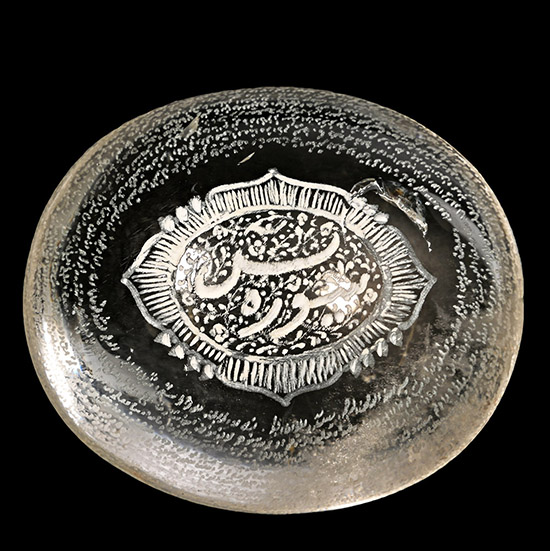
Western Asiatic Engraved Calligraphic Rock Crystal
20th century A.D.Sold for (Inc. bp): £338
Ellipsoid in plan and biconvex in section with spiral band of dense Nastaliq text surrounding a central calligraphic panel. 104 grams, 56 mm
Acquired by a Swiss family in the mid-1980s to late 1990s, thence by descent. Private collection, Switzerland, since the late 1990s. -
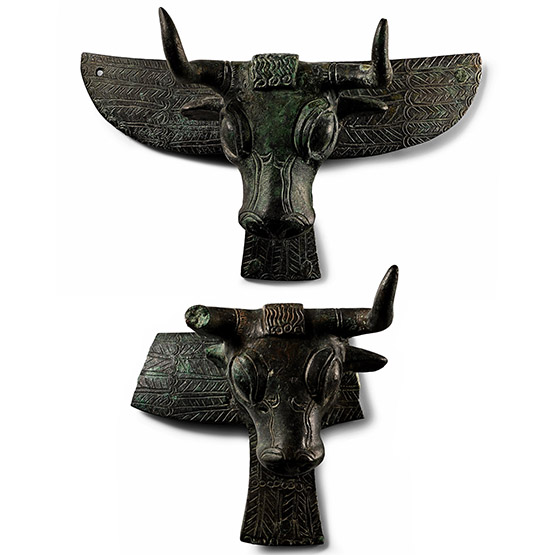
Urartu Bull-Headed Bronze Cauldron Applique Pair
8th century B.C.Estimate: £15,000 - 20,000 (‡+bp*)
Opening Bid: £7,500
Matched pair of bovine-head mounts, each formed as a pair of D-shaped wings and a tail with low-relief feather detailing and holes to accept rivets; central head and neck of a bull with prominent horns, bands of curly hair to the pate and throat, large scaphoid eyes, incised contour detailing to muzzle, socket to reverse. 790 grams total, 8-13 cm wide
From the warehouse of Lane Hope Ltd, London, UK, 1980s (company dissolved December 1991). Private collection, UK; anonymous sale, Gorny & Mosch, Munich, Auction 206, 20 June 2012, no.85. European private collection, acquired at Gorny & Mosch, 2012. Accompanied by a copy of an Art Loss Register certificate, no.6210.AM. Accompanied by a copy of the relevant Gorny & Mosch catalogue pages. This lot has been checked against the Interpol Database of stolen works of art and is accompanied by a search certificate number no.12696-234610.
The fitting would have been one of four to the rim of a large bronze cauldron. Urartu was centered in eastern Anatolia, around Lake Van; the capital, Tushpa, was located on the eastern shore of the lake, situated on a high and elongated rock outcrop. Most sites boasted a well-built temple situated at the highest point, as well as a number of large storage rooms containing rows of large vessels for storing oil and grains, and massive well-built fortification walls. -
.jpg)
Marlik Bronze Maternity Figure
9th-8th century B.C.Sold for (Inc. bp): £1,690
Openwork body with integral horned head, loops to the shoulders and breasts; separate arms mounted in the shoulder-rings, applied pellets and braid detailing. 40 grams, 77 mm
Acquired in the 1980s. Private collection, Switzerland, thence by descent. Private collection, since the late 1990s. This lot has been checked against the Interpol Database of stolen works of art and is accompanied by a search certificate number no.12698-234680.
