
Loading, please wait...
LOT 1455
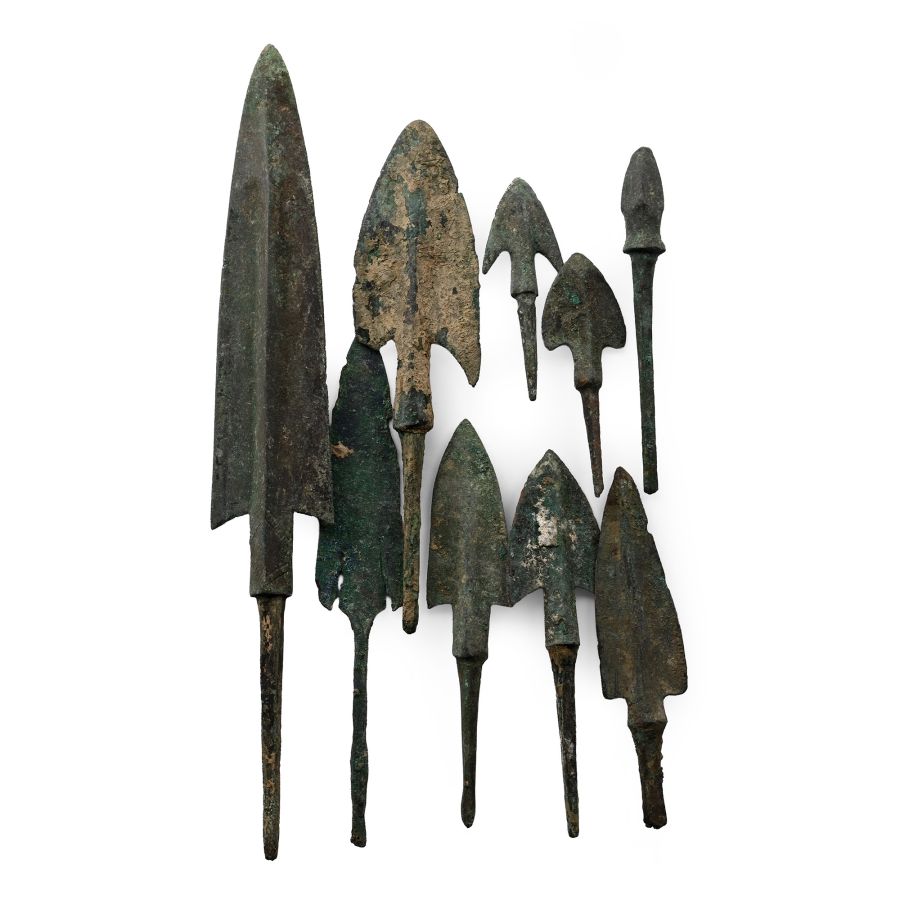
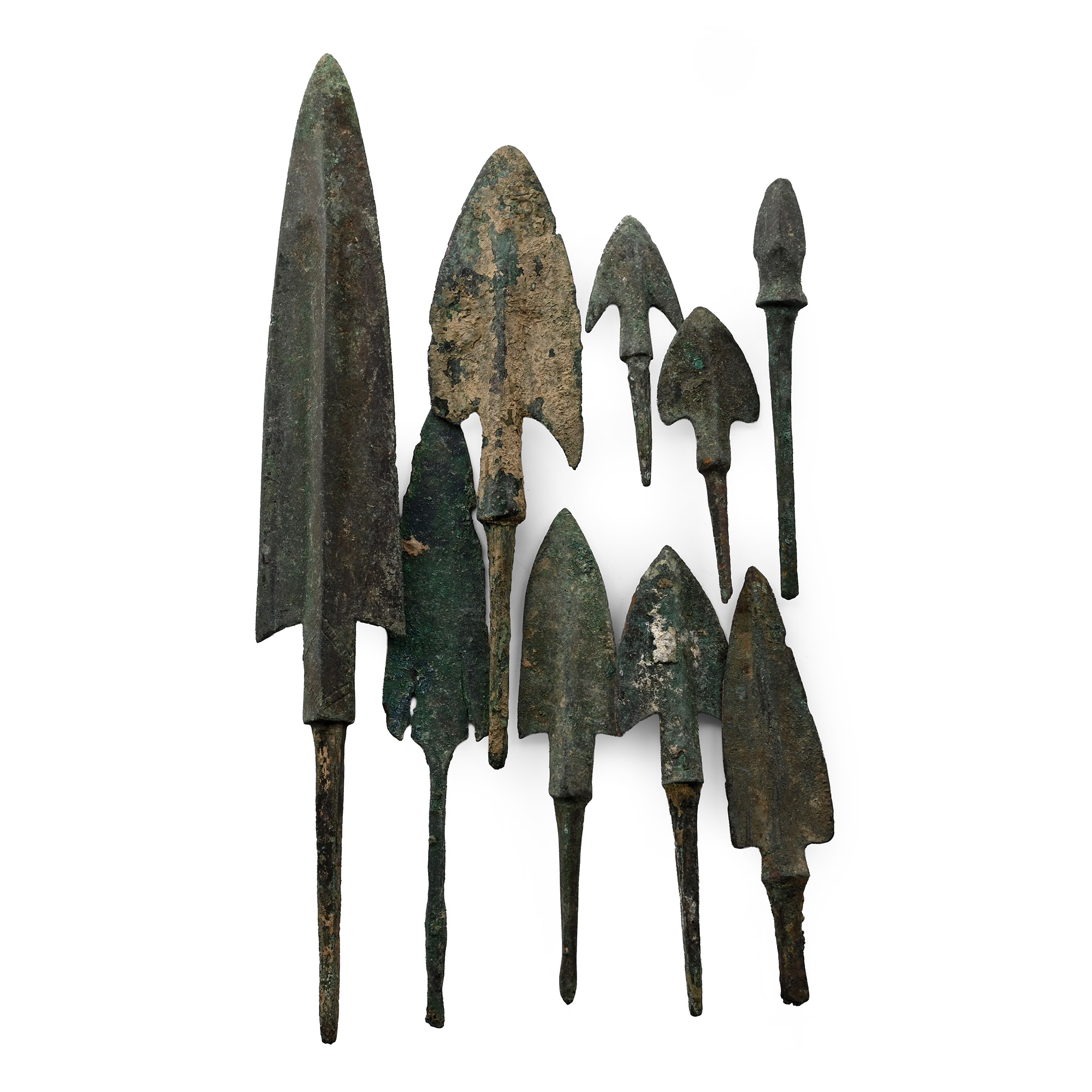
Luristan Bronze Arrowhead Collection
2ND MILLENNIUM-9TH CENTURY B.C.
2 - 7 in. (149 grams total, 5.4-18 cm).
Nine arrowheads most of deltoid form, having a sharp flat barbed blade and prominent midrib extending to a long tang; one with head without barbs, but prominent midrib extending to a tang; one with long tang and small pyramidal shape. [9]
ProvenanceFormerly from a late Japanese gentleman's collection, 1970-2010.
From the private collection of John Meredith, acquired since the 1990s; thence by descent.
This lot is accompanied by an illustrated lot declaration signed by the Head of the Antiquities Department, Dr Raffaele D'Amato.
See for similar arrowheads Muscarella, O.W., Bronze and Iron Ancient Near Eastern Artifacts in the Metropolitan Museum of Art, New York, 1988, pp.289ff.
FootnotesThis type of head was in use from the last centuries of the second through to the early centuries of the first millennium BC, with varieties of barbed heads continuing to be employed for a time after the ninth century BC, during the Neo-Assyrian period.
CONDITIONTimeLine Auctions follows a vetting process to ensure the authenticity and legality of all items, reinforcing our commitment to integrity and responsible trading. Each antiquity, antique, and coin lot undergoes thorough examination by a vetting committee of at least ten external specialists, professional trade association members, scientists, and archaeologists: Our Vetting Process
AUCTIONS:
TimeLine is a leading auction house specialising in antiquities, ancient art, collectables, natural history, coins, medals, and books. Our auctions offer museums, collectors, historians, and enthusiasts the opportunity to acquire unique and historically significant pieces.
-
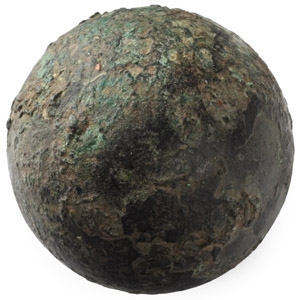
Tudor Hand Cannon Bronze Shot
16th century A.D.Sold for (Inc. bp): £72
Spherical shot from a large hand gun or a small cannon. 90.6 grams, 27 mm
Acquired on the UK art market in the early 2000s. This lot is accompanied by an illustrated lot declaration signed by the Head of the Antiquities Department, Dr Raffaele D'Amato. -
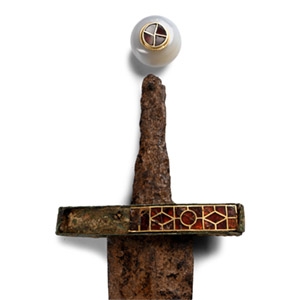
Late Roman Iron Sword with Decorated Guard
5th-6th century A.D.Sold for (Inc. bp): £2,340
A two-edged spatha type with a lentoid parallel-sided blade, sloped shoulders and short tang pierced by an attachment rivet for the grip; the bronze lower guard rectangular in plan and scaphoid in section with inset garnet cloisonné in gold cells with rhomboid patterns alternating with circles; the upper top roundel of the pommel or insertion of the hanging stone divided into four gold cells in garnet cloisonné; accompanied by a barrel-shaped polished hilt stone. 696 grams, 74 cm
From the private collection of a London gentleman, from his grandfather's collection formed before the early 1970s. Accompanied by an academic report by Dr Raffaele D’Amato. This lot has been checked against the Interpol Database of stolen works of art and is accompanied by search certificate no. 12586-240319. This lot has been cleared against the Art Loss Register database, and is accompanied by an illustrated lot declaration signed by the Head of the Antiquities Department, Dr Raffaele D'Amato.
The sword is a Migration Period sword which usually had stones hanging from the pommel or hilt, like the one preserved here, which finds a parallel with the sword of Lord of Morken (Strassmeir, 2019, p.55, lett.G). This typology was widespread in Central Europe by the Huns and there are also specimens attested in Gaul and Spain in the 5th century. -
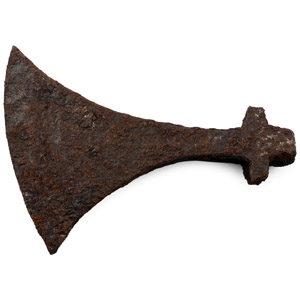
Viking Age Danish Iron Broad Axehead
Late 10th-early 11th century A.D.Sold for (Inc. bp): £572
With rectangular spurs above and below the curved socket, medium-broad flaring triangular-section blade extending to a curved edge, hammer extension to the rear. 245 grams, 13.6 cm
Fair condition.
Private collection, York, UK, 1990s. Property of a Sussex, UK, teacher. This lot is accompanied by an illustrated lot declaration signed by the Head of the Antiquities Department, Dr Raffaele D'Amato.
The first specialised battle-axes which appeared in the second half of the 10th century A.D. were light, narrow, usually thinly forged but with broad-edged blades, sometimes decorated with precious metals.
