
Loading, please wait...



LOT 0261
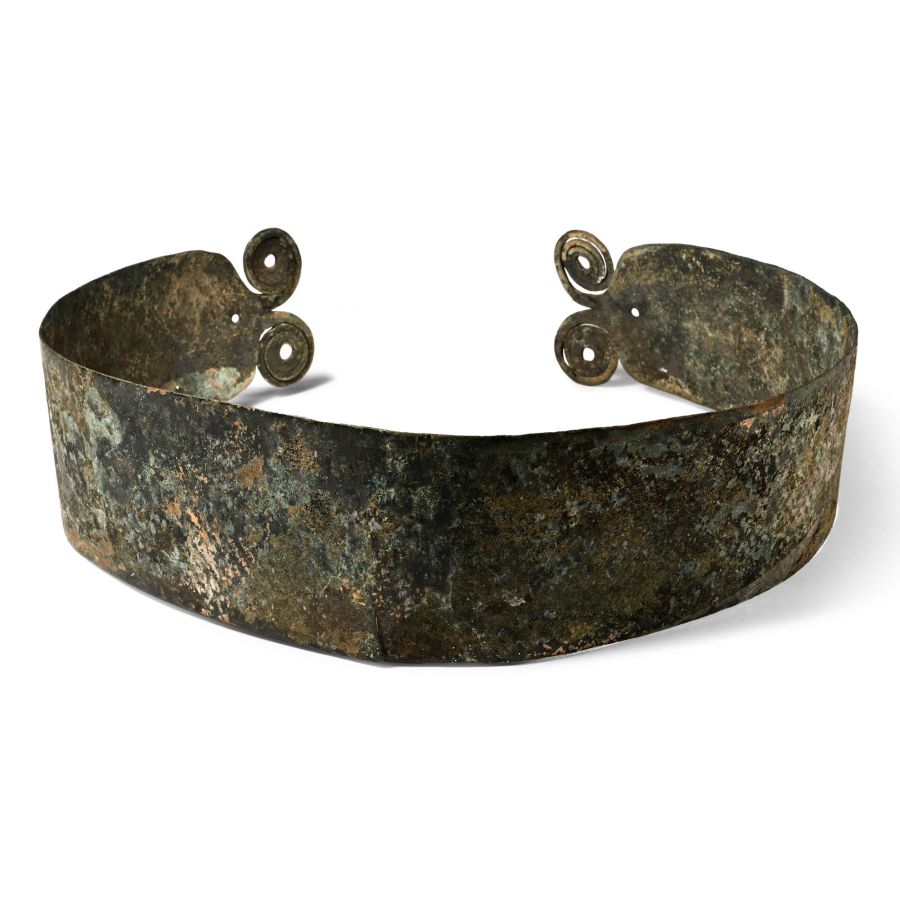
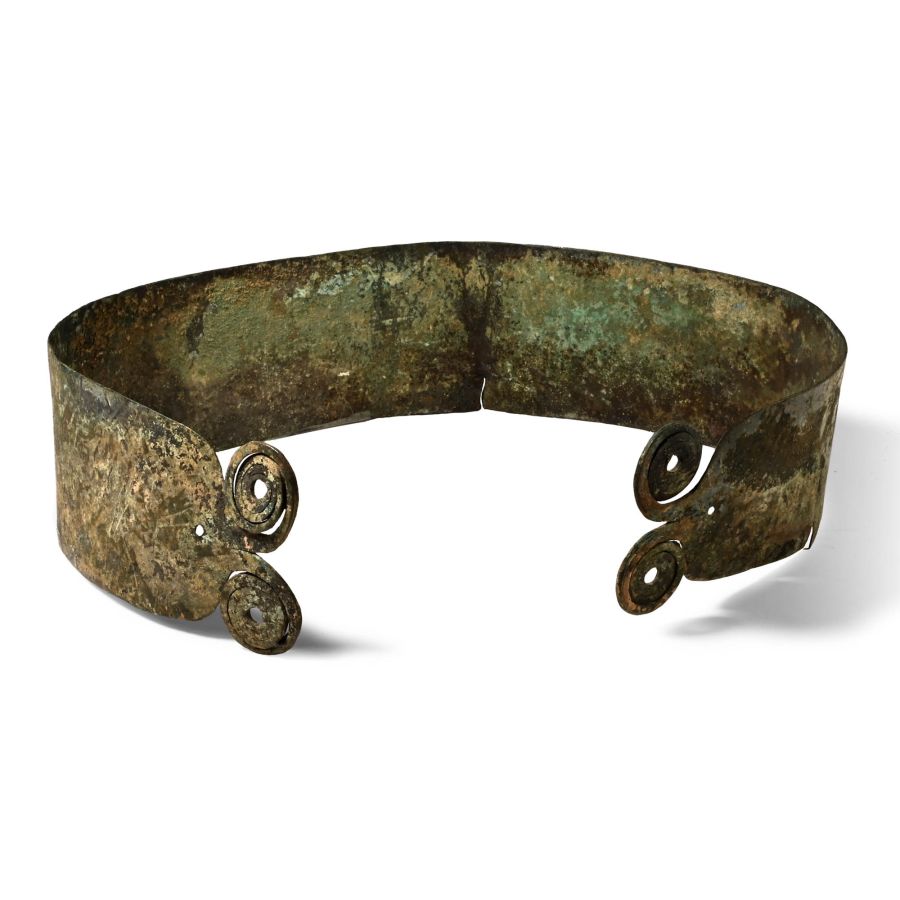
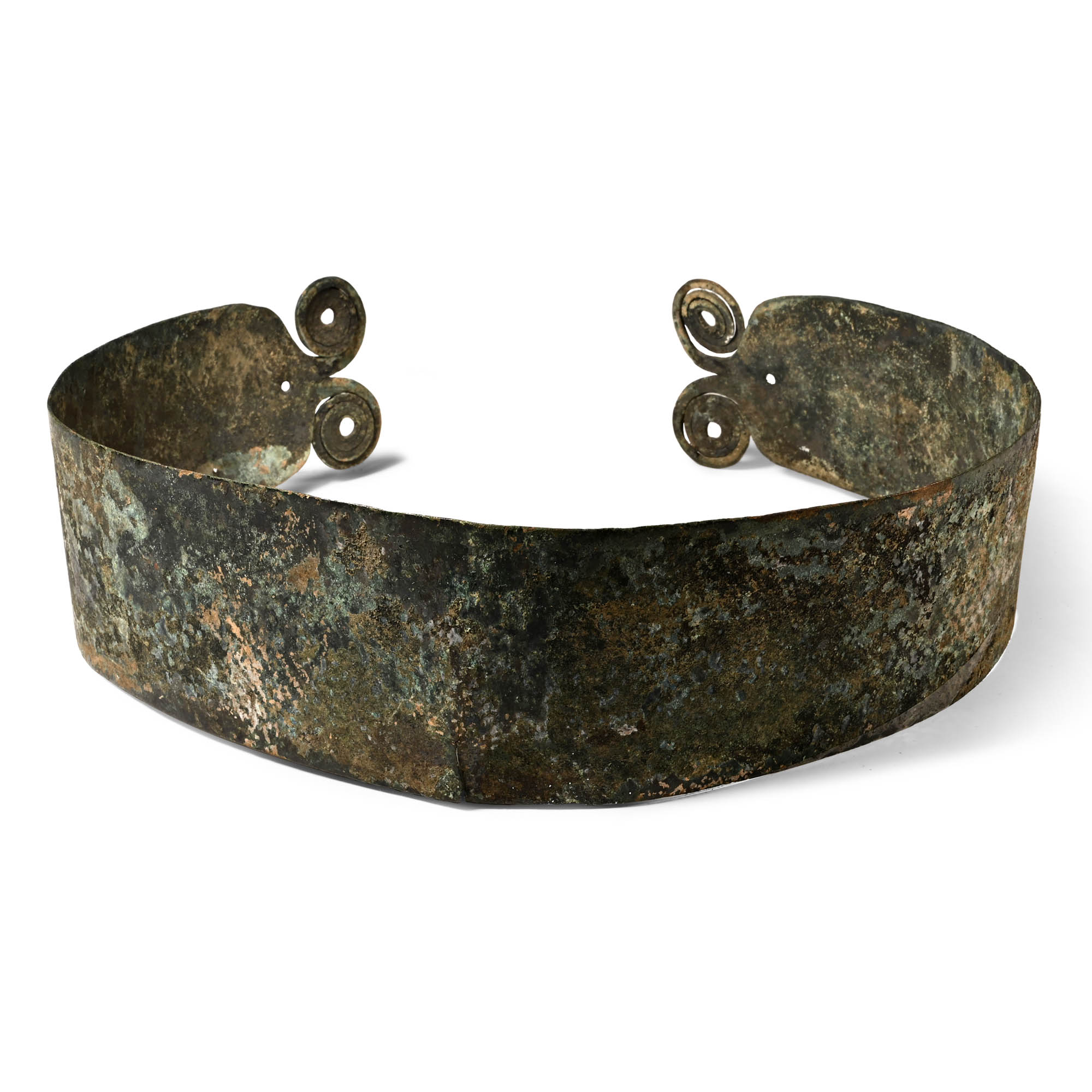
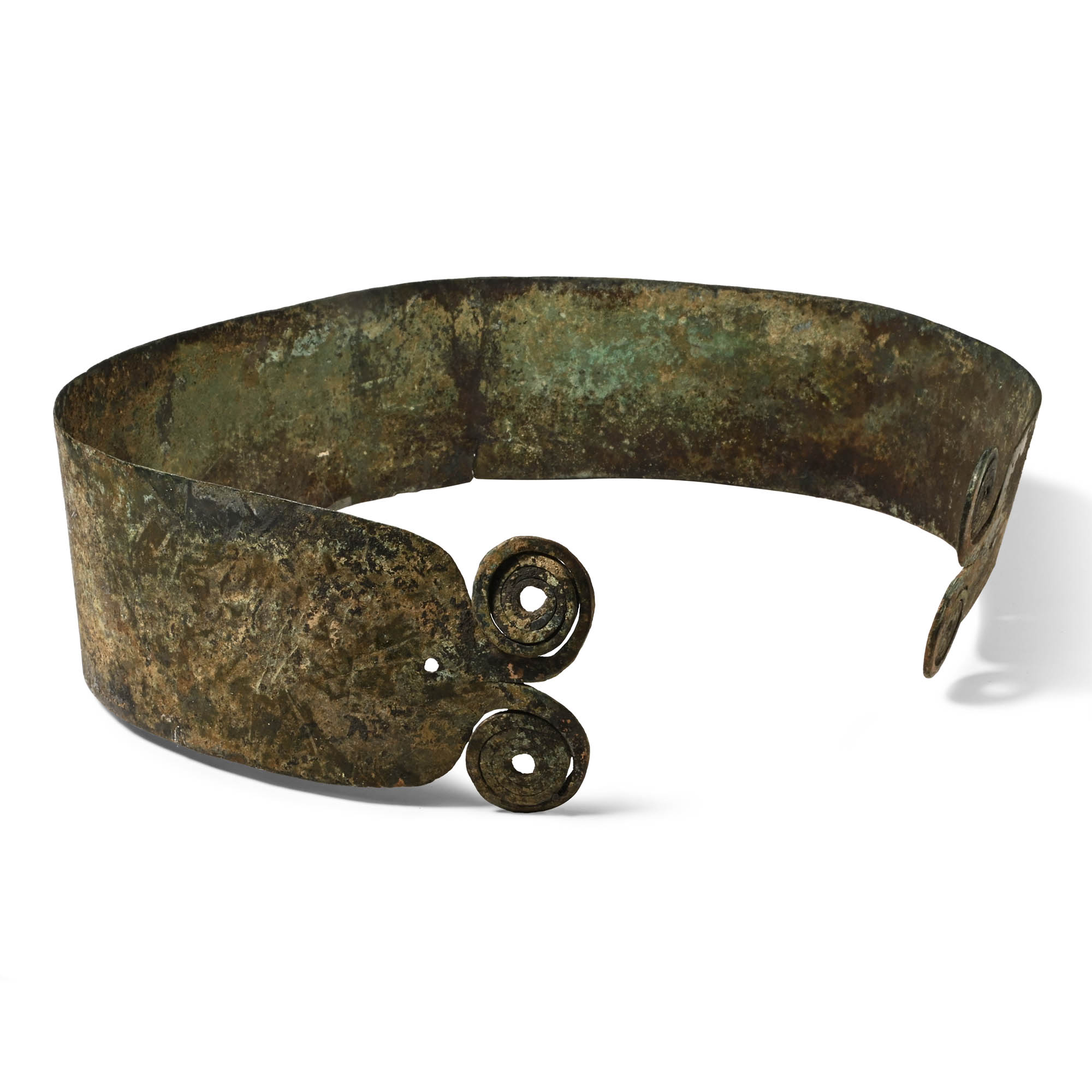
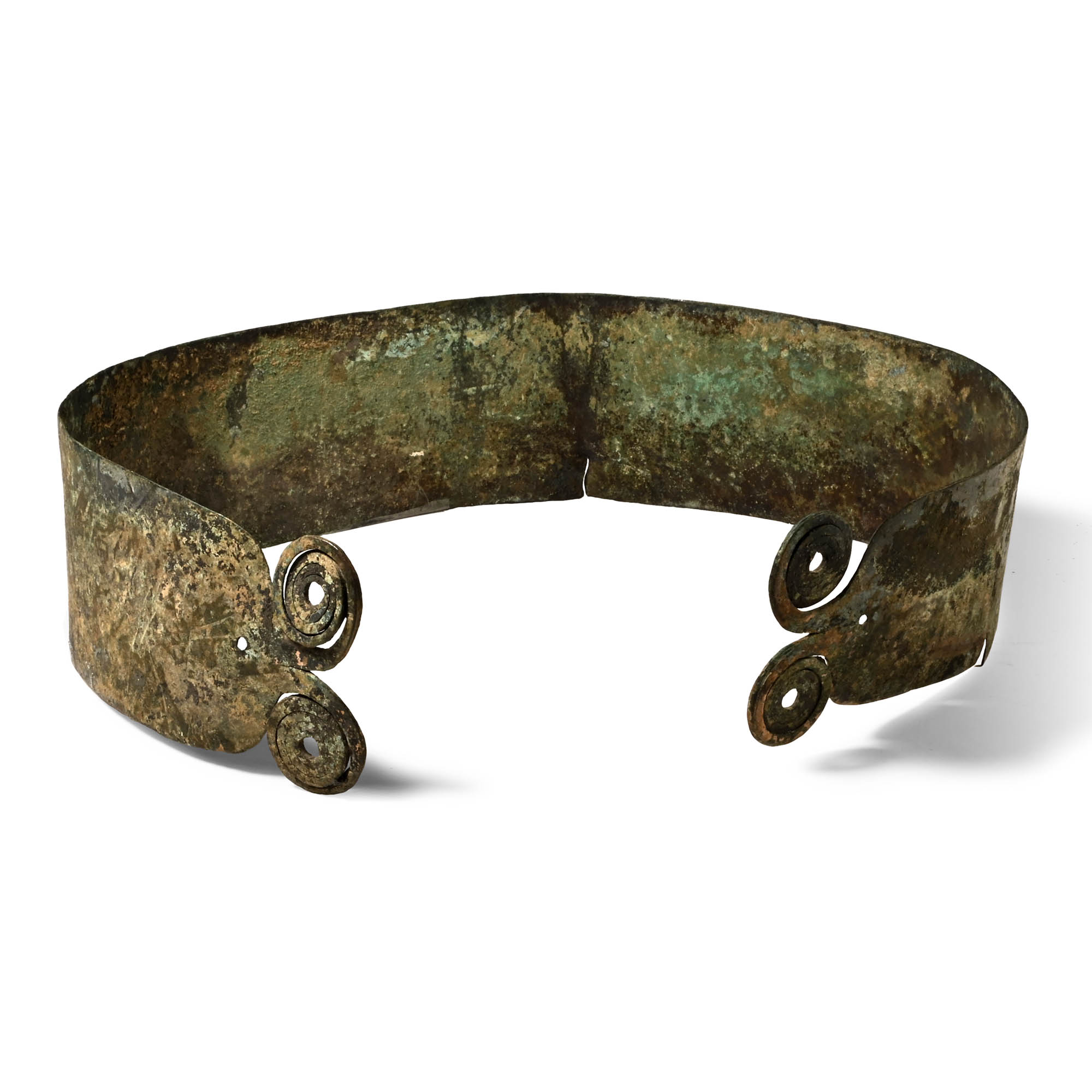
Luristan Bronze Armour Belt with Double Scroll Terminals
9TH-7TH CENTURY B.C.
10 in. (257 grams, 25.6 cm).
A broad hammered military belt or cuirass band with plain surface, the terminals shaped as a double spiral ornament, holes in the centre of both ends for fastening. [No Reserve]
ProvenanceUK private collection before 2000.
Acquired on the UK art market.
Property of a London gentleman.
Cf. Gorelik, M., Weapons of Ancient East, IV millennium BC-IV century BC, Saint Petersburg, 2003, in Russian, for similar belts from Luristan with decorated surfaces (plate LIX, nos.19-20).
FootnotesThe rich and noble aristocrats of Luristan, Elamites, Hurrians, Lullubians, Kutians, and Kassites, went to battle splendidly equipped and used magnificent bronze armours. For metal sheets used for quiver plaques and bronze protective belts or shields, they used the hammering technique (Čakoškāri).
CONDITIONTimeLine Auctions follows a vetting process to ensure the authenticity and legality of all items, reinforcing our commitment to integrity and responsible trading. Each antiquity, antique, and coin lot undergoes thorough examination by a vetting committee of at least ten external specialists, professional trade association members, scientists, and archaeologists: Our Vetting Process
AUCTIONS:
TimeLine is a leading auction house specialising in antiquities, ancient art, collectables, natural history, coins, medals, and books. Our auctions offer museums, collectors, historians, and enthusiasts the opportunity to acquire unique and historically significant pieces.
LOT 0261
Luristan Bronze Armour Belt with Double Scroll Terminals
Sold for (Inc. bp): £169
-
Illuminated Vellum Quran Leaf
North Africa, 20th century A.D.Sold for (Inc. bp): £182
Both sides with six lines of Kufic script in black and gold ink with blue and red accents, showing verses 18 & 19 of Surah 22 ('Al-Hajj' or 'Pilgrimage'). 16 grams, 26.5 cm
Acquired on the UK art market. Scottish private collection. -
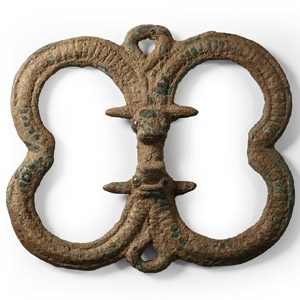
Luristan Bronze Mount with Facing Animal Heads
13th-7th century B.C.Estimate: £180 - 240 (+bp*)
Opening Bid: £90
Large quatrefoil openwork mount with billeting to the frame, loops at the apices and facing bull-head masks. 82 grams, 94 mm
Acquired 1980-2015. Ex Abelita family collection. -
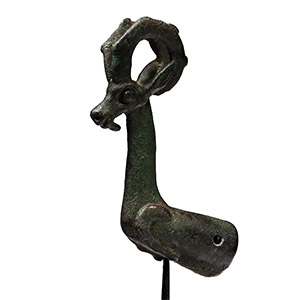
Luristan Bronze Whetstone Handle
Circa 9th-7th century A.D.Sold for (Inc. bp): £780
Modelled in the round; head, neck and forelegs of a gazelle with circular horns meeting the ears, pellet eye in a wide surround, folded forelegs; lead plug in the socket; mounted on a custom-made stand. 205 grams total, 14.1 cm including stand
Nicolas Koutoulakis (1910-1996), thence by descent. Belgian private collection, Brussels, acquired from the above circa 2017.
