
Loading, please wait...
LOT 1413
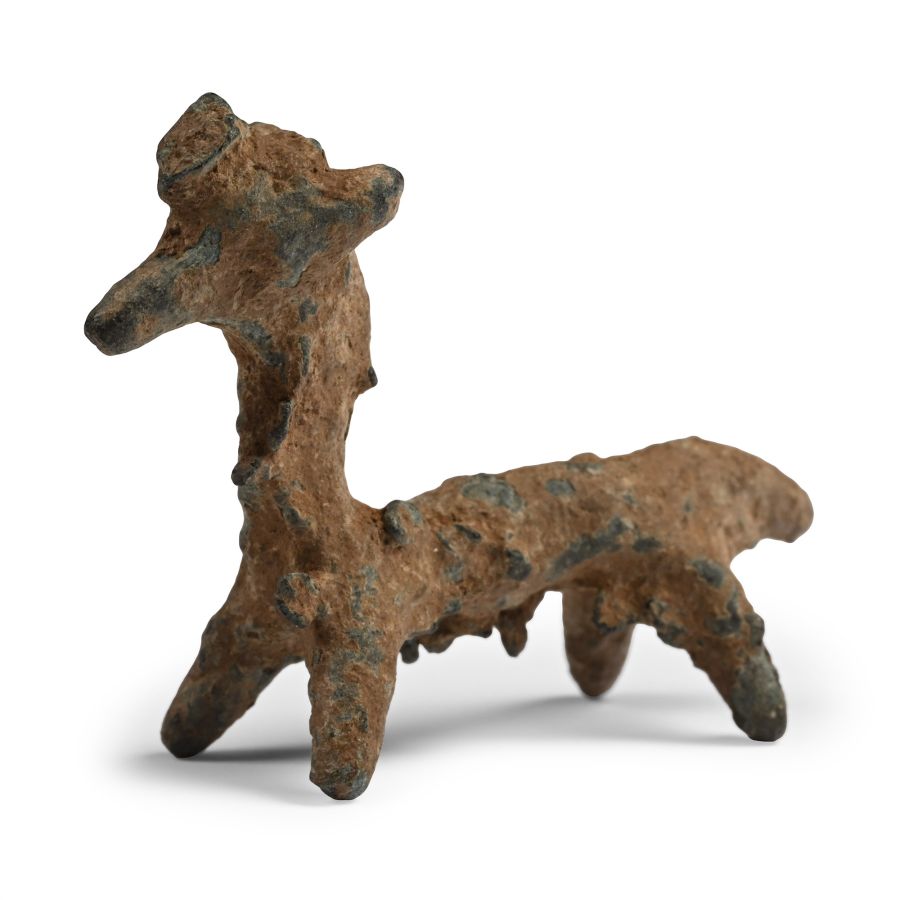
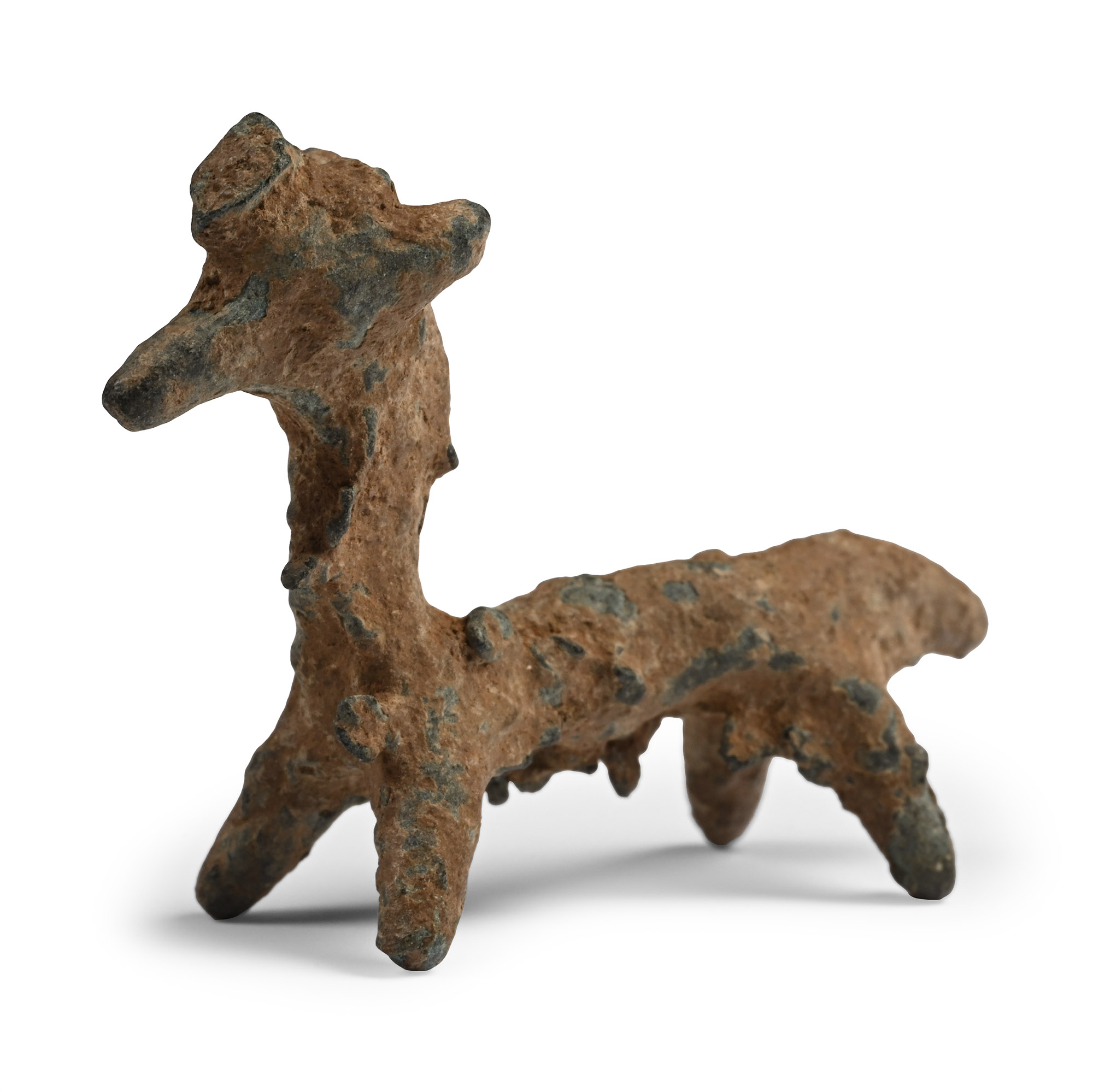
Luristan Bronze Animal
13TH-7TH CENTURY B.C.
1 7/8 in. (15.9 grams, 40 mm).
Modelled in the round with long arched neck. [No Reserve]
ProvenanceAcquired 1980-2015.
Ex Abelita family collection.
This lot has been cleared against the Art Loss Register database, and is accompanied by an illustrated lot declaration signed by the Head of the Antiquities Department, Dr Raffaele D'Amato.
TimeLine Auctions follows a vetting process to ensure the authenticity and legality of all items, reinforcing our commitment to integrity and responsible trading. Each antiquity, antique, and coin lot undergoes thorough examination by a vetting committee of at least ten external specialists, professional trade association members, scientists, and archaeologists: Our Vetting Process
AUCTIONS:
TimeLine is a leading auction house specialising in antiquities, ancient art, collectables, natural history, coins, medals, and books. Our auctions offer museums, collectors, historians, and enthusiasts the opportunity to acquire unique and historically significant pieces.
-

Western Asiatic and Other Mixed Bead Group
1st millennium B.C. and laterSold for (Inc. bp): £78
An assorted colourful mix of glass, stone and faience beads, including some larger feature beads. 58 grams total, 1-25 cm
Ex London, UK, collection, 1990s. This lot has been cleared against the Art Loss Register database, and is accompanied by an illustrated lot declaration signed by the Head of the Antiquities Department, Dr Raffaele D'Amato. -
.jpg)
Indo-Gangetic Copper Anthropomorphic Idol
India, circa 1500-1300 B.C.Sold for (Inc. bp): £41,600
A large flat-section figure with curled arms, spread legs, lobed head; mounted on a custom-made stand. 3.24 kg total, 36.3 cm wide
Private English collection, 1950s, and kept in England. Ex Atigh Gallery, pre-1986. with Aaron Gallery, acquired from the above. Accompanied by a copy of the 1986 invoice from Atigh Gallery. This lot has been checked against the Interpol Database of stolen works of art and is accompanied by search certificate no.12492-230324. This lot has been cleared against the Art Loss Register database, and is accompanied by an illustrated lot declaration signed by the Head of the Antiquities Department, Dr Raffaele D'Amato.
A cluster of copper artefacts dating to 1500-1000 B.C. was found in the Indo-Gangetic plains (region of Uttar Pradesh), including a number of anthropomorphic figures with downwards curving arms, dome-shaped heads, and spread legs. They were cast in moulds and then hammered with often discernible chisel marks. They can be divided in several distinct categories based on their characteristics, and it has been suggested that these idols functioned as protective guardian spirits. -
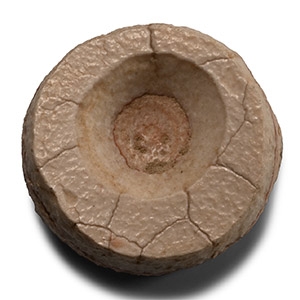
Western Asiatic Alabaster Circular Palette
1st millennium B.C.Sold for (Inc. bp): £26
Featuring attractive striations, circular in shape with a slightly convex base, concave top with a rounded recess off-centre. 47 grams, 45 mm
Ex London and Geneva collection, pre-1988. Accompanied by an old dealer's information label. This lot has been cleared against the Art Loss Register database, and is accompanied by an illustrated lot declaration signed by the Head of the Antiquities Department, Dr Raffaele D'Amato.
