
Loading, please wait...
LOT 1096
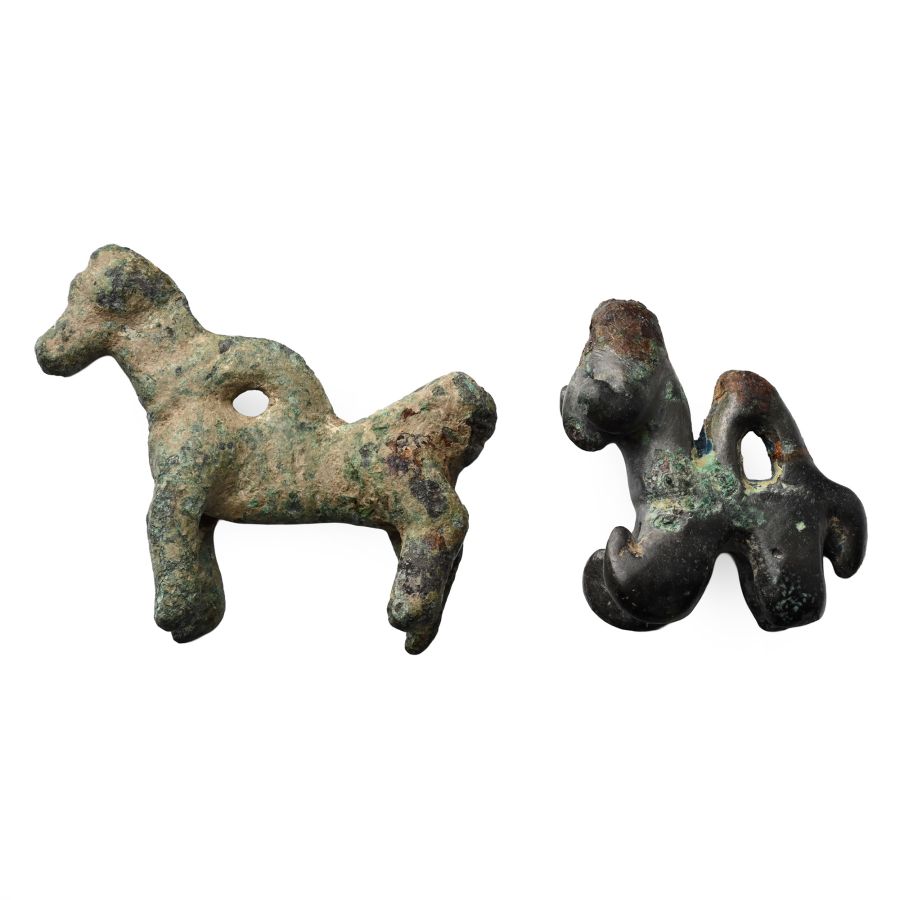
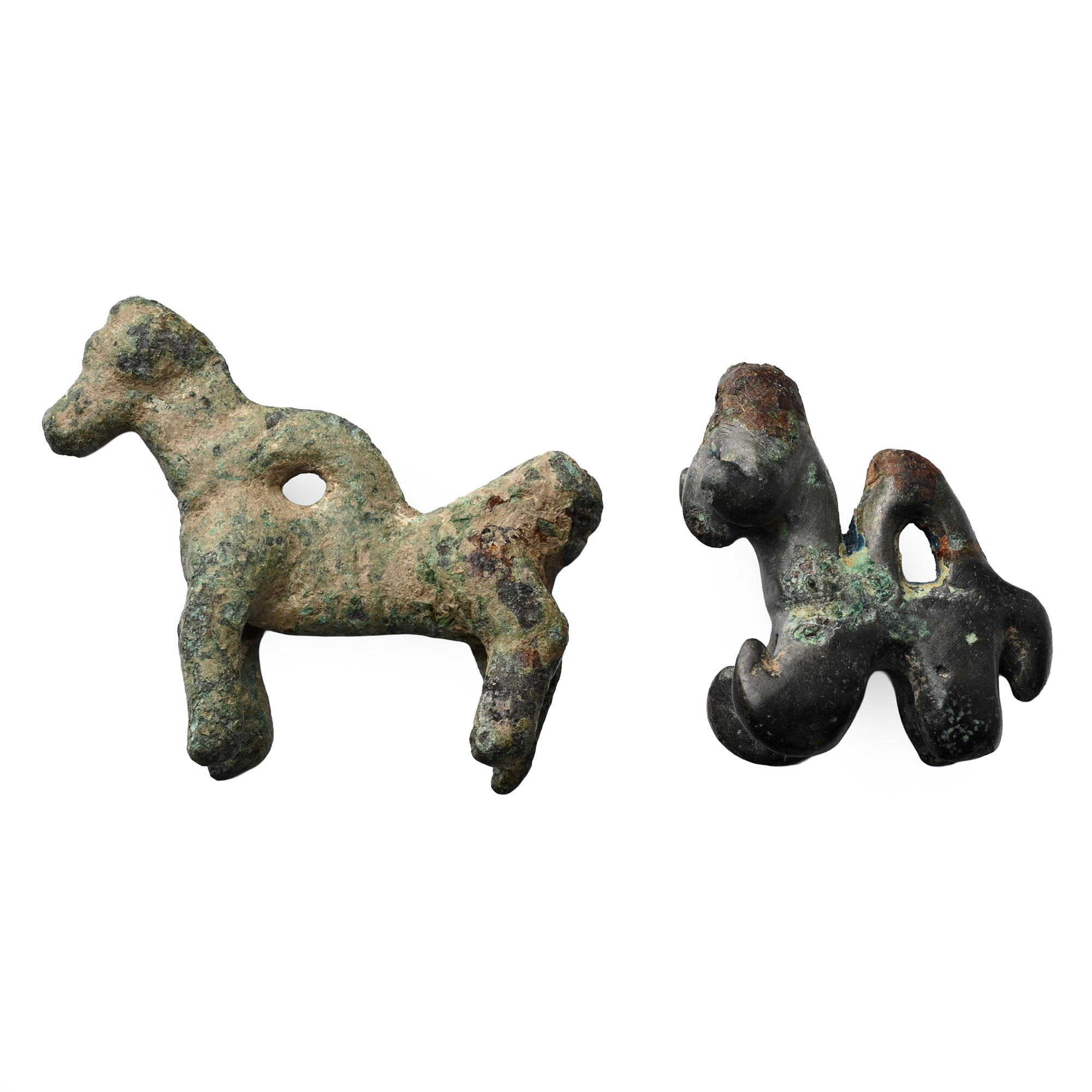
Luristan Bronze Animal Pendant Group
2ND-1ST MILLENNIUM B.C.
1 - 1 3/8 in. (27.7 grams total, 25-36 mm).
Comprising stylised horse(?) with elongated neck, ram with curved horns and chubby short legs; each with attachment loop to the top. [2, No Reserve]
ProvenanceUK private collection before 2000.
Acquired on the UK art market.
Private collection, London, UK.
This lot has been cleared against the Art Loss Register database, and is accompanied by an illustrated lot declaration signed by the Head of the Antiquities Department, Dr Raffaele D'Amato.
TimeLine Auctions follows a vetting process to ensure the authenticity and legality of all items, reinforcing our commitment to integrity and responsible trading. Each antiquity, antique, and coin lot undergoes thorough examination by a vetting committee of at least ten external specialists, professional trade association members, scientists, and archaeologists: Our Vetting Process
AUCTIONS:
TimeLine is a leading auction house specialising in antiquities, ancient art, collectables, natural history, coins, medals, and books. Our auctions offer museums, collectors, historians, and enthusiasts the opportunity to acquire unique and historically significant pieces.
-
Sasanian Glass Rhyton
3rd-5th century A.D.Estimate: £10,000 - 14,000 (+bp*)
Opening Bid: £5,000
With trumpet-shaped broad end, tapering sidewalls and thick pierced finial; mounted in a custom-made wooden case. 718 grams, 25.5 cm
Japanese private collection, prior 1979. with Aaron Gallery, Iran, prior 1970. with Aaron Gallery, London, 19 September 1980. This lot has been checked against the Interpol Database of stolen works of art and is accompanied by search certificate number no.12798-241349. This lot has been cleared against the Art Loss Register database, and is accompanied by an illustrated lot declaration signed by the Head of the Antiquities Department, Dr Raffaele D'Amato. -
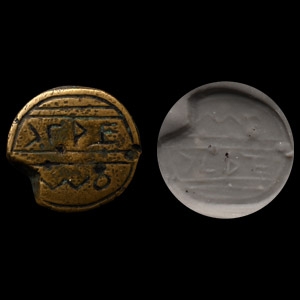
Aramaic Bronze Inscribed Stamp Seal
6th-4th century B.C.Sold for (Inc. bp): £52
Discoid with large loop, incised linear design with text in two lines. 3.33 grams, 12 mm
Ex London, UK, gentleman 1980-1990s. This lot has been cleared against the Art Loss Register database, and is accompanied by an illustrated lot declaration signed by the Head of the Antiquities Department, Dr Raffaele D'Amato. -
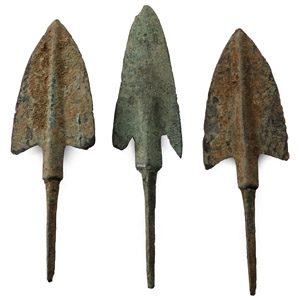
Luristan Bronze Arrowhead Collection
2nd-1st millennium B.C.Sold for (Inc. bp): £117
Comprising: three large triangular arrowheads with barbed shoulders and rounded midrib. 51 grams total, 9.7-10.5 cm
Acquired in the 1990s. Ex Abelita family collection. This lot has been cleared against the Art Loss Register database, and is accompanied by an illustrated lot declaration signed by the Head of the Antiquities Department, Dr Raffaele D'Amato.
The arrowheads belong to the type V of the Khorasani classification: subtype C, arrowheads with elongated, triangular shape with barbed shoulders and convex sides, and a raised midrib with a sharp central line. These types of arrowheads were commonly used in Anatolia and Mesopotamia from the 2nd millennium B.C., but apparently their employment began earlier in this area, where types like these occur alongside the non-barbed, predominantly ribbed and tanged types.
