
Loading, please wait...
LOT 1232
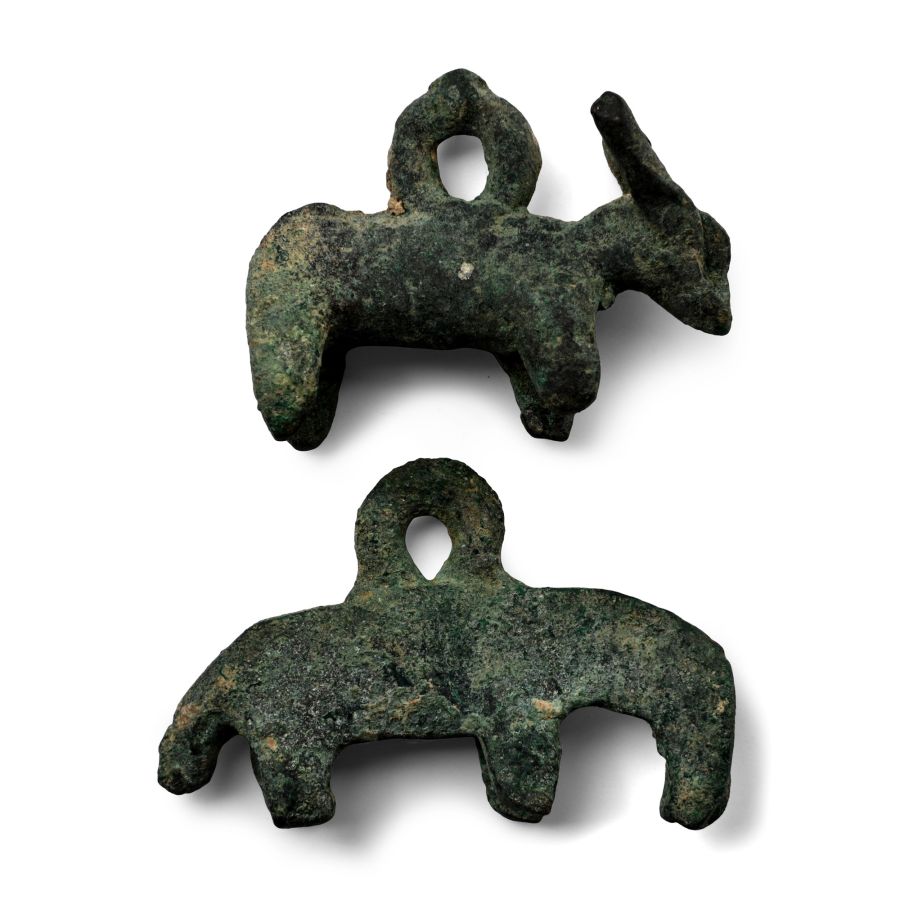
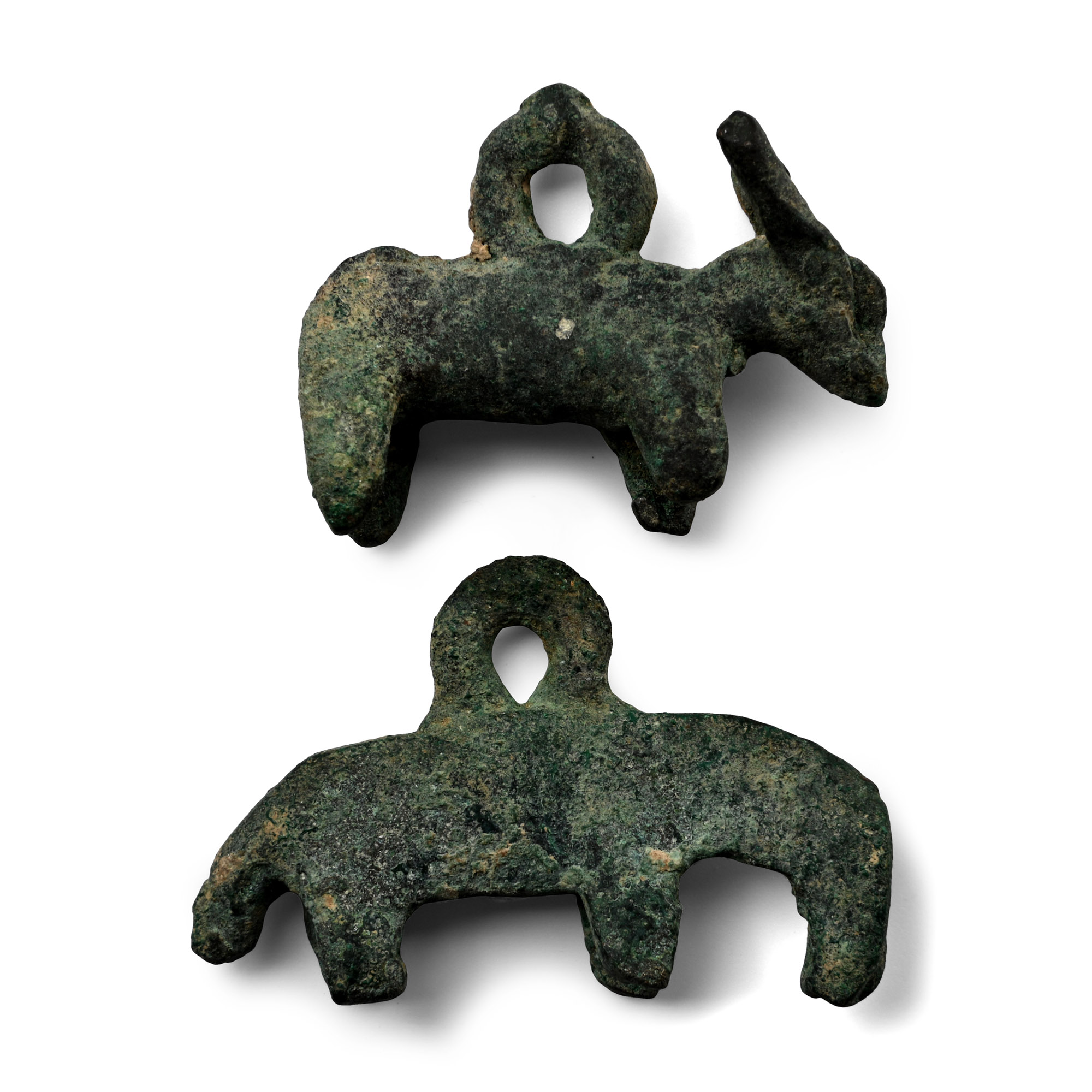
Luristan Bronze Animal Pair
EARLY 1ST MILLENNIUM B.C.
1 1/4 - 1 1/2 in. (31 grams total, 32-39 mm).
Comprising: a grazing animal with loop to the shoulders; a horned animal with head lowered. [2, No Reserve]
ProvenanceFrom the private collection of a Canadian gentleman living in Essex, UK, formed since the 1920s-circa 1990.
Property of an Essex lady until the late 1990s; thence by descent.
From the private collection of an Essex gentleman since the late 1990s.
This lot has been cleared against the Art Loss Register database, and is accompanied by an illustrated lot declaration signed by the Head of the Antiquities Department, Dr Raffaele D'Amato.
TimeLine Auctions follows a vetting process to ensure the authenticity and legality of all items, reinforcing our commitment to integrity and responsible trading. Each antiquity, antique, and coin lot undergoes thorough examination by a vetting committee of at least ten external specialists, professional trade association members, scientists, and archaeologists: Our Vetting Process
AUCTIONS:
TimeLine is a leading auction house specialising in antiquities, ancient art, collectables, natural history, coins, medals, and books. Our auctions offer museums, collectors, historians, and enthusiasts the opportunity to acquire unique and historically significant pieces.
-
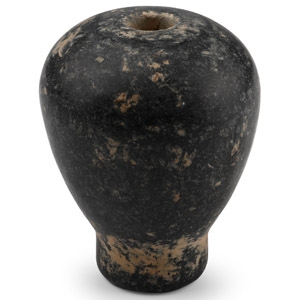
Western Asiatic Stone Macehead
3rd millennium B.C.Estimate: £100 - 140 (+bp*)
Opening Bid: £50
Piriform in profile with extended tubular socket. 494 grams, 82 mm
From a London, UK, collection, 2000s. This lot has been cleared against the Art Loss Register database, and is accompanied by an illustrated lot declaration signed by the Head of the Antiquities Department, Dr Raffaele D'Amato. -
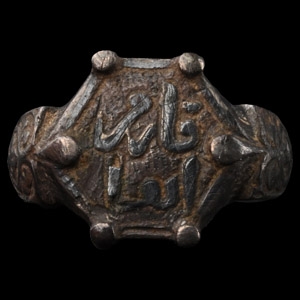
Western Asiatic Silver Ring with Niello
12th-13th century A.D. or laterEstimate: £500 - 700 (‡+bp*)
Opening Bid: £250
With carinated hoop, heater-shaped plaques to the shoulders, hexagonal bezel with pellet to each angle and reserved calligraphic legend. 9.03 grams, 23.84 mm overall, 19.40 mm internal diameter (approximate size British P, USA 7 1/2, Europe 16.23, Japan 15)
From a central European collection. Mr S.A., acquired in 1992. Thence by descent, family collection, since the late 1990s. This lot has been cleared against the Art Loss Register database, and is accompanied by an illustrated lot declaration signed by the Head of the Antiquities Department, Dr Raffaele D'Amato. -
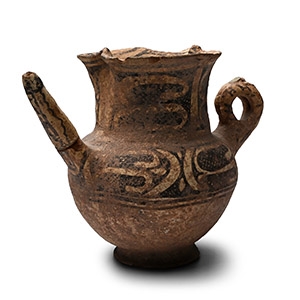
Western Asiatic Terracotta Spouted Vessel
8th-9th century A.D.Estimate: £400 - 600 (+bp*)
Opening Bid: £200
With bulbous body, looped handle and tapering spout, broad columnar neck with crimped detailing, bands of reserved tendrils on a hatched field. 523 grams, 18.5 cm wide
UK collection, 1990s. Acquired on the UK art market, before 2000. Private collection, Mr M.V., a London-based businessman. This lot has been cleared against the Art Loss Register database, and is accompanied by an illustrated lot declaration signed by the Head of the Antiquities Department, Dr Raffaele D'Amato.
