
Loading, please wait...
LOT 1090
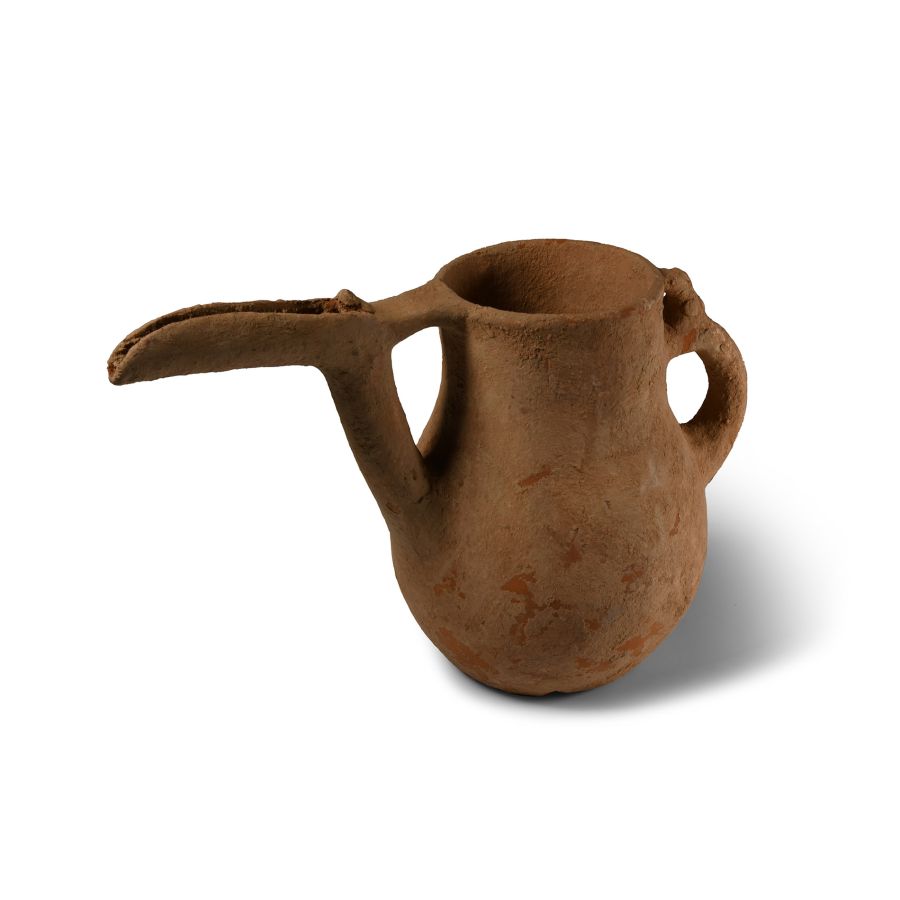
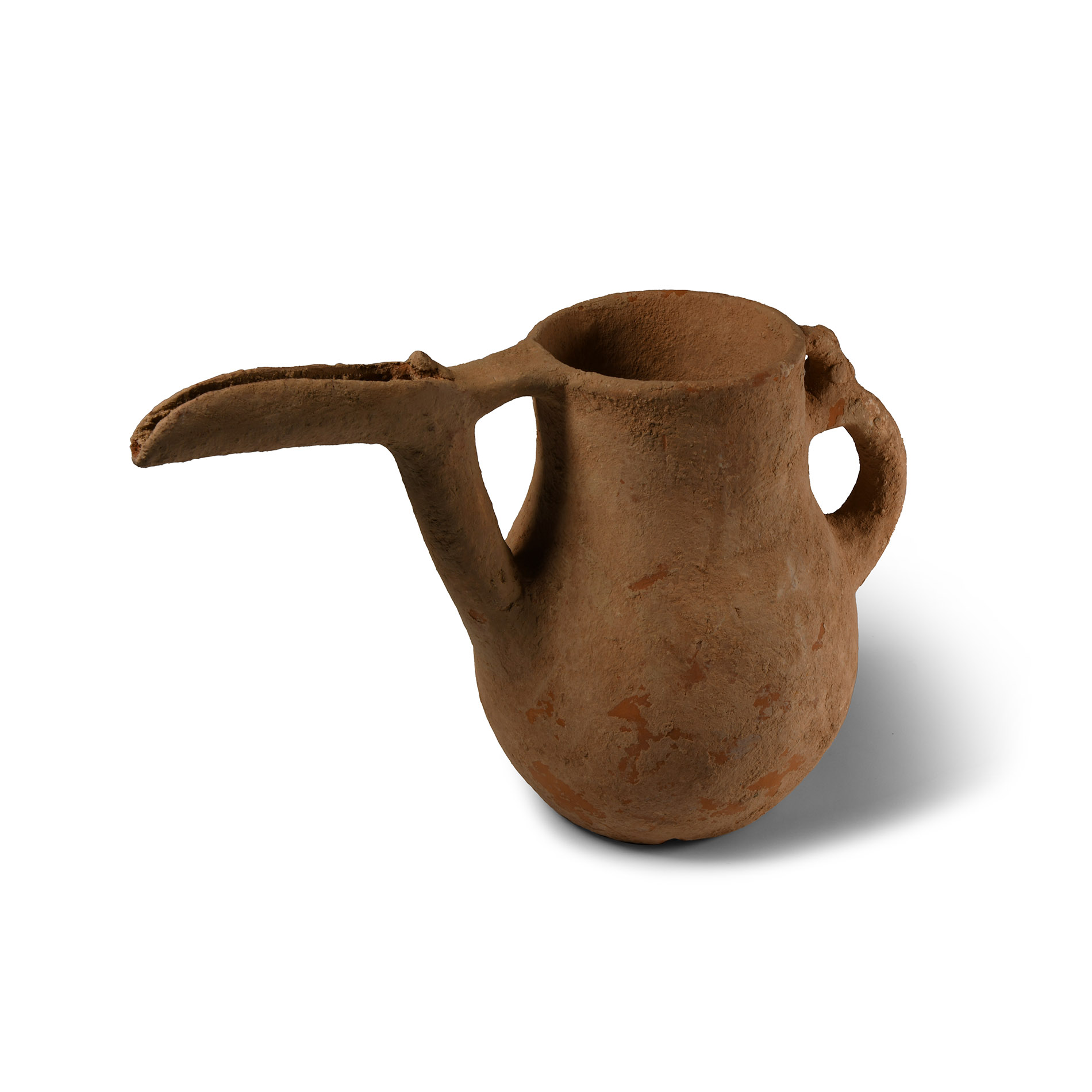
Luristan Bird-Spouted Terracotta Vessel with Animal Handle
13TH-7TH CENTURY B.C.
10 1/4 in. (845 grams, 26 cm wide).
Piriform-bodied with a broad neck, slender spout with zoomorphic U-section terminal, double looped handle also zoomorphic in form, featuring applied pellets. [No Reserve]
ProvenanceEx Rabi gallery, 1990s.
Private collection of Iranian art.
TimeLine Auctions follows a vetting process to ensure the authenticity and legality of all items, reinforcing our commitment to integrity and responsible trading. Each antiquity, antique, and coin lot undergoes thorough examination by a vetting committee of at least ten external specialists, professional trade association members, scientists, and archaeologists: Our Vetting Process
AUCTIONS:
TimeLine is a leading auction house specialising in antiquities, ancient art, collectables, natural history, coins, medals, and books. Our auctions offer museums, collectors, historians, and enthusiasts the opportunity to acquire unique and historically significant pieces.
LOT 1090
Luristan Bird-Spouted Terracotta Vessel with Animal Handle
Sold for (Inc. bp): £156
-
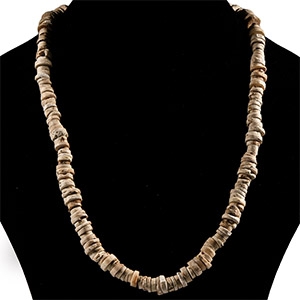
Mesopotamian Shale Bead String
4th-3rd millennium B.C.Sold for (Inc. bp): £20
Restrung; composed mainly of disc-shaped shale beads. 108 grams, 66 cm long
Acquired 1980s-1990s. From the H.N. collection, Milton Keynes, Bedfordshire, UK. -
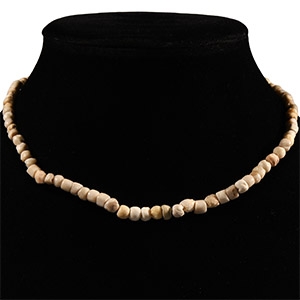
Western Asiatic Stone and Shell Bead Necklace String
Circa 1st millennium B.C.Sold for (Inc. bp): £26
Restrung; composed of stone beads of various shapes and shades of cream and grey. 16.1 grams, 38 cm long
Ex North London collection from 1980s-1990s. Property of a Ruislip, UK, gentleman, by inheritance. Accompanied by a previous dealer's certificate of authenticity. -
.jpg)
Large Bactrian Bronze Armlet Pair
2nd millennium B.C.Estimate: £2,000 - 3,000 (+bp*)
Opening Bid: £800
Each armlet composed of a substantial round-section penannular hoop, both terminals formed as stylised opposed animal heads, ring-and-dot motifs representing the eyes and highlighting other anatomical detailing, together with dashes, dimples, chevrons and crescents. 1.2 kg total, 13.4 mm wide each
with a London, UK gallery, 1971-early 2000s. This lot has been checked against the Interpol Database of stolen works of art and is accompanied by search certificate number no.11873-206890.
