
Loading, please wait...
LOT 1068
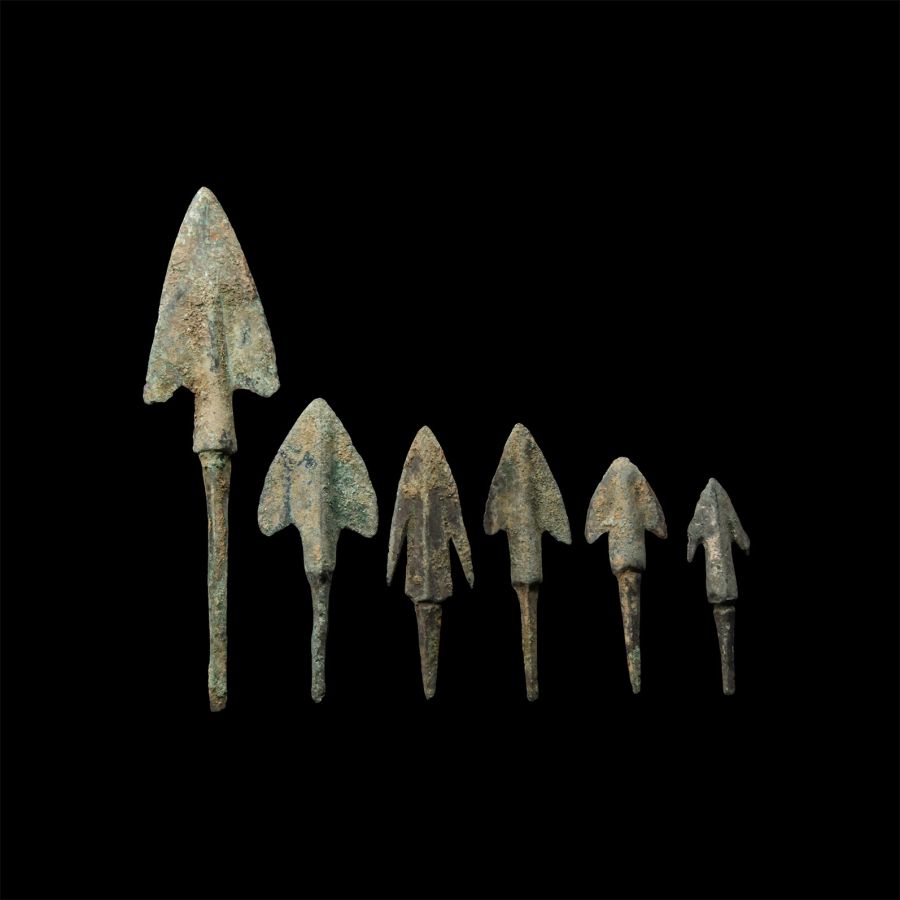
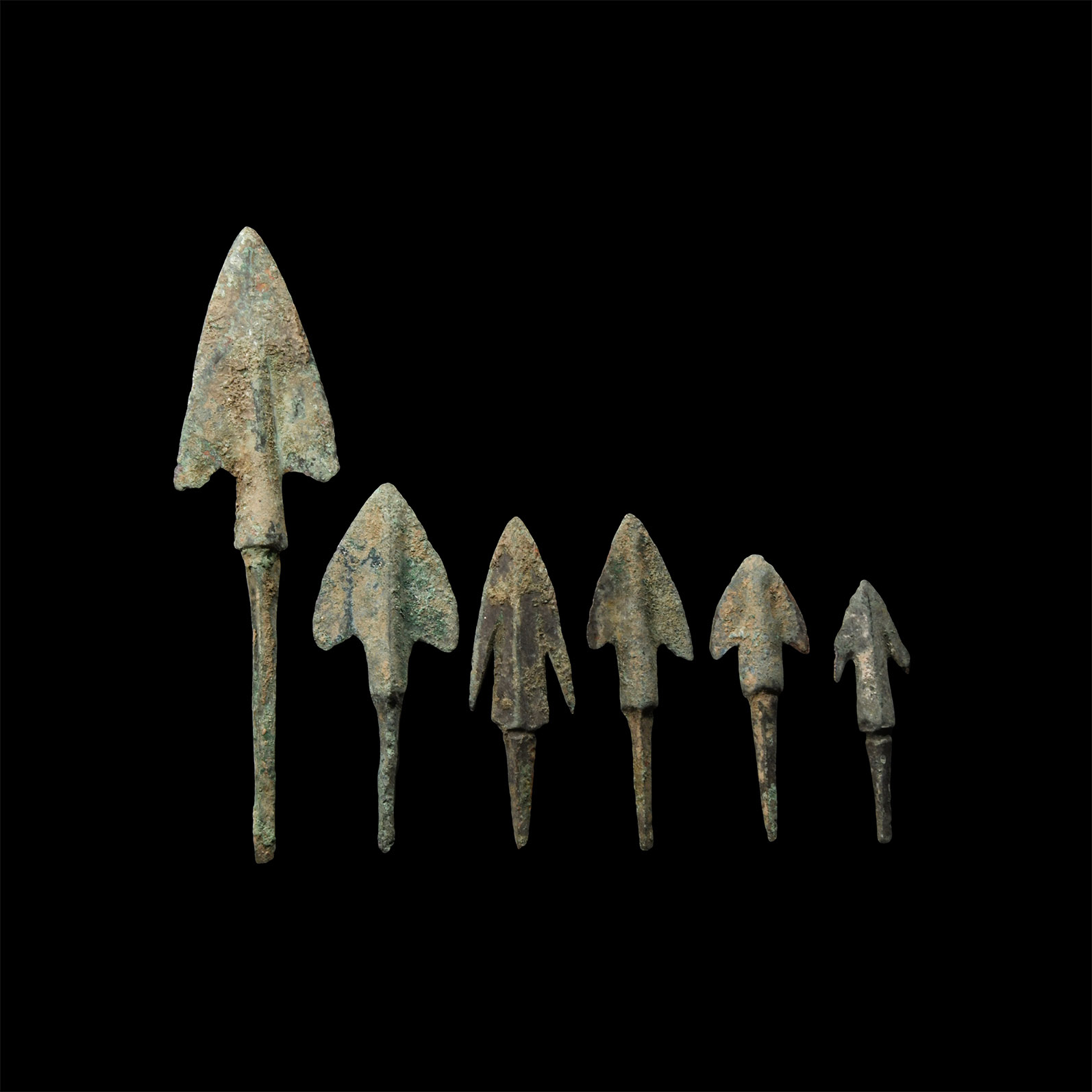
Luristan Arrowhead Group
2ND MILLENNIUM B.C.
1 3/4 - 4 1/4 in. (52 grams total, 4.3-10.9 cm).
A group of six bronze arrowheads with deltoid form, a sharp barbed blade and prominent midrib extending to a long tang. [6]
ProvenanceAcquired 1980-2015.
Ex Abelita family collection.
Cf. Muscarella, O.W., Bronze and Iron Ancient Near Eastern Artifacts in the Metropolitan Museum of Art, New York, 1988, pp.289ff., for similar, nos.408, 409, 416.
FootnotesA number of arrowheads of this type have been excavated from the Northern Iranian Plateau, in Luristan and in the South-Caspian region. Many parallels have a burial provenance, but a large hoard of them was found in a non-funerary context. This type of arrowhead has been in use from the 2nd millennium B.C. Godard claimed that barbed types of heads came from tombs from Luristan, like the ones found in Tang-i-Hamamlan.
CONDITIONTimeLine Auctions follows a vetting process to ensure the authenticity and legality of all items, reinforcing our commitment to integrity and responsible trading. Each antiquity, antique, and coin lot undergoes thorough examination by a vetting committee of at least ten external specialists, professional trade association members, scientists, and archaeologists: Our Vetting Process
AUCTIONS:
TimeLine is a leading auction house specialising in antiquities, ancient art, collectables, natural history, coins, medals, and books. Our auctions offer museums, collectors, historians, and enthusiasts the opportunity to acquire unique and historically significant pieces.
-
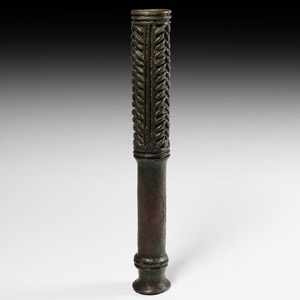
Akkadian Bronze Mace Head
2400-2000 B.C.Sold for (Inc. bp): £390
A bronze cylindrical mace head or cudgel with collared stem and flanged rim, the upper body with alternating vertical ribs and chevrons. 510 grams, 23 cm
Acquired 1980-2015. Ex Abelita family collection. -
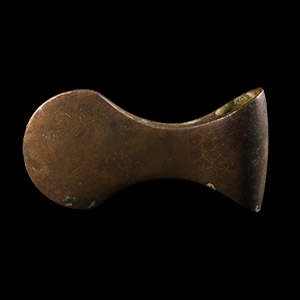
Western Asiatic Paddle-Shaped Axehead
2nd-1st millennium B.C.Sold for (Inc. bp): £98
A copper-alloy axehead with curved cylindrical butt and socket, waisted neck and D-shaped cutting edge; incised scale decoration to the socket. 353 grams, 12 cm
Early 1990s London collection. Acquired on the UK art market. From a private collection, Lancashire, UK.
These kind of axes had a simple but aesthetic form, with the round socket placed at the edge of the rounded butt which tapered smoothly to a flat, splayed crescent-shaped blade. -
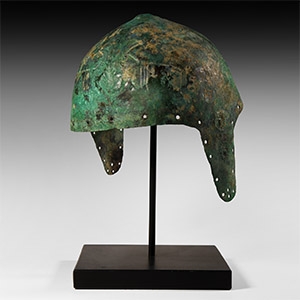
Levantine Helmet with Opposing Ibexes
8th century B.C.Sold for (Inc. bp): £5,200
A Levantine or Assyrian domed bronze helmet of ovoid shape with slightly pointed top and integral cheek-pieces; chased low-relief decoration to both front and back depicting insignia of a pair of opposing ibexes flanking a small palm tree; the edge with regularly disposed holes for fastening of the leather lining; accompanied by a custom-made display stand. 458 grams, 23 cm high (2.36 kg total, 31.5 cm high including stand)
Fine condition, some restoration.
Acquired 1960s-1990s. Late Alison Barker collection, a retired London barrister. Accompanied by an academic report by Dr Raffaele D'Amato. This lot has been checked against the Interpol Database of stolen works of art and is accompanied by search certificate no.11386-190447.
This rare helmet is an unusual example of a conical strap-helmet, linked with similar Greek strap helmets, but until now in the Near East, known only from the Assyrian reliefs. It is shown together with the crested helmets, on the reliefs of Tiglapilaser III and Sennacherib.
