
Loading, please wait...
LOT 1053
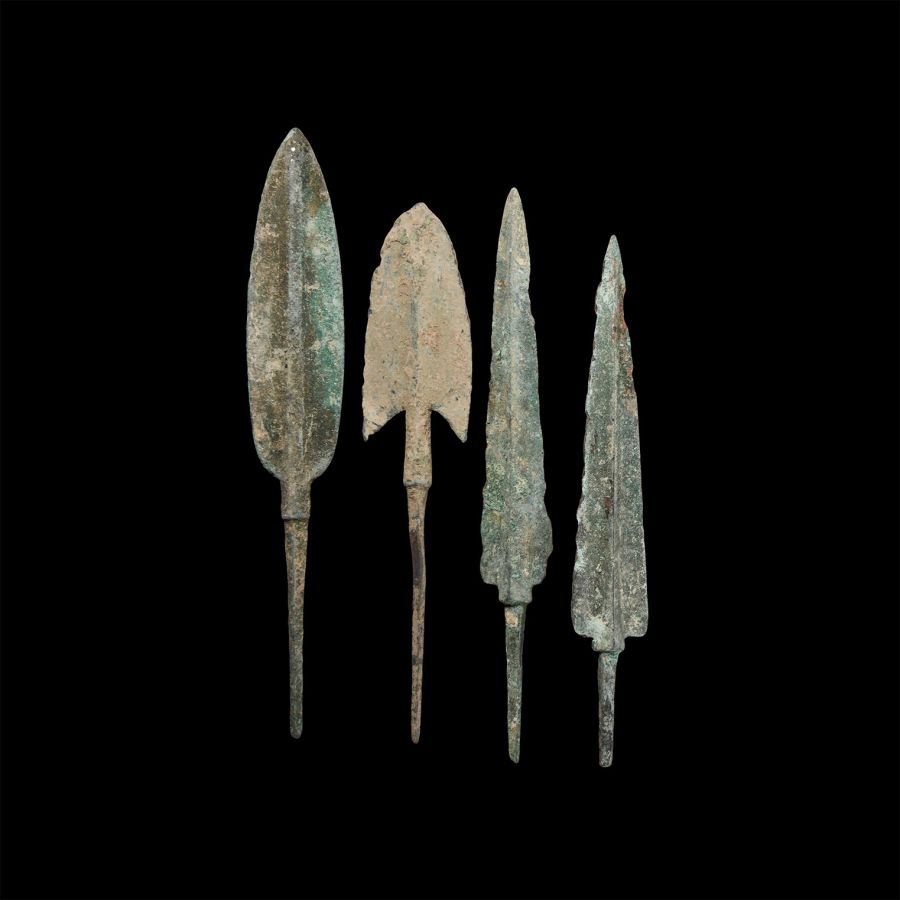
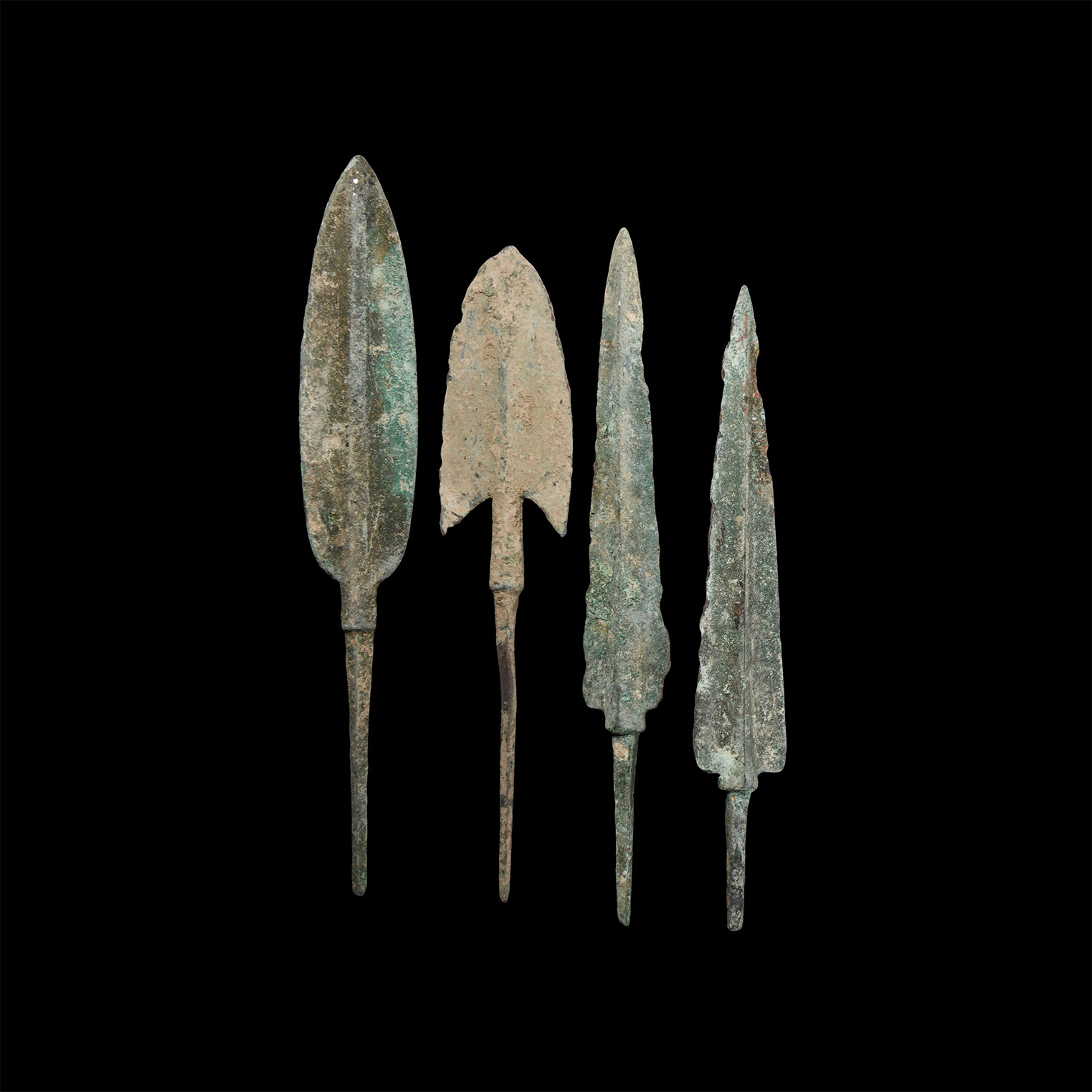
Luristan Arrowhead Collection
13TH-6TH CENTURY B.C.
5 5/8 - 6 1/4 in. (118 grams total, 14.2-16 cm).
A group of four bronze arrowheads comprising: two triangular with thick midrib; one barbed and tanged; one leaf-shaped. [4]
ProvenanceAcquired 1980-2015.
Ex Abelita family collection.
TimeLine Auctions follows a vetting process to ensure the authenticity and legality of all items, reinforcing our commitment to integrity and responsible trading. Each antiquity, antique, and coin lot undergoes thorough examination by a vetting committee of at least ten external specialists, professional trade association members, scientists, and archaeologists: Our Vetting Process
AUCTIONS:
TimeLine is a leading auction house specialising in antiquities, ancient art, collectables, natural history, coins, medals, and books. Our auctions offer museums, collectors, historians, and enthusiasts the opportunity to acquire unique and historically significant pieces.
-
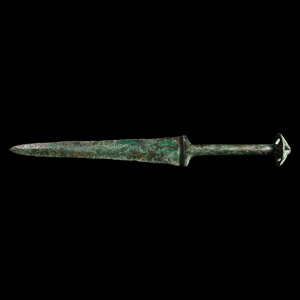
Luristan Bronze Dagger
14th-10th century B.C.Sold for (Inc. bp): £390
A bronze dagger with lentoid-section two-edged triangular blade, rounded lower guard, columnar grip and domed pommel with six radiating spokes and void between. 156 grams, 26.5 cm
Ex S. Motamed collection. with Bellman's Auctions, 20th-26th June 2015, lot 2482. Property of a London gentleman. -
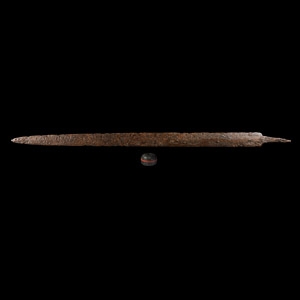
Migration Period Sword Blade with Agate Pommel
Circa 5th-6th century A.D.Sold for (Inc. bp): £975
A two-edged parallel-sided iron blade with broad pointed tip, battle nicks to both cutting edges; accompanied by a discoid agate pommel. 823 grams total, 3.5-83 cm
cleaned and conserved
Acquired 1971-1972. From the collection of the vendor's father. Property of a London, UK, collector. Accompanied by an academic report by Dr Raffaele D’Amato. -
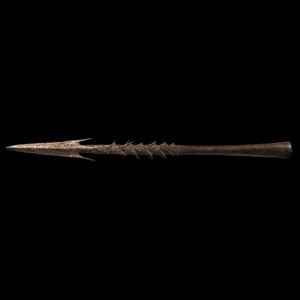
Medieval Socketted Catapult Dart
14th-16th century A.D.Sold for (Inc. bp): £208
An iron catapult dart formed with a tapering cylindrical socket and rectangular-section neck with barbs, barbed triangular head with full-length medial rib to both faces. 83 grams, 25 cm
Acquired before 2000. From the collection of a European gentleman living in the UK.
