
Loading, please wait...
LOT 1815
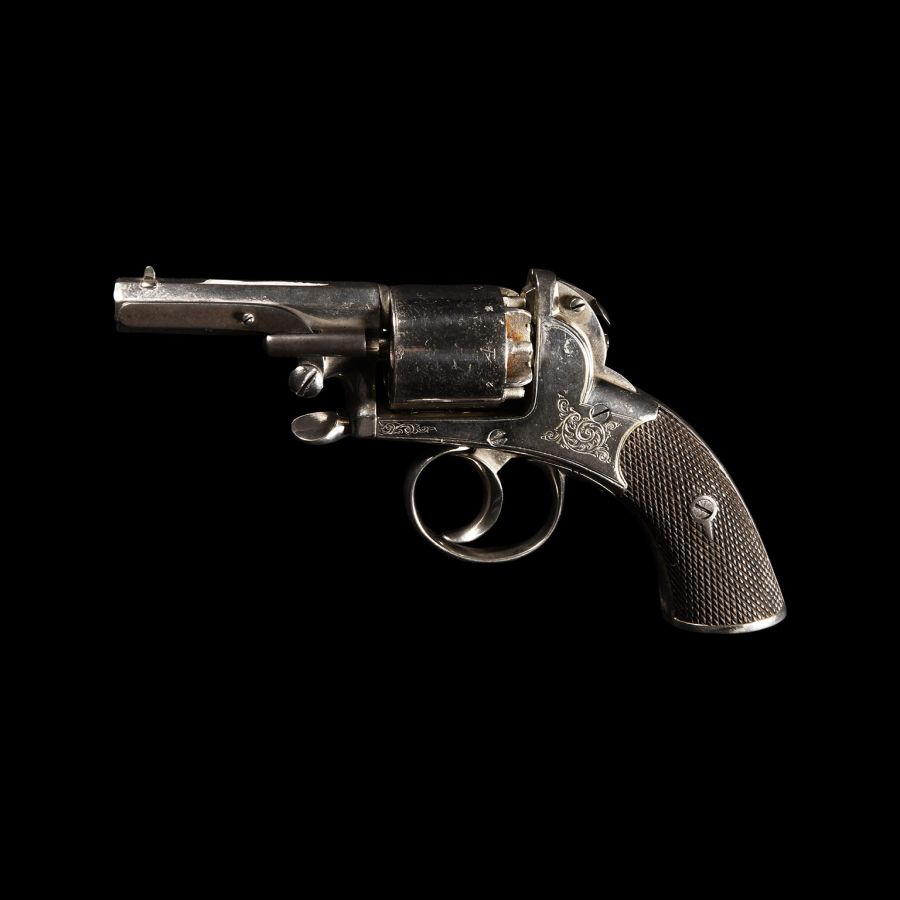
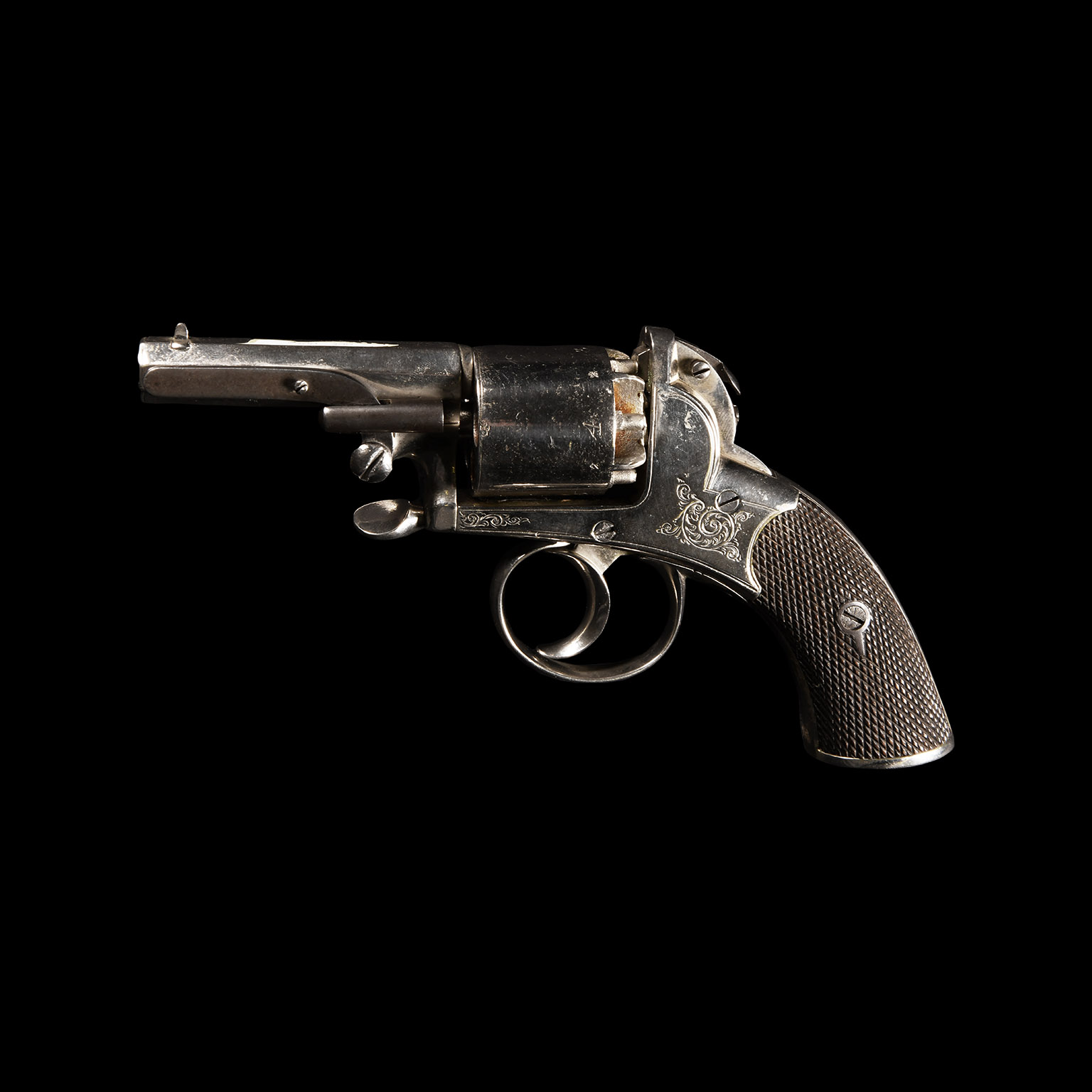
London Proofed Percussion Revolver
19TH CENTURY A.D.
7 in. (480 grams, 18 cm).
A double-action nickel-plated 5-shot percussion revolver with numbered chambers; the chambers and barrel bearing London proofmarks and the barrel numbered '2'; the frame with foliate engraving and fitted with chequered wood grip scales with hinged steel loading lever; action in working order.
ProvenanceAcquired Peter Wilson Auction, 2020, lot 10.
Ex property of a Kent collector.
Accompanied by lot ticket.
This lot is for UK buyers only.
Sold as an exempt item under Section 58 (2) of the Firearms Act, 1968, to be held as a curiosity or ornament. No license required but buyer must be over 18 years of age.
CONDITIONTimeLine Auctions follows a vetting process to ensure the authenticity and legality of all items, reinforcing our commitment to integrity and responsible trading. Each antiquity, antique, and coin lot undergoes thorough examination by a vetting committee of at least ten external specialists, professional trade association members, scientists, and archaeologists: Our Vetting Process
AUCTIONS:
TimeLine is a leading auction house specialising in antiquities, ancient art, collectables, natural history, coins, medals, and books. Our auctions offer museums, collectors, historians, and enthusiasts the opportunity to acquire unique and historically significant pieces.
-
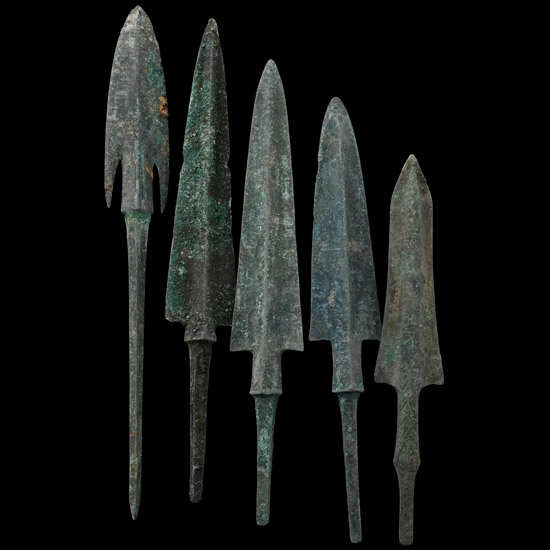
Western Asiatic Bronze Arrowhead Collection
2nd-1st millennium B.C.Sold for (Inc. bp): £143
Comprising five tanged arrowheads with raised midribs, one with barbed shoulders. 150 grams total, 11.7-15.4 cm
London, UK, collection, 1990s.
One category of the represented arrowheads has a sharp blade, the ends of which extend to form wings or barbs, and a prominent midrib extending into a long tang that often has a stop; the blade shape varies from deltoid to more triangular. Another form has no barbs, but it has a prominent midrib and triangular blade, with a stop at the tang. -
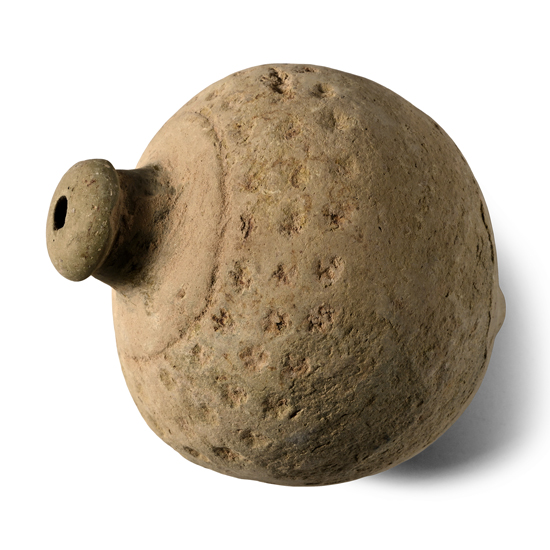
Byzantine 'Greek Fire' Ceramic Fire Bomb or Hand Grenade
9th-11th century A.D.Sold for (Inc. bp): £208
Ovoid in profile with impressed pellet decoration on the upper body; intended to be filled with explosive liquid and a wick, and used as a hand grenade. 436 grams, 11 cm
From an important specialist collection, London, UK, 1990s. Accompanied by an academic paper by military specialist Dr Raffaele D'Amato, dated 15 July 2019 and titled 'Eastern Roman Empire - Greek Fire Bomb or Hand Grenade (μεσαίον kακάβιον) 9th-11th century AD'.
Apart from the use of siphons or manual flame-throwers called cheirosiphona, special corps of Roman soldiers employed terracotta grenades, in the form of small jars, abundantly evidenced in archaeological excavations. They were called μεσαία kακαβιά or κυτροκακάβια, where the former had a bulbous shape and the latter a more cylindrical form. -
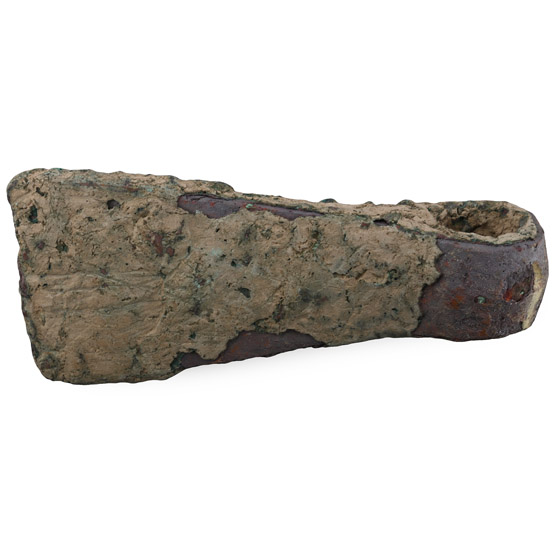
Luristan Bronze Socketted Axehead
2nd-1st millennium B.C.Sold for (Inc. bp): £85
With a triangular tapering blade and a flat cutting edge, oval socket. 997 grams, 17 cm
Ex Abelita family collection, 1980s-2000s.
