
Loading, please wait...
LOT 0131
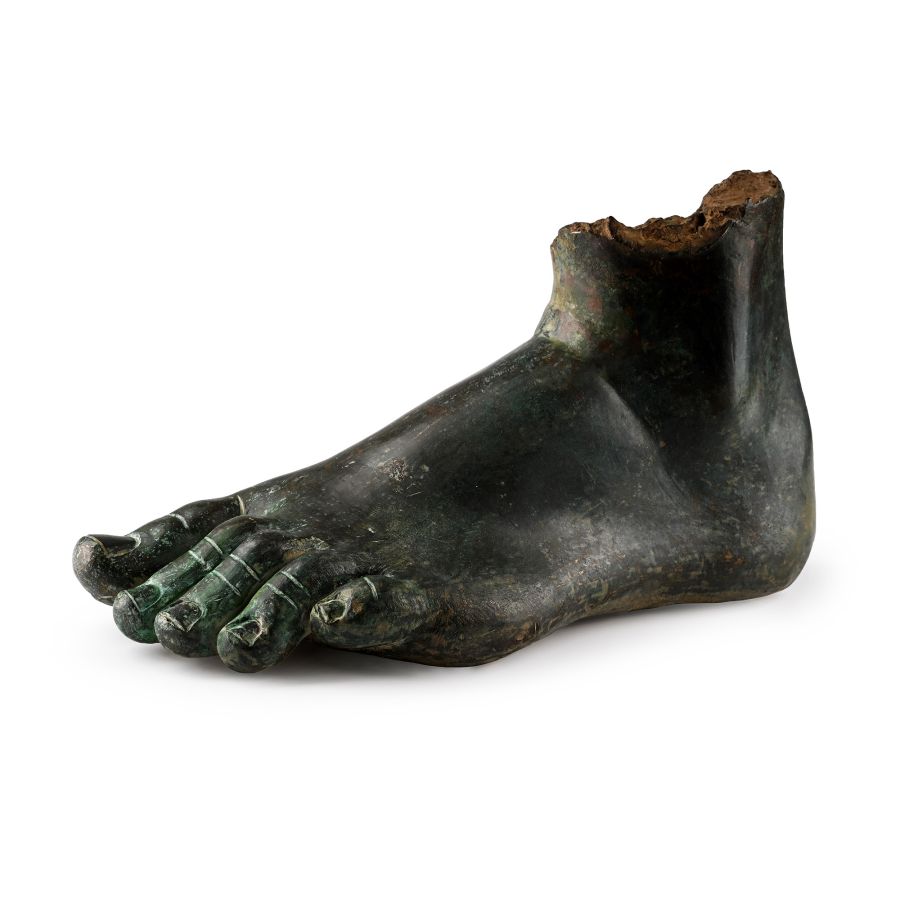
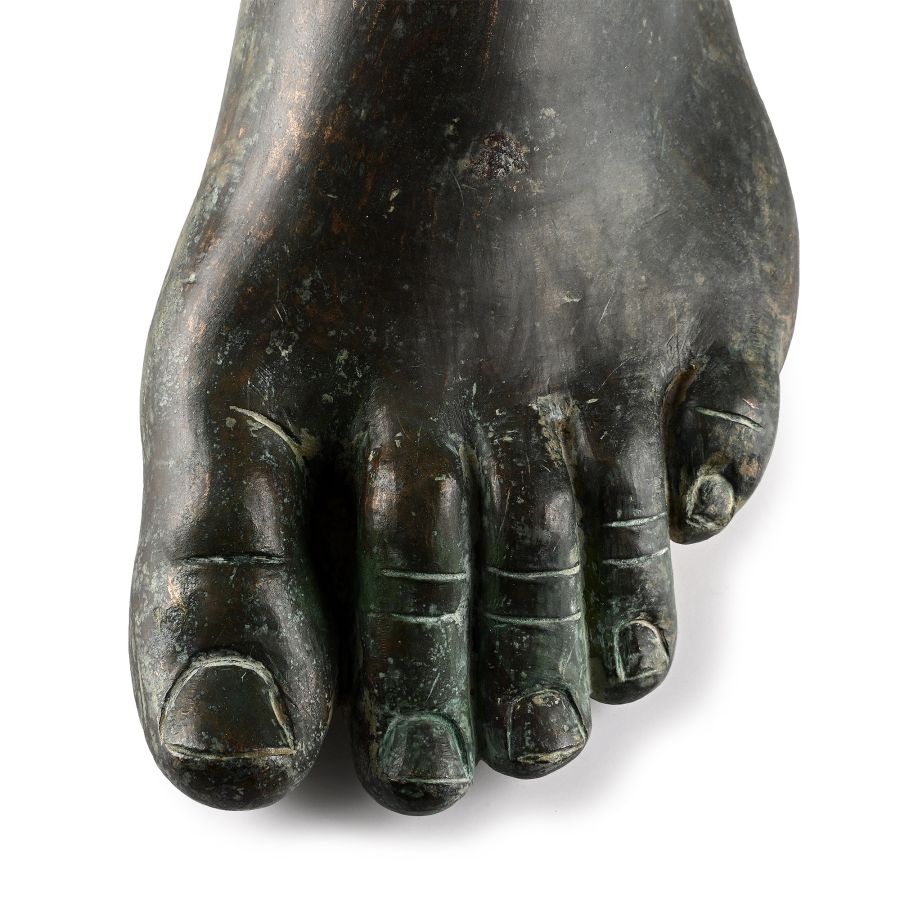
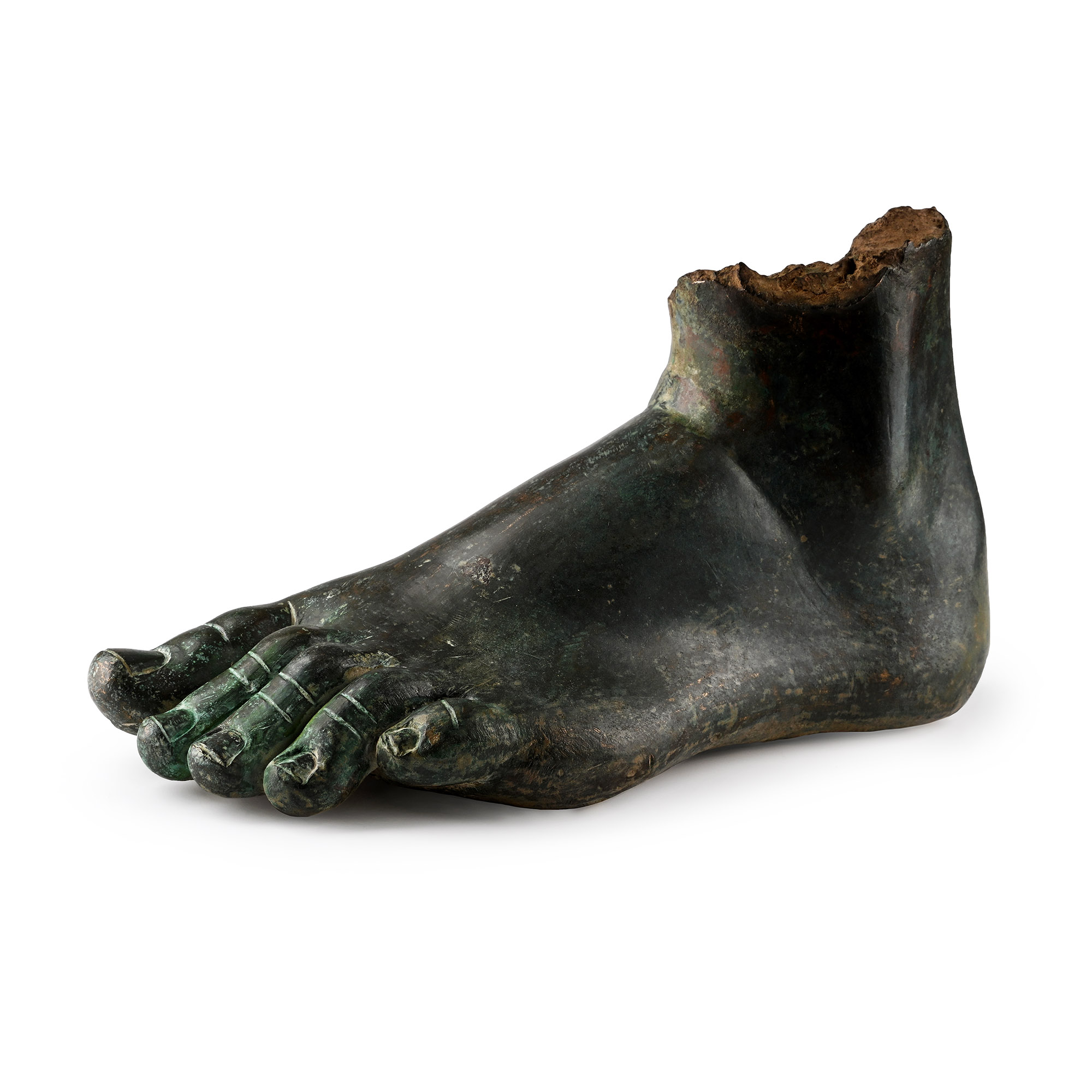
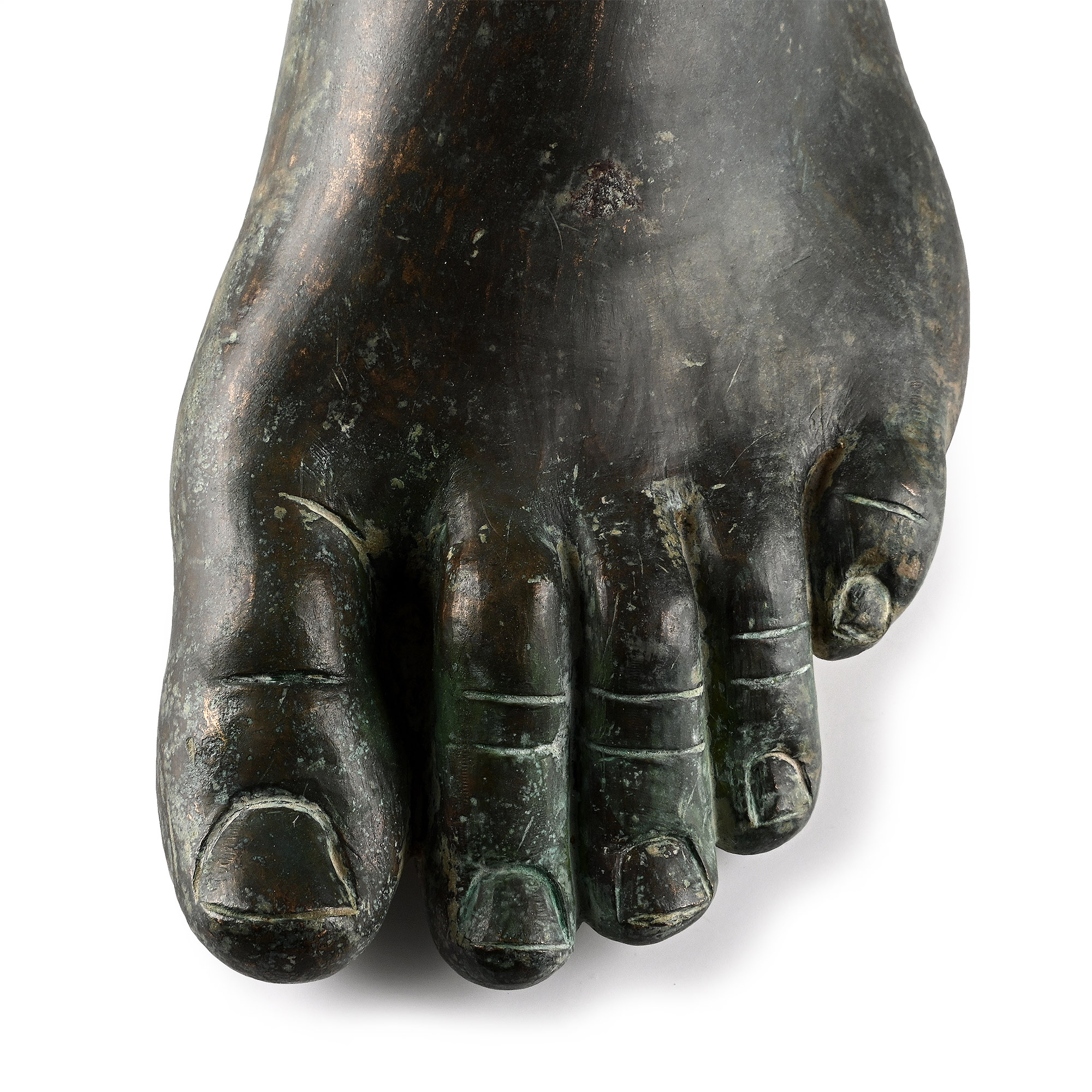
Life-Size Roman Statue Foot of a Young Athlete
1ST CENTURY B.C.-2ND CENTURY A.D.
8 5/8 in. (5.73 kg, 22 cm).
Comprising the left foot and ankle with finely modelled anatomical detailing, filled with lead and originally attached to a base from the sole of the foot.
ProvenanceFrom a London, UK, collection that was formed the 1980s.
Acquired from Alan Darer, Mayfair, London, UK, 2016.
From the private collection of a Beckenham, UK, lady.
Accompanied by an academic report by Dr Raffaele D’Amato.
This lot has been checked against the Interpol Database of stolen works of art and is accompanied by search certificate number no.12783-240373.
This lot has been cleared against the Art Loss Register database, and is accompanied by an illustrated lot declaration signed by the Head of the Antiquities Department, Dr Raffaele D'Amato.
Cf. Reinach, S., 'Hermaphrodite: Statuette de bronze de la collection du Mis de Luppé' in Revue archéologique Volume 32, 1898, pp.321-336; Reinach, S., Repertoire de la statuarie grecque et romaine, Paris, 1930, p.100-104; Rolland, H., Bronzes Antiques de Haute Provence, Paris, 1965, item 219, for similar fragment; Deiss, J.J., Herculaneum: Italy's Buried Treasure, New York, 1985; Various, Small bronze sculpture from the Ancient World, Malibu, 1990; Blix, G., From Paris to Pompeii: French Romanticism and the Cultural Politics of Archaeology, University of Pennsylvania Press, 2009; Kleiner, F.S., A history of Roman art, Wadsworth, 2010; Cooley, A.E., Cooley, M.G.L., Pompeii and Herculaneum, New York, 2014.
FootnotesThe small proportions of the foot could suggest that it originally belonged to a statue of a boy, young god or athlete. One of the possible candidates can be Apollo or Narcissus: many of their statues show a similar position of the left foot (Reinach, 1930, pp.100-104).
CONDITIONTimeLine Auctions follows a vetting process to ensure the authenticity and legality of all items, reinforcing our commitment to integrity and responsible trading. Each antiquity, antique, and coin lot undergoes thorough examination by a vetting committee of at least ten external specialists, professional trade association members, scientists, and archaeologists: Our Vetting Process
AUCTIONS:
TimeLine is a leading auction house specialising in antiquities, ancient art, collectables, natural history, coins, medals, and books. Our auctions offer museums, collectors, historians, and enthusiasts the opportunity to acquire unique and historically significant pieces.
-
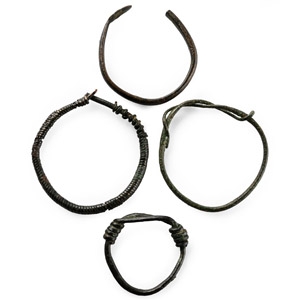
Roman Bronze Bracelet Group
1st-4th century A.D.Sold for (Inc. bp): £72
Comprising two annular bracelets with coiled section, one with the ends wound about the shank, and a penannular bracelet with snake-head terminal. 19.1 grams total, 29-44 mm
Ex German art market, 2000s. Acquired from an EU collector living in London. From the collection of a Surrey, UK, gentleman. This lot is accompanied by an illustrated lot declaration signed by the Head of the Antiquities Department, Dr Raffaele D'Amato. -
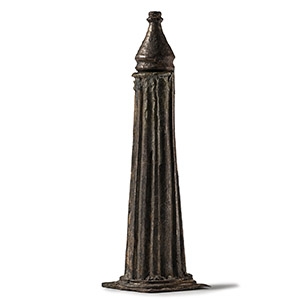
Roman Sheet-Silver Pyxis in the form of a Column
1st-2nd century A.D.Sold for (Inc. bp): £351
Formed as a fluted column on a square, stepped base; separate poppy-shaped lid; fine cracks to the rim. 14.2 grams, 83 mm
Ex Herbert A. Cahn, Basel, 1990s. Accompanied by a copy of an Art Loss Register certificate no.S00037854. This lot is accompanied by an illustrated lot declaration signed by the Head of the Antiquities Department, Dr Raffaele D’Amato. This lot is accompanied by an illustrated lot declaration signed by the Head of the Antiquities Department, Dr Raffaele D'Amato. -
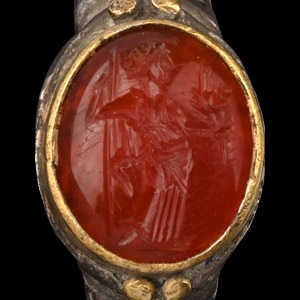
Roman Silver Ring with Carnelian Minerva Gemstone
2nd-3rd century A.D.Sold for (Inc. bp): £416
With narrow shank, plano-convex section, and incised saltires to the outer face, gilt cell to the bezel with granule clusters, inset intaglio of Minerva standing with spear and cornucopia. 4.65 grams, 23.29 mm overall, 17.38 mm internal diameter (approximate size British N 1/2, USA 6 3/4, Europe 14.35, Japan 13)
Acquired on the UK art market before 2000. Property of an Essex, UK, gentleman. This lot is accompanied by an illustrated lot declaration signed by the Head of the Antiquities Department, Dr Raffaele D'Amato.
