
Loading, please wait...
LOT 0135
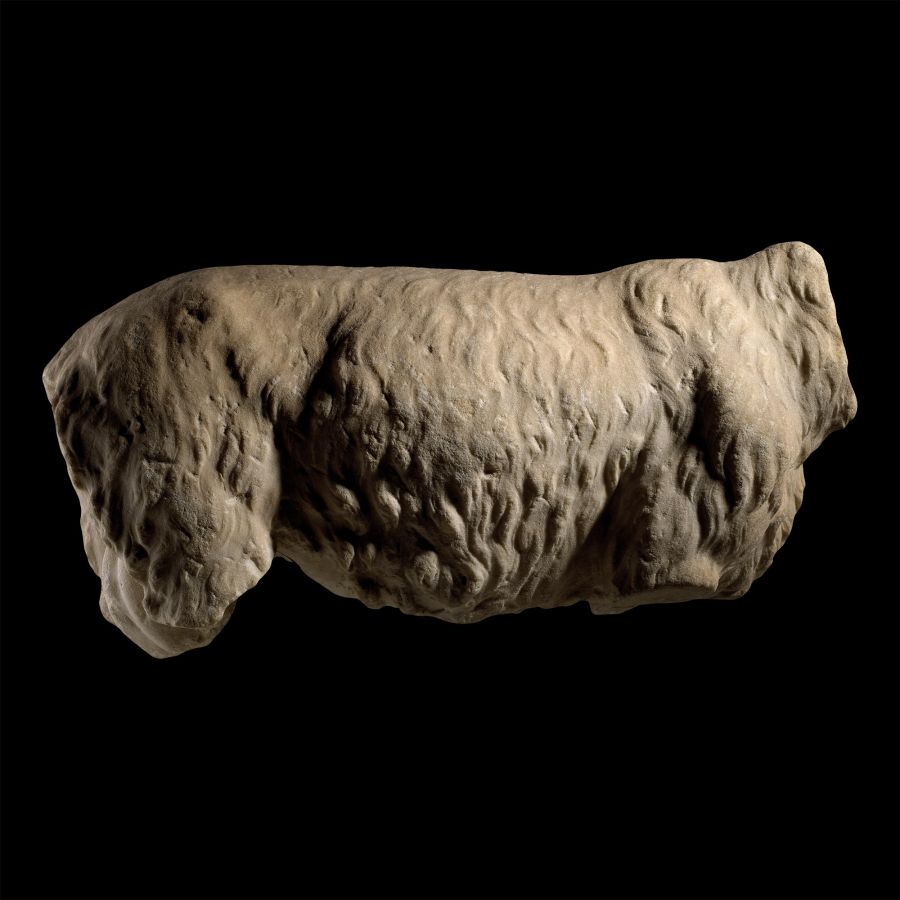
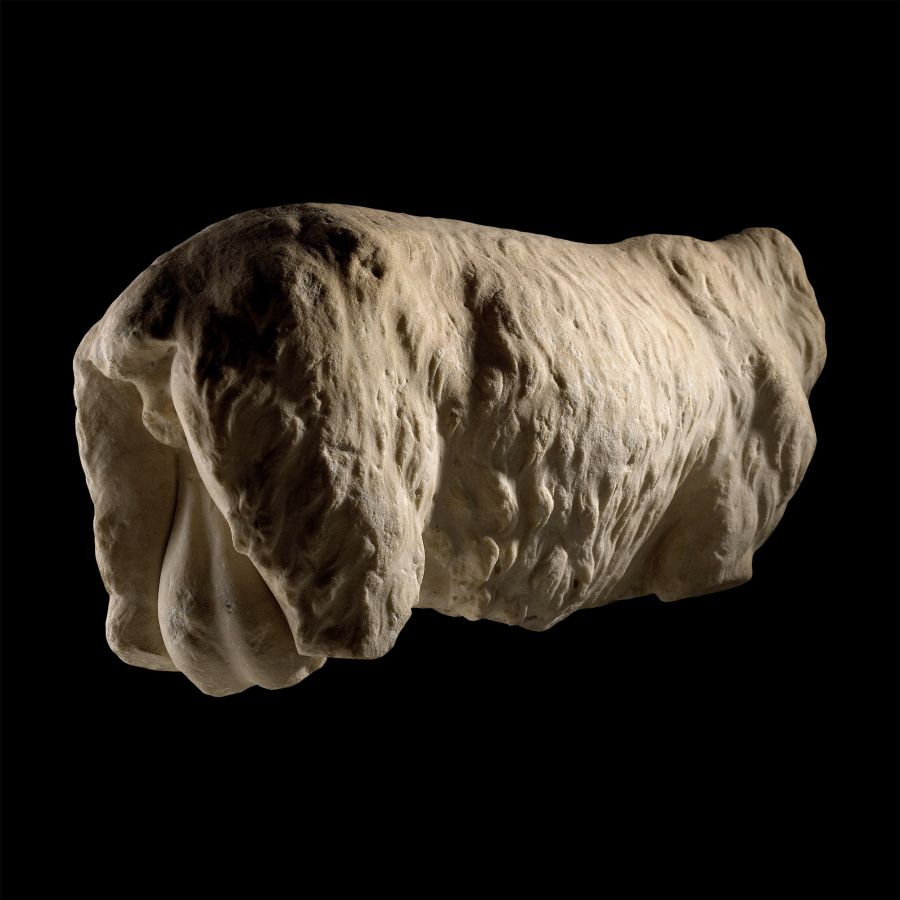
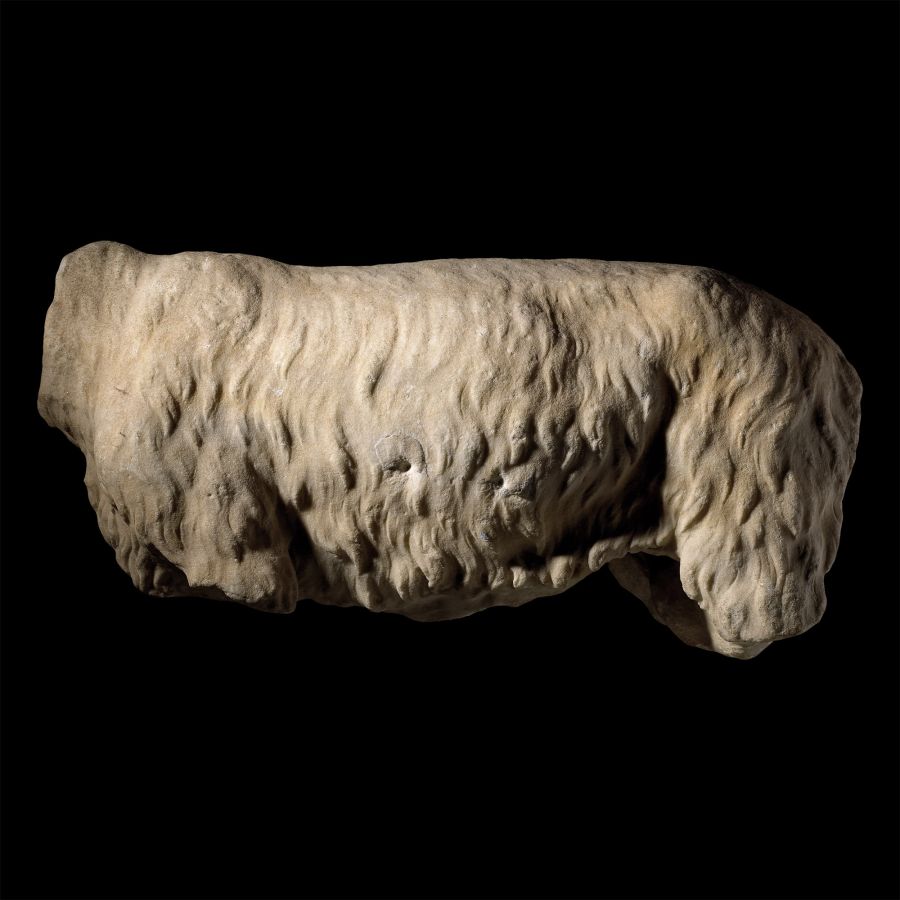
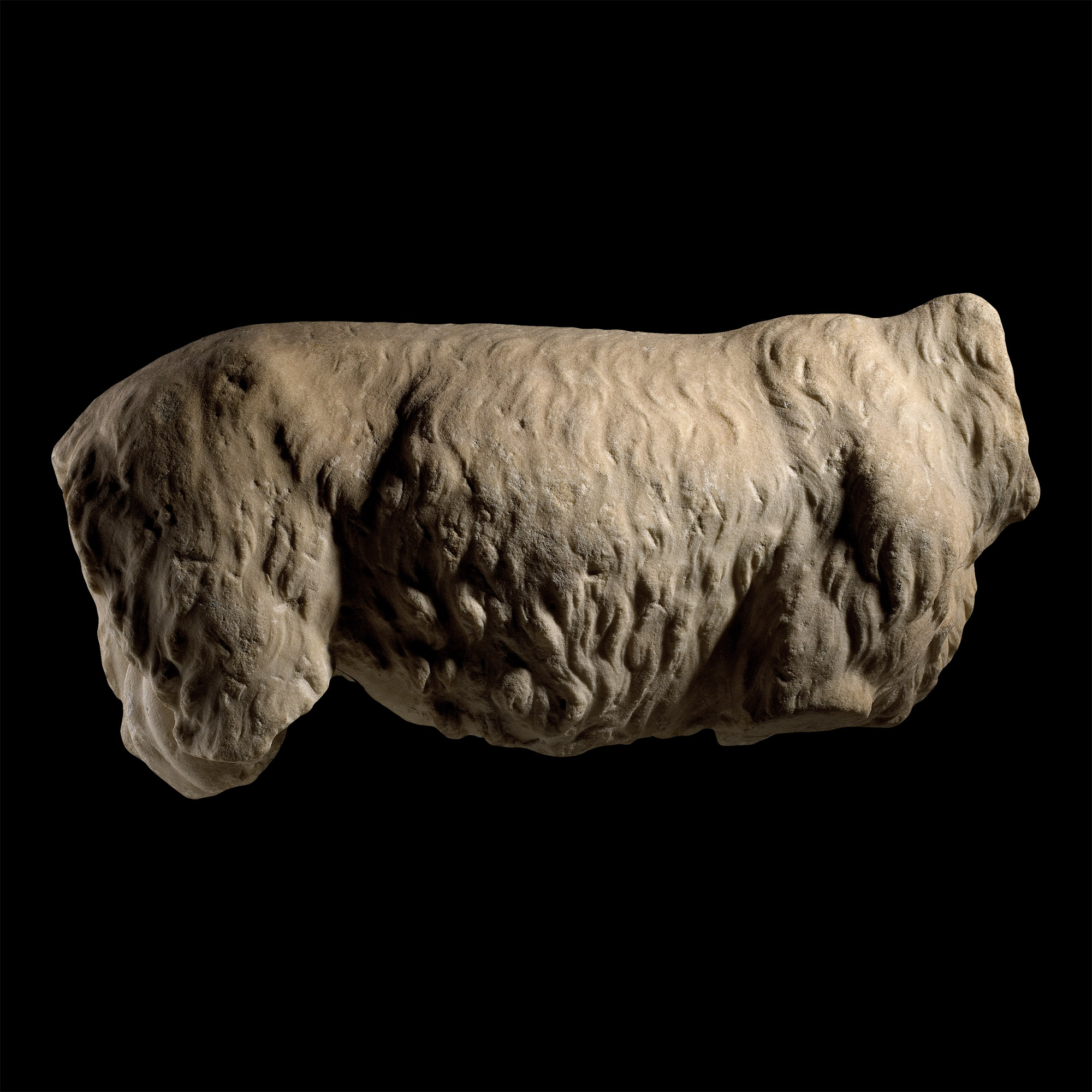
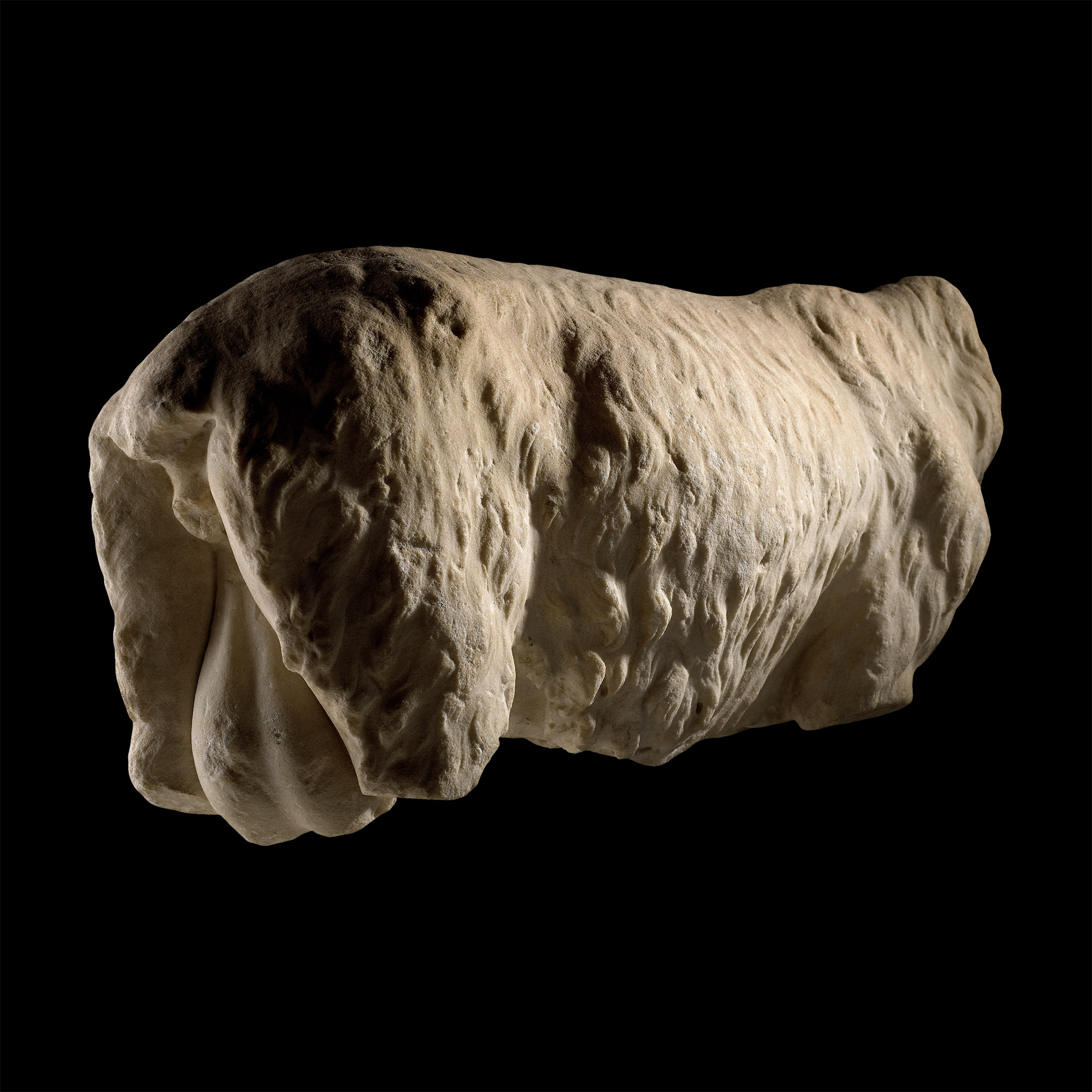
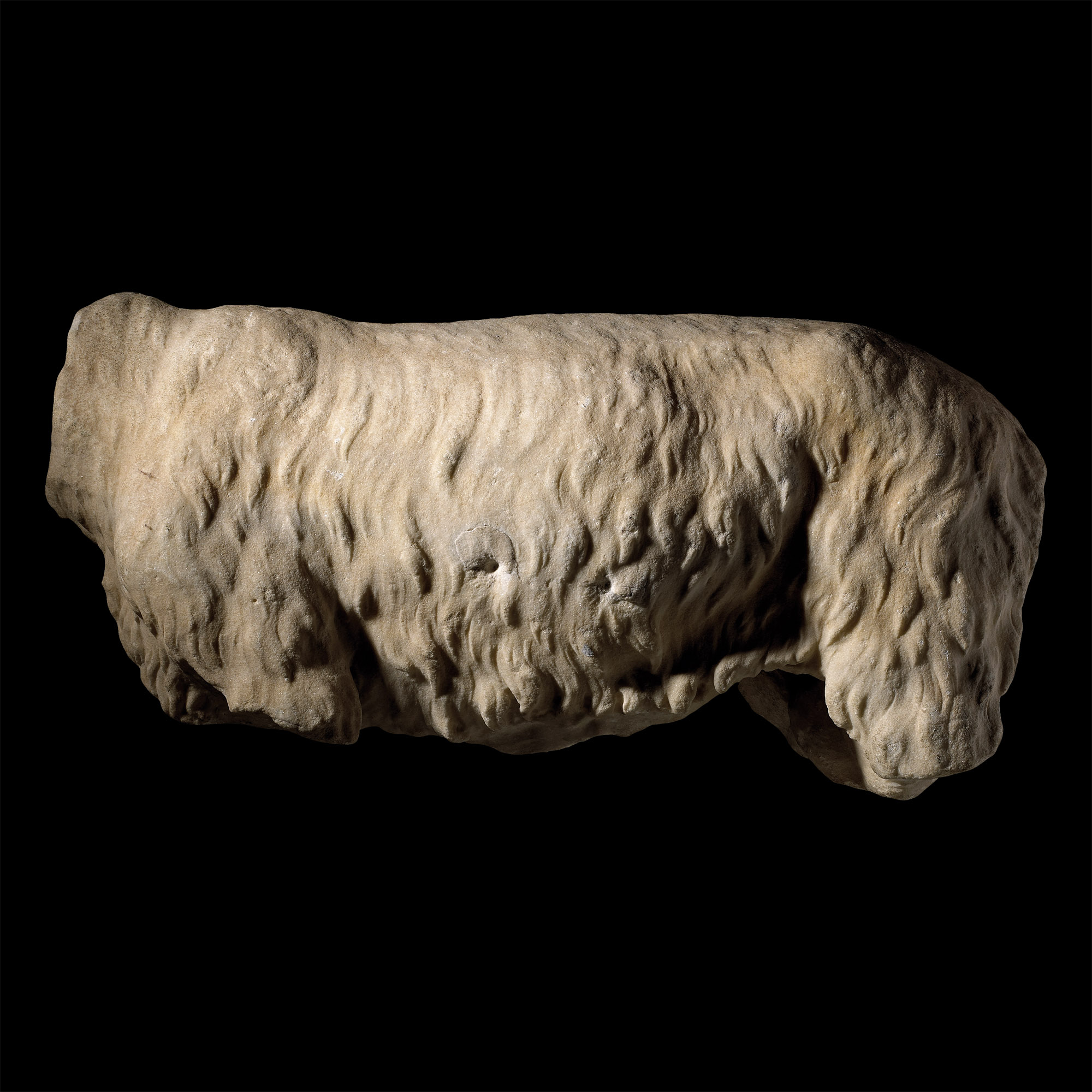
Life-Size Roman Marble Torso of a Ram
1ST CENTURY B.C.-1ST CENTURY A.D.
35 in. (long), 16 in. (high) (155 kg, 89 cm (long), 41 cm (high) excluding stand).
The naturalistic rendering of the animal is particularly evident in the modelling of the muscles and shaggy fur, which originally belonged to a multi-figure group intended for prominent display in an official space, such as a public bath, or in the private gardens of a luxurious villa; accompanied by a custom-made display stand.
ProvenanceAcquired in Brussels, circa 1980.
with Christie's, South Kensington, 6 October 2011, no.121.
Jean-David Cahn AG, Basel, Switzerland.
Private collection, England.
Accompanied by a copy of an Art Loss Register certificate, no.S00074876.
This lot has been checked against the Interpol Database of stolen works of art and is accompanied by search certificate no.13079-249669.
For animal sculptures of the Roman Period, cf. the sculpture of a bear in the J. Paul Getty Museum, Vermeule, C., Neuerburg, N., Catalogue of the Ancient Art in the J. Paul Getty Museum, Malibu, 1973, 13f, no.24; and two sculptures of dogs, which are similar in style and probably belonged to the same group, cf. Sotheby's Antiquities, London, 31 October 2003, no.66; and Sotheby's Antiquities, New York, 24-25 November 1987, no.155.
FootnotesThe sculpture may represent the goat Amalthea, nurse of Zeus, one of the most famous animals in Graeco-Roman mythology. At the same time, it could simply be a representation of a ram, an animal typically sculpted in sacrificial reliefs of the Roman world.
CONDITIONTimeLine Auctions follows a vetting process to ensure the authenticity and legality of all items, reinforcing our commitment to integrity and responsible trading. Each antiquity, antique, and coin lot undergoes thorough examination by a vetting committee of at least ten external specialists, professional trade association members, scientists, and archaeologists: Our Vetting Process
AUCTIONS:
TimeLine is a leading auction house specialising in antiquities, ancient art, collectables, natural history, coins, medals, and books. Our auctions offer museums, collectors, historians, and enthusiasts the opportunity to acquire unique and historically significant pieces.
-
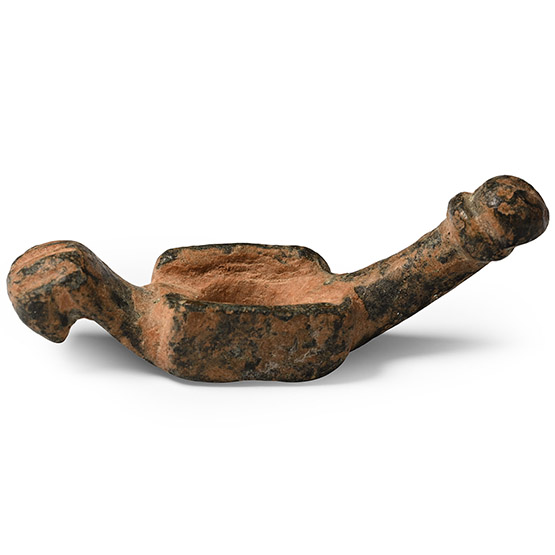
Roman Bronze Phallic Dagger Quillon or Pendant
1st-2nd century A.D.Sold for (Inc. bp): £65
With a rectangular plaque with central void, phallus to one short edge and a stylised fist to the other. 25.5 grams, 55 mm
Acquired 1980-2015. Ex Abelita family collection.
In the Roman world the phallus was symbol of luck or fertility, and it as well was believed to have apotropaic functions. Pendants, amulets and small objects were worn by all sorts of people as symbols of protection, especially from young children according to Varro and Pliny the Elder. The phallus is commonly found on reliefs, frescoes and lamps from the Graeco-Roman world. This object can have been the quillon of a small dagger, but also hung as a charm from a tintinnabulum, a wind chime adorned with bells and intended to ward off evil. -
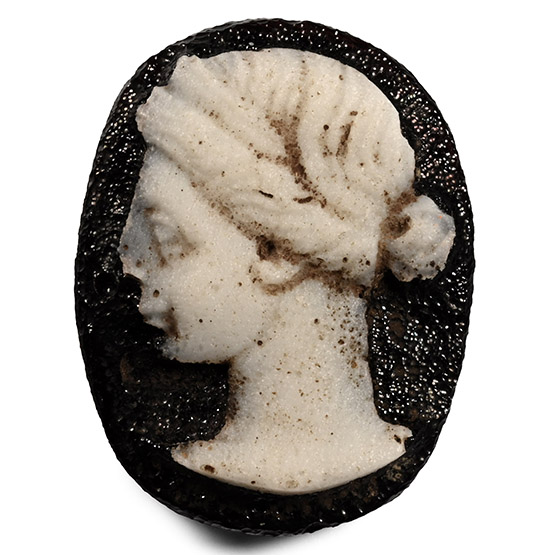
Roman Glass Cameo with Female Bust
1st century A.D.Estimate: £400 - 600 (‡+bp*)
Opening Bid: £200
Ellipsoid black glass plaque with profile female bust, hair dressed in a chignon. 1.82 grams, 18.58 mm
Acquired in the mid 1980s-1990s. Private collection, Switzerland, thence by descent. Private collection, since the late 1990s. Accompanied by a copy of an Art Loss Register certificate, no.S00011371. -
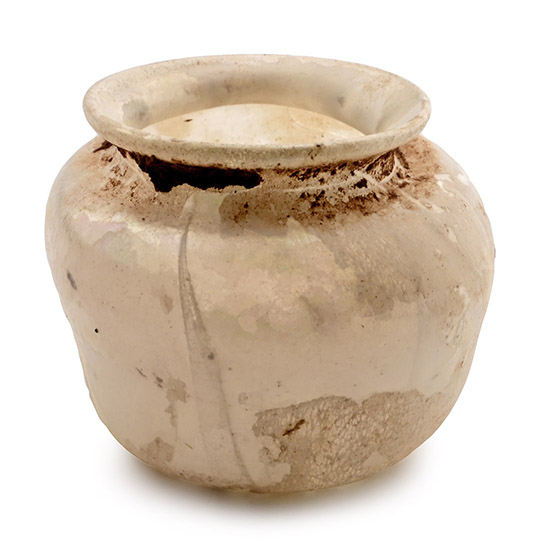
Roman Glass Vase
2nd-4th century A.D.Estimate: £120 - 170 (‡+bp*)
Opening Bid: £60
Squat in profile with sloped shoulder, everted flange rim. 13.7 grams, 50 mm
Acquired in the late 1980s. Private collection, thence by descent. Private collection, since the late 1990s.
