
Loading, please wait...
LOT 0075
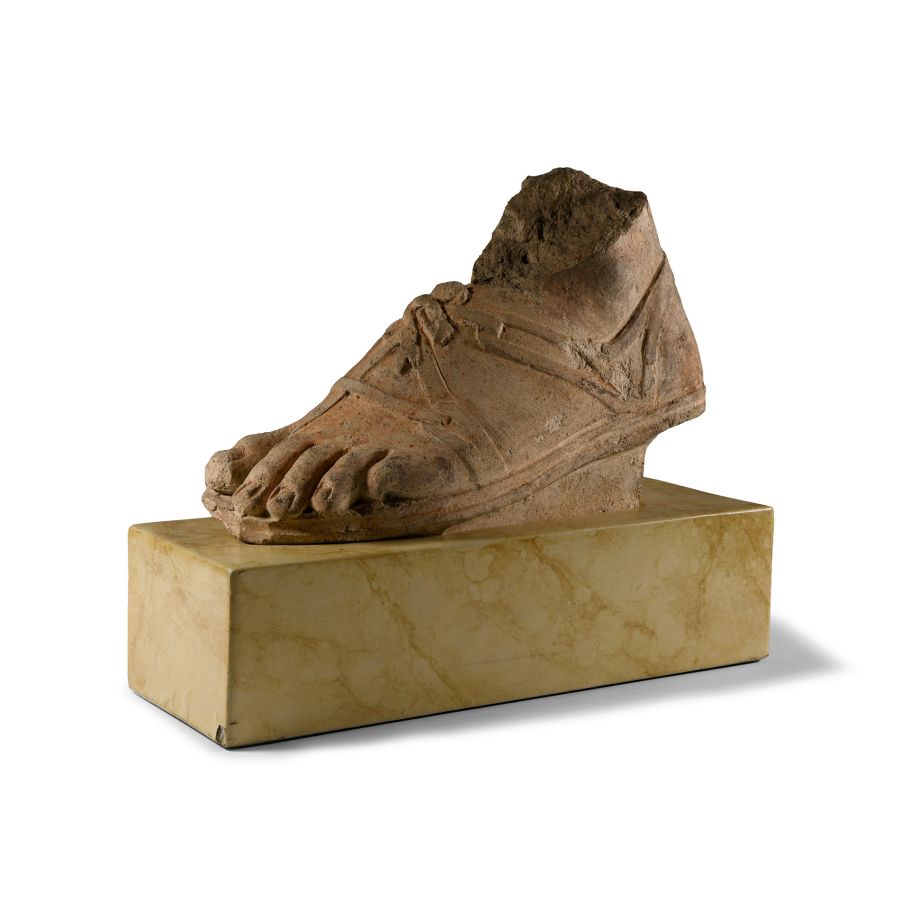
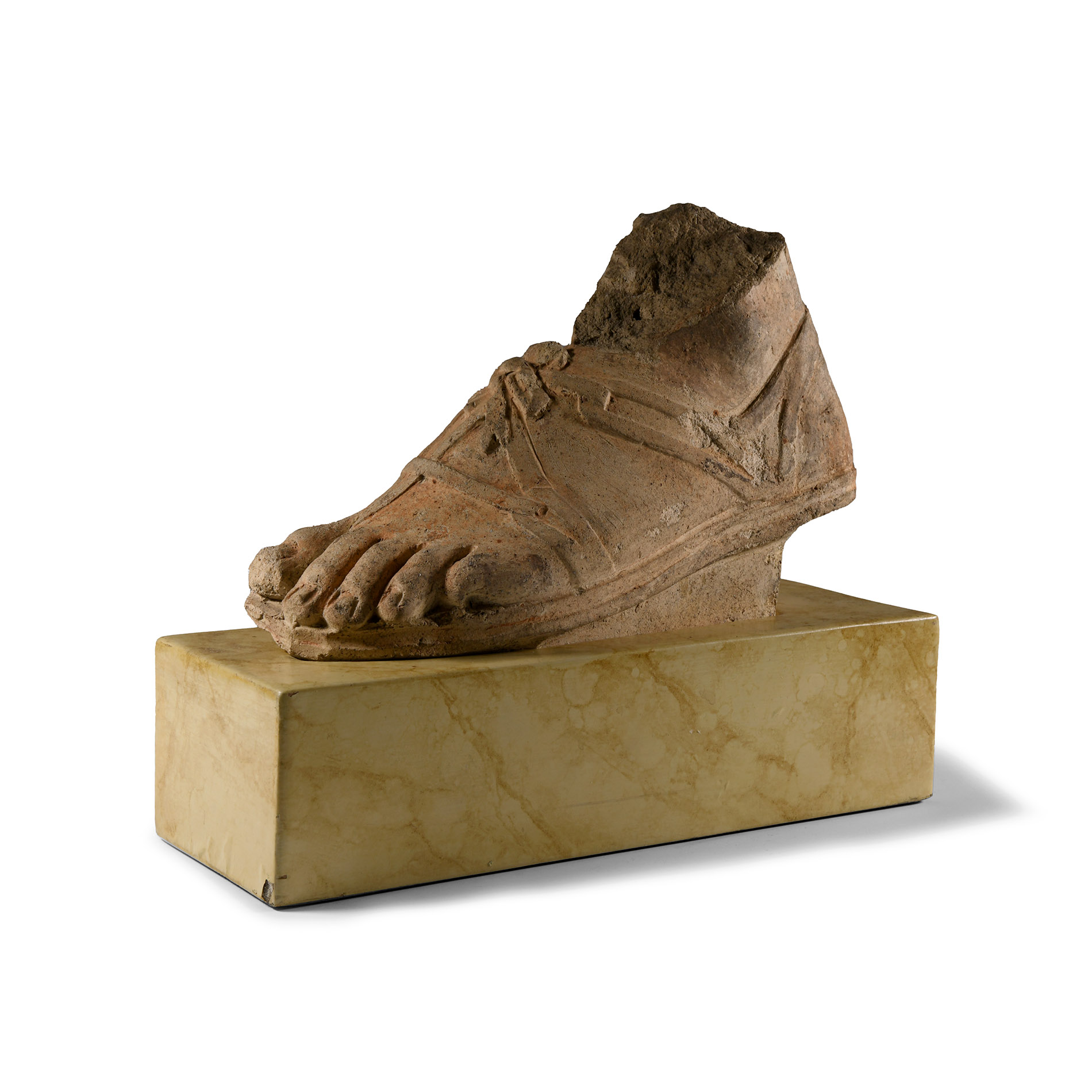
Life-Size Etruscan Terracotta Foot
CIRCA 200 B.C.
11 in. (3.1 kg total, 28 cm wide including stand).
From a statue; left foot with detailed lacing to the sandal; integral wedge below to provide the correct angle for the foot and ankle.
ProvenanceFrom the collection of Platon Hobson (29 January 1937-3 December 2022), local dealer and previously a costumier in the film industry.
CONDITIONTimeLine Auctions follows a vetting process to ensure the authenticity and legality of all items, reinforcing our commitment to integrity and responsible trading. Each antiquity, antique, and coin lot undergoes thorough examination by a vetting committee of at least ten external specialists, professional trade association members, scientists, and archaeologists: Our Vetting Process
AUCTIONS:
TimeLine is a leading auction house specialising in antiquities, ancient art, collectables, natural history, coins, medals, and books. Our auctions offer museums, collectors, historians, and enthusiasts the opportunity to acquire unique and historically significant pieces.
-
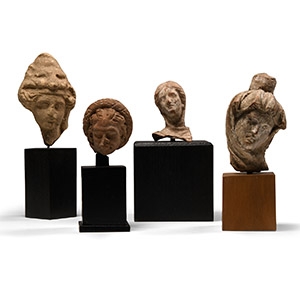
Greek Terracotta Head Collection
3rd-2nd century B.C.Sold for (Inc. bp): £1,690
Each modelled in the round and and derived from a larger female figure, some wearing diadems and some with draped heads; each mounted on a custom-made display base. 491 grams total, 9.5-13.5 cm high including stand
Acquired in the 1970s. Ex European private collection. This lot has been checked against the Interpol Database of stolen works of art and is accompanied by search certificate no.11795-206534.
These figurines reflect sculptural prototypes. Interestingly the head of one of the women is draped in a himation, and the head is turned slightly to the right like the terracotta of Amisos which represents a dancer. These figurines were most probably manufactured in Hellenistic cities by craftsmen who used either light yellow or dark brown clay. After the firing, the surface of the clay became reddish, while the core became grey-brown. The majority of the figurines were made from untreated clay with many impurities, such as coarse grain. Due to the quality of the clay the surface of the figurines was often rugged, despite the retouch, but were painted with vivid colours, as is still visible on the pink polos on one of the heads. -
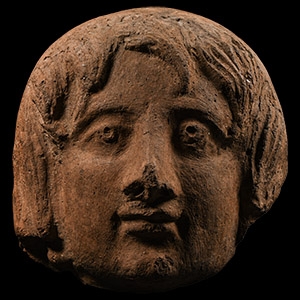
Etruscan Terracotta Head
Circa 4th-3rd century B.C.Estimate: £2,000 - 3,000 (+bp*)
Opening Bid: £1,000
Formed as a youthful figure with semi-naturalistic facial features and short tufts of comb-effect hair falling around the face; hollow-formed. 1.07 kg, 17 cm
Ex S. Amacker collection, prior to 1970. Acquired from the above in 2005. This lot has been checked against the Interpol Database of stolen works of art and is accompanied by search certificate number no.11853-207423. -
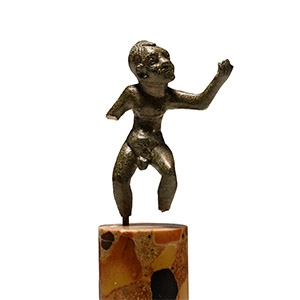
Hellenistic Bronze Statuette of an Alexandrian Dancing Dwarf
1st century B.C.-1st century A.D.Estimate: £3,000 - 4,000 (+bp*)
Opening Bid: £1,500
In an active pose with both legs bent and left arm raised dramatically, head tilted to the left; exaggerated facial features, short trimmed hair, slim body with developed pectoral muscles and pronounced kyphosis; mounted on a columnar stand. 299 grams,14.5 cm including stand
Belgian private art collection of M.A., Brussels, Belgium, 1995. with Gorny and Mosch, 14 December 2011, lot 82. This lot has been checked against the Interpol Database of stolen works of art and is accompanied by search certificate number no.11886-206399.
