
Loading, please wait...
LOT 1792
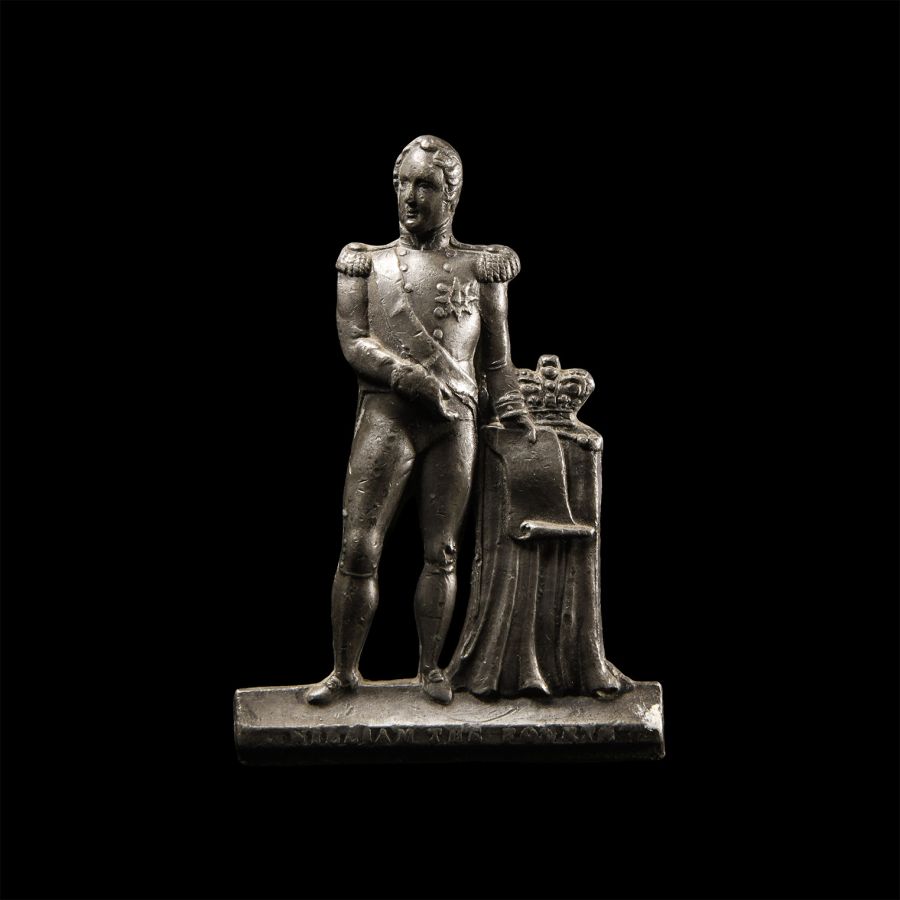
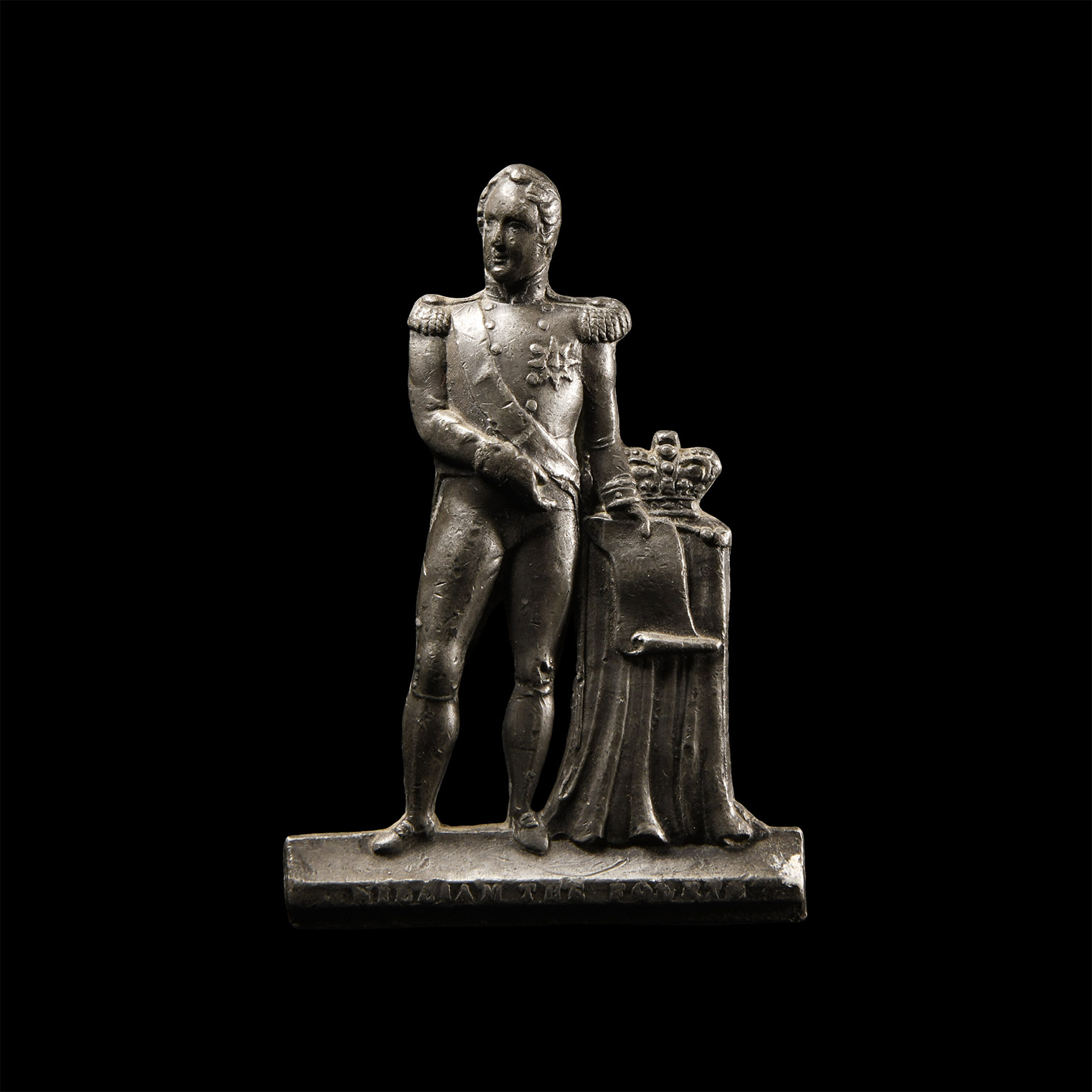
Lead William IV Plaque
EARLY 1800S A.D.
3 1/4 in. (64 grams, 81 mm).
With King William IV (1830-1837) modelled in the half-round beside a draped table with a crown, holding a scroll or map; horizontal base with abraded legend 'WILLIAM THE FOURTH'. [No Reserve]
ProvenanceAcquired 1960s-1990s.
Late Alison Barker collection, a retired London barrister.
TimeLine Auctions follows a vetting process to ensure the authenticity and legality of all items, reinforcing our commitment to integrity and responsible trading. Each antiquity, antique, and coin lot undergoes thorough examination by a vetting committee of at least ten external specialists, professional trade association members, scientists, and archaeologists: Our Vetting Process
AUCTIONS:
TimeLine is a leading auction house specialising in antiquities, ancient art, collectables, natural history, coins, medals, and books. Our auctions offer museums, collectors, historians, and enthusiasts the opportunity to acquire unique and historically significant pieces.
-
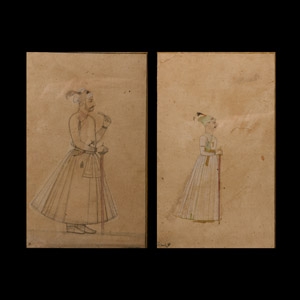
Framed Watercolour Painting Pair by Assad Irani
Persia, early 19th century A.D.Estimate: £200 - 300 (+bp*)
Opening Bid: £111
Each showing a nobleman standing right, leaning on a sword, concentric borders and gold-coloured stipple-effect, signed by an Iranian artist Assad Irani; both mounted in a reveal and a glazed wooden frame. 2.45 kg total, each 42 x 32 cm
Fine condition.
Acquired on the UK art market, 1980s-1990s. The Woodbridge collection of Indo-Persian art. -
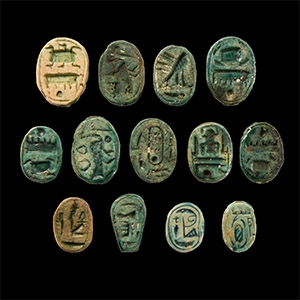
Egyptian Style Faience Scarab Collection
20th century A.D.Sold for (Inc. bp): £52
Each decorated with blue glaze and displaying semi-naturalistic detailing; each featuring hieroglyphs to the base and pierced for suspension; one possibly displaying a fish to the upper face. 15.2 grams total, 11-15 mm
UK gallery, early 2000s. -
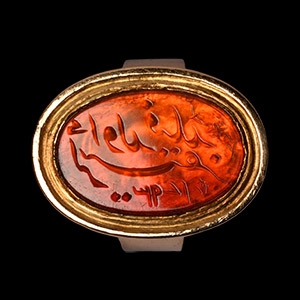
Carnelian Calligraphic Gemstone in Gold Ring
18th-19th century A.D.Sold for (Inc. bp): £546
Polished carnelian bearing a calligraphic Arabic inscription with floral flourishes, set into a 20th century flat-section hoop supporting an oval bezel. 6.75 grams, 22.83 mm overall, 18.04 mm internal diameter (approximate size British O, USA 7, Europe 14.98, Japan 14)
From a family collection formed 1900-1950; by descent circa 1980.
